Two prominent figures in Islamic scholarship were honoured at Malaysia's national Maal Hijrah celebration, with government leaders using the occasion to emphasise the importance of their contributions to Muslim society. Deputy Prime Minister Datuk Seri Dr Ahmad Zahid Hamidi highlighted how the recipients of the prestigious awards should inspire Malaysia's Muslim population to embrace deeper spiritual and intellectual commitments. The recognition, he suggested, extends beyond personal achievement to encompass a broader message about the role of scholars and community leaders in strengthening the Islamic civilisation.
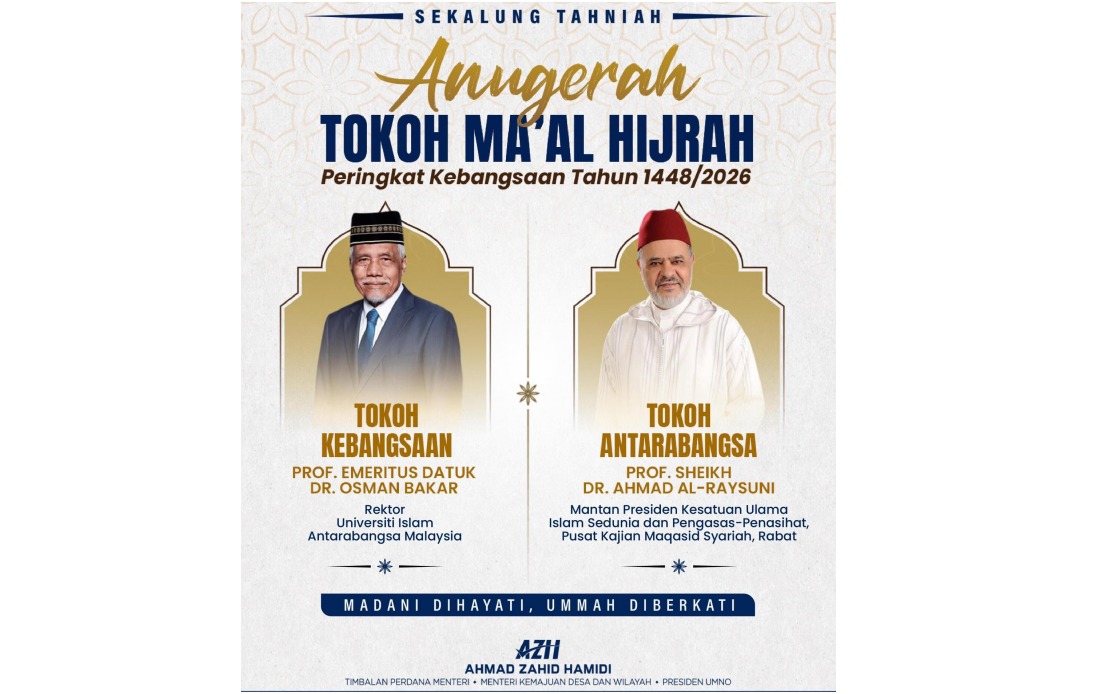
Prof Emeritus Datuk Dr Osman Bakar received the national award, while Prof Sheikh Dr Ahmad Al-Raysuni, a prominent Islamic jurisprudence specialist from Morocco, secured the international distinction. The ceremony took place at Masjid Putra in Putrajaya, where Sultan Nazrin Shah of Perak presented the recipients with cash prizes, trophies and certificates of appreciation. This ceremonial backdrop underscores how Malaysia's institutional framework places considerable significance on honouring intellectual and spiritual leadership within the Muslim world.
Ahmad Zahid's message focused on the dual responsibility that such recognition carries. He articulated that award recipients exemplify virtues fundamental to Islamic teaching: the relentless pursuit of knowledge, active community engagement, and contribution to the broader development of the ummah. His framing positioned these individual honours as invitations for the wider Muslim population to reflect on their own roles within society, particularly in contexts where knowledge advancement and social welfare intersect. The Deputy Prime Minister's emphasis on these values suggests an institutional perspective that links scholarly excellence with practical communal benefit.
The inclusion of an international award recipient in the ceremony carries implications for Malaysia's positioning within the broader Islamic scholarly world. By recognising Prof Ahmad Al-Raysuni, a Moroccan Islamic scholar, Malaysia signals its engagement with Muslim intellectual discourse beyond its borders. This gesture reflects the ummah concept—a transnational Muslim community—and suggests that Malaysia views itself as part of a wider Islamic civilisational project rather than confining recognition purely to domestic figures. Such international recognition also enhances Malaysia's soft power within Muslim-majority regions and diaspora communities globally.
Deputy Prime Minister Datuk Seri Fadillah Yusof echoed similar sentiments but approached the awards through a slightly different lens, emphasising the hijrah narrative itself as a guiding principle. His interpretation of the Prophet Muhammad's hijrah moved beyond historical commemoration to extract contemporary lessons about resilience, unity and determination. This reframing transforms the annual Maal Hijrah observance from a simple historical remembrance into a conceptual framework for ongoing national development. Fadillah's argument suggests that the values embedded in the original hijrah—sacrifice, adaptability, and commitment to progressive change—remain directly applicable to modern Malaysian governance and societal challenges.
The hijrah metaphor, as Fadillah articulated it, carries particular resonance in the Malaysian context where national unity and inclusive development remain ongoing policy priorities. By connecting the award ceremony to themes of sacrifice and resilience, he positioned the honoured scholars as embodying principles that transcend religious boundaries in their practical application. This interpretative approach may reflect an attempt to frame Islamic values in ways that speak to broader national objectives, suggesting that religious excellence and national prosperity are mutually reinforcing rather than competing concerns.
The timing of the awards at the national level Maal Hijrah celebration signals institutional deliberation about which figures and contributions deserve state recognition. Such selectivity indicates that the awards process involves careful curation based on perceived impact on Muslim communities and Islamic knowledge systems. Prof Osman Bakar's selection for the national award suggests recognition of his contributions specifically to Malaysia's Islamic intellectual landscape, while Prof Ahmad Al-Raysuni's international award acknowledges broader scholarly impact across Muslim-majority societies. This dual-track recognition system allows the Malaysian government to celebrate both domestic and international Islamic achievement simultaneously.
For Malaysian readers, the awards carry implications for how intellectual leadership is valued within the country's institutional structure. The prominence given to these ceremonies suggests that knowledge advancement and community service remain central to how Malaysia's government conceptualises Muslim contribution to national development. Furthermore, the involvement of state officials at the highest levels indicates that Islamic scholarship is not relegated to religious or community affairs alone, but is integrated into broader governance and national vision frameworks. This positioning may influence how younger scholars and community leaders approach their own aspirations and career trajectories.
The emphasis on continuing this inspirational message points toward an ongoing institutional conversation about generational transmission of Islamic values and scholarly commitment. Both Deputy Prime Ministers framed the awards as catalysts rather than endpoints—honours that should motivate continued effort rather than mark final accomplishment. This forward-looking perspective suggests awareness that Malaysia's competitive position in the Islamic intellectual world requires sustained investment in knowledge production and community engagement. The implicit message is that current award recipients serve as benchmarks and models whose achievements should inspire rather than satisfy.
Fadillah's call for collective effort to strengthen unity, enhance faith and increase good deeds extends the awards' significance beyond individual recognition into a framework for national mobilisation. This language of shared responsibility and communal advancement reflects governance rhetoric that positions Muslim achievement as integral to Malaysia's prosperity. By connecting the honoured scholars to broader national aspirations, government leaders attempt to create narrative coherence between religious excellence and national progress, suggesting these dimensions are intrinsically linked rather than separate domains of endeavour.