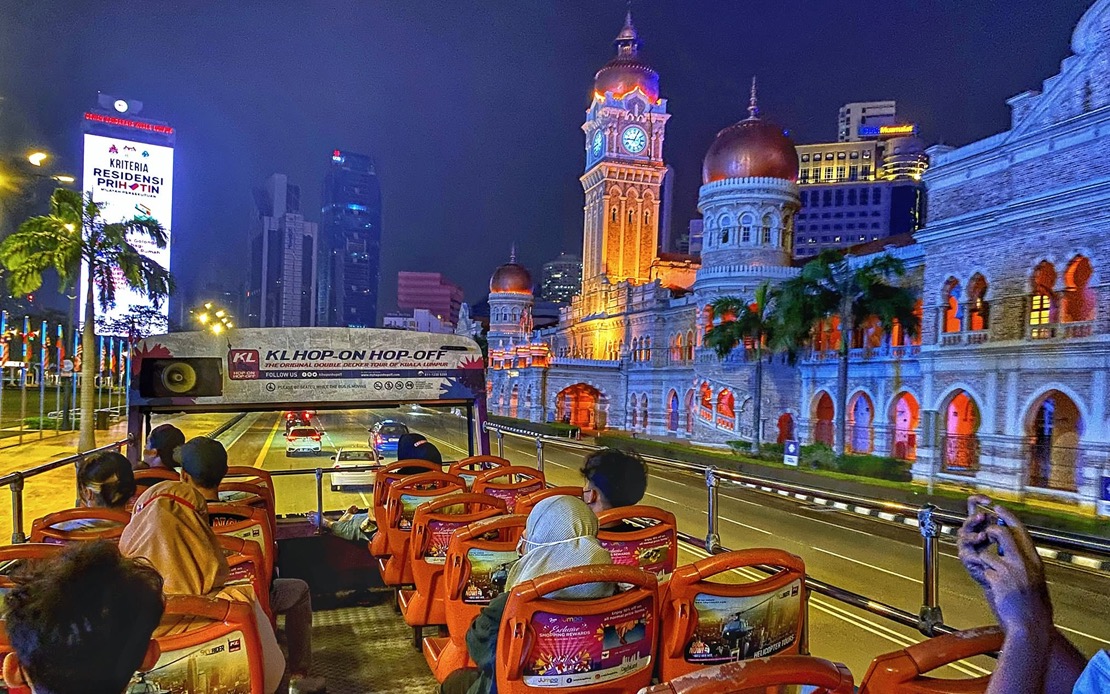
Tourism Malaysia and KL Hop-On Hop-Off operator Elang Wah Sdn Bhd unveiled a domestic tourism campaign on June 24 designed to encourage local travel and prepare the nation for Visit Malaysia 2026. The initiative leverages the iconic double-decker sightseeing buses as mobile billboards traversing Kuala Lumpur's most visited attractions, transforming them into promotional vehicles that reach both residents and tourists navigating the capital.
Minister of Tourism, Arts and Culture Datuk Seri Tiong King Sing emphasised that domestic tourism forms a cornerstone of Malaysia's broader tourism strategy, delivering substantial economic benefits beyond international visitor receipts. The sector drives employment across hospitality, transportation, and retail sectors while channelling spending into local communities, from rural homestays to urban entertainment districts. This multiplier effect strengthens supply chains involving small and medium enterprises that depend on consistent domestic customer flows.
The campaign reflects a strategic pivot toward mobilising internal travel demand before the anticipated global tourism surge around Visit Malaysia 2026. Rather than waiting passively for international visitors, Tourism Malaysia recognises that Malaysians themselves represent an underutilised market for premium domestic experiences. By encouraging locals to patronise attractions and services during off-peak seasons and weekdays, operators can improve capacity utilisation and generate revenue before international peak periods strain infrastructure.
Six KL Hop-On Hop-Off buses now display custom-designed wraps showcasing tourist destinations spanning 15 states and federal territories. The selection ranges from religious and architectural landmarks such as the Sri Sendayan Mosque in Negeri Sembilan to natural wonders including the Pinnacles of Mulu in Sarawak. This geographic diversity serves multiple objectives: it educates commuters about Malaysia's varied attractions, distributes promotional burden beyond the Klang Valley, and signals to state tourism boards that regional destinations receive visibility within national campaigns.
The wrapped buses incorporate interactive QR code technology enabling passengers and street-level viewers to access VM2026 travel packages, the official Calendar of Events, and individual state tourism websites. This digital integration bridges the gap between passive exposure and active booking capability, allowing interested travellers to immediately research options and secure deals without requiring additional search effort. The approach reflects contemporary consumer behaviour where convenience and instant gratification drive purchasing decisions, particularly among mobile-phone dependent younger demographics.
Recent performance data underscores the momentum underlying this campaign. Domestic tourism expanded by 21.3 per cent in 2025, attracting 290.1 million visitor trips against 260.1 million recorded in 2024. This significant growth trajectory suggests that Malaysians increasingly allocate leisure budgets toward local exploration, potentially driven by visa-free travel convenience, reduced transport costs compared with international holidays, and expanded accommodation options including budget chains and alternative lodging platforms.
Expenditure growth matched visitor volume increases, with total domestic tourism spending climbing 13.3 per cent to RM121.0 billion in 2025 from RM106.7 billion the previous year. This expenditure dimension proves crucial because higher per-visitor spending indicates quality improvement rather than merely volume-driven growth. Travellers appear willing to invest in premium experiences, upscale dining, and activity packages, suggesting maturation of the domestic tourism market beyond basic sightseeing toward experiential consumption.
The campaign timing positions Malaysia advantageously ahead of Visit Malaysia 2026, a milestone year designed to attract global media attention and international visitors. By cultivating robust domestic participation in the tourism ecosystem now, Malaysia builds operational capacity, trains hospitality staff, and refines service delivery protocols before international scrutiny intensifies. Domestic tourists effectively serve as quality-control mechanisms, providing feedback that operators can incorporate into service improvements.
For Kuala Lumpur specifically, the wrapped buses represent economical marketing assets. The capital's extensive bus network ensures daily exposure across diverse neighbourhoods and socioeconomic groups. Unlike stationary advertising that requires deliberate attention, moving buses create repeated impressions as they navigate residential areas, commercial districts, and transit hubs. This ambient marketing approach proves particularly effective for building top-of-mind awareness among leisure travellers planning weekend getaways or longer holiday itineraries.
The public transportation integration also carries sustainability messaging, aligning with Visit Malaysia 2026's environmental commitments. Promoting coach-based sightseeing over individual car journeys reduces traffic congestion and emissions while concentrating visitor impact into managed corridors. This positioning appeals to environmentally conscious travellers increasingly influenced by sustainability considerations when selecting destinations and transport modes.
For state tourism authorities beyond Kuala Lumpur, the campaign offers partnership opportunities to negotiate inclusion on bus wraps and co-market through shared digital channels. Sarawak's Pinnacles of Mulu receives specific mention, suggesting conversations between federal and state governments regarding reciprocal promotion. Similar arrangements with other regions could extend campaign reach geographically while distributing promotional costs across multiple stakeholders.

