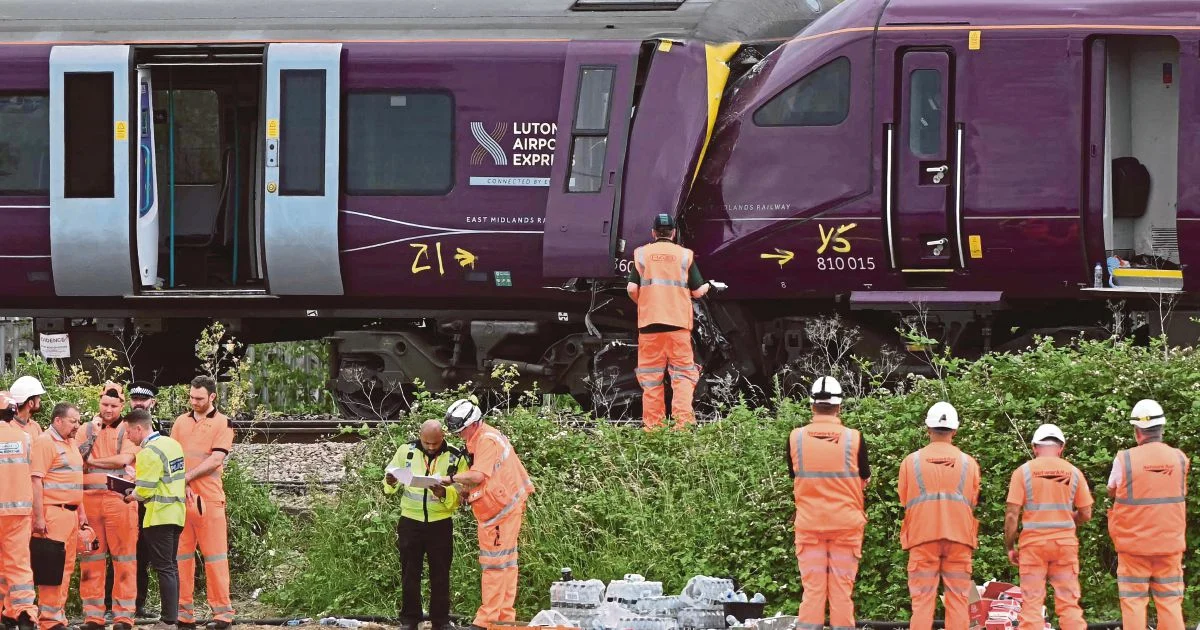
A fatal railway collision north of London has triggered a major investigation by UK accident authorities, with one train driver confirmed dead and dozens of passengers receiving hospital treatment. The incident, which occurred in the Bedford area, has resulted in 28 people being admitted for medical care, including nine who sustained injuries severe enough to warrant critical care assessment. Emergency responders were deployed immediately to manage the scale of casualties, and authorities have launched a comprehensive examination of what led to the collision.
The circumstances surrounding the crash have prompted railway safety officials to examine multiple factors that may have contributed to the accident. Investigators will be focusing on operational procedures, communication protocols between train operators, track conditions, and the technical functioning of both vehicles involved. The proximity of the incident to major urban infrastructure in London's commuter belt raises questions about whether safety systems performed as intended during the collision.
Railway collisions of this magnitude remain relatively uncommon in modern Britain, where multiple layers of automated safety technology are designed to prevent such incidents. However, when accidents do occur, they often reveal critical insights into the limitations of existing systems or procedural gaps. The investigation will examine whether these protective mechanisms functioned correctly and whether human error or mechanical failure played any role.
The Bedford area has historically been a significant railway hub in England's East Midlands region, with substantial passenger and freight traffic moving through the route daily. This high volume of rail activity means any disruption carries consequences for regional transport networks and commuters relying on reliable service. The collision's impact extends beyond the immediate casualties to affect broader transport connectivity across the region.
For passengers injured in such incidents, the psychological impact often extends far beyond physical injuries. Those who experience train collisions frequently report lasting anxiety about rail travel, even after physical recovery. The nine passengers requiring critical care will likely face extended hospital stays and rehabilitation, raising questions about long-term medical support and compensation frameworks for those affected.
The investigation will inevitably scrutinize whether current safety standards are adequate for British railway operations. Since the Hatfield rail disaster in 2000, which killed four people and prompted significant reforms, the industry has implemented enhanced track maintenance protocols and improved signalling systems. Nevertheless, this incident suggests that vulnerabilities may persist despite decades of post-Hatfield improvements and considerable investment in railway infrastructure.
Operational decisions and staff training procedures will also face detailed examination. Railway operators in the UK are bound by strict protocols for train spacing, speed limitations in certain sections, and communication requirements between control centres and on-train personnel. If any deviation from these procedures occurred, it could be central to understanding how the collision happened and what additional safeguards might be needed.
The incident occurs against a backdrop of ongoing debates about rail privatisation and funding in Britain. Critics often argue that fragmentation of the railway system across multiple private operators creates coordination challenges and prioritises profits over safety infrastructure investment. This accident may reignite discussion about whether the current organisational structure of British railways adequately supports safety culture and investment priorities.
For Malaysian and Southeast Asian observers, incidents like this offer important perspective on railway safety standards. As countries in this region expand their rail networks—including high-speed services in Thailand, Malaysia, and Indonesia—lessons from British investigative processes and safety frameworks provide valuable references. The UK's detailed accident investigation methodology, coordinated by the Rail Accident Investigation Branch, represents an international best-practice model that developing railway systems elsewhere may wish to emulate.
The immediate priorities for authorities include completing medical assessment of all injured passengers, supporting affected families and witnesses, and preserving evidence at the accident site for comprehensive forensic analysis. Investigators will likely conduct detailed interviews with both train operators, staff at the signalling control centres, and any witnesses to establish a precise chronology of events leading to the collision.
Railway operator responses will be carefully monitored, as will any immediate measures taken to prevent similar incidents pending the formal investigation conclusions. Passengers and the broader travelling public will scrutinise whether operators demonstrate transparency throughout the investigation process and implement safety improvements without waiting for official recommendations.
This collision serves as a stark reminder that despite technological advances, railway safety remains dependent on the integration of robust mechanical systems, clear procedures, effective communication, and human vigilance. The Bedford incident will likely influence rail safety discussions globally as investigators work to determine precisely what sequence of events led to this tragedy and what preventative measures might eliminate similar risks.

