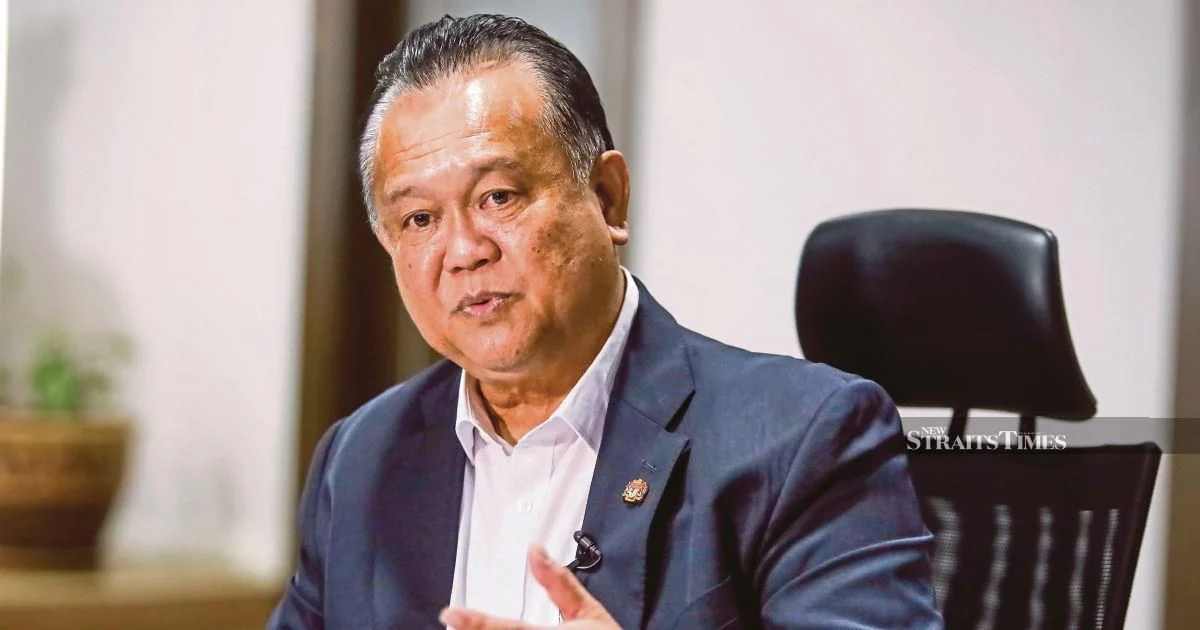
Malaysia's approach to transport infrastructure is undergoing a fundamental realignment, with Works Minister Datuk Seri Alexander Nanta Linggi signalling that the country must move beyond its traditional reliance on highway construction as the primary solution to mobility challenges. Speaking in Kuala Lumpur, the minister articulated a vision where the physical expansion of highway networks will decelerate significantly, a marked departure from decades of transport policy dominated by road-building initiatives.
The shift reflects growing recognition that transportation solutions cannot remain anchored to a single mode of mobility. Rather than abandoning highways entirely—a move that remains impractical given existing economic structures and settlement patterns—the government is repositioning them as components within a more sophisticated, interconnected ecosystem. This recalibration suggests that decision-makers now view roads as nodes within a broader network rather than as the network itself.
Central to this strategic evolution is the imperative for technological enhancement and operational intelligence in existing road infrastructure. The minister's emphasis on highways becoming "smarter" implies investment in traffic management systems, real-time data analytics, and adaptive technologies that optimize flow and reduce congestion without requiring constant physical expansion. Such improvements address mounting concerns about air quality, carbon emissions, and urban sprawl that characterise many Malaysian cities, particularly in the Klang Valley and George Town.
Equally significant is the integration imperative outlined by Datuk Seri Alexander Nanta Linggi. For highways to function effectively within a modernised transport system, they must serve as connective tissue linking diverse transit modes—mass rapid transit networks, bus rapid transit systems, rail corridors, and last-mile solutions. This interconnectedness ensures that a commuter journey might involve seamless transfers between private vehicle on an expressway, train travel on electrified rails, and bus connections to final destinations. Without such integration, highways become redundant islands disconnected from the broader urban metabolism.
The emphasis on connectivity to public transport systems carries particular weight in the Malaysian context, where car dependency has reached problematic levels in metropolitan areas while suburban and rural regions often lack adequate transit alternatives. By deliberately linking highways to public transportation nodes, the government can potentially shift modal preferences and reduce vehicle congestion at peak hours. This approach has proven effective in cities like Singapore and has influenced transport planning in Bangkok and Jakarta.
This policy recalibration also reflects fiscal realities facing the government. Highway construction demands enormous capital investment, often requiring toll mechanisms to secure financing, which has generated considerable public resistance. Land acquisition for new expressways becomes increasingly contentious in densely populated areas, while property displacement raises social costs that extend beyond monetary calculations. By moderating highway expansion, the government can redirect scarce resources towards public transport projects that yield broader social benefits and serve lower-income populations who cannot afford toll-based systems.
For Malaysia's economic competitiveness, the transition bears strategic implications. A transportation system that balances highways with robust public transit options attracts investors seeking locations with manageable congestion and skilled workforces willing to relocate. International corporations increasingly prioritize cities with liveable transport infrastructure when establishing regional headquarters or research facilities. The Klang Valley's growing reputation for congestion has already influenced some corporate location decisions, making this policy reorientation economically justified beyond merely environmental considerations.
Implementing this vision demands coordination across multiple government agencies and levels. Federal authorities controlling national highways must align with state governments managing local roads and municipal authorities operating public transport systems. The current institutional fragmentation, particularly in Selangor and Kuala Lumpur, has historically hindered integrated planning. Datuk Seri Alexander Nanta Linggi's ministry will need to establish mechanisms ensuring that new highways, where constructed, deliberately incorporate interchanges compatible with bus terminals and commuter rail stations rather than optimising solely for vehicle throughput.
The regional dimension deserves attention as well. Singapore's investments in rail corridors and Malaysia's pan-regional transport initiatives, such as the Iskandar Malaysia development and proposed Kuala Lumpur-Singapore High-Speed Rail connections, demonstrate that modern transport strategies transcend municipal boundaries. A national framework favouring integrated systems could strengthen Malaysia's position within regional trade and mobility networks while improving cross-border connectivity with Thailand and Singapore.
Nevertheless, implementing this strategic shift faces practical obstacles. Entrenched interests favour continued highway construction, established toll concessionaires have contractual rights to expand existing networks, and urban populations have built settlement patterns around car-dependent infrastructure. Changing travel behaviour requires not merely infrastructure investment but also coordinated demand management—congestion pricing, parking policies, and land-use reform—measures that invariably provoke political backlash.
Datuk Seri Alexander Nanta Linggi's articulation of this more balanced approach signals that senior government officials now recognise the limitations of automobile-centric transport models. Whether this rhetorical shift translates into substantive budget reallocation and institutional reform remains uncertain. The coming years will reveal whether Malaysia genuinely commits to rebalancing its transport investments or whether the rhetoric of integration masks continued highway prioritisation dressed in modern language.

