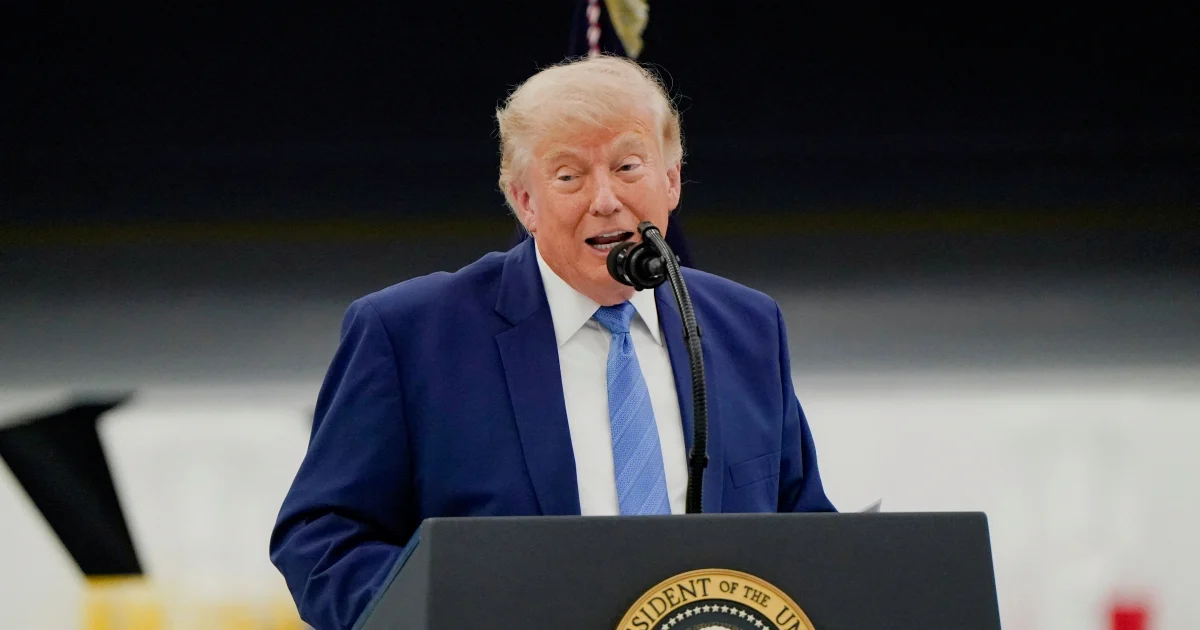
From Washington, US President Donald Trump has launched a pointed critique of Keir Starmer after the British Prime Minister disclosed his intention to step down, alleging that the Labour leader has inflicted significant damage on his own political standing through missteps across three critical policy areas. Trump's intervention came swiftly following Starmer's announcement, reflecting the unusual dynamics of contemporary international relations where senior American politicians frequently comment on the fortunes of foreign leaders, particularly those in traditionally close allies like Britain.
Trump specifically targeted Starmer's management of energy policy, an area that has proven contentious throughout the Labour government's tenure. The energy sector in Britain has faced considerable challenges, ranging from discussions over green transition strategies to concerns about the balance between renewable investment and energy security. Trump's criticism suggests that he views Starmer's approach to these matters as counterproductive, possibly alluding to the UK government's positions on climate commitments or energy independence initiatives that may not align with the Trump administration's own policy priorities.
The outgoing American President also faulted Starmer's immigration record, a domain where Labour had promised stricter enforcement while maintaining what critics saw as contradictory commitments. Immigration remains a lightning-rod issue across Western democracies, and Britain's approach—including discussions around asylum processing, integration policies, and border management—has generated intense domestic debate. Trump's emphasis on this portfolio reflects broader conservative concerns about national borders and immigration controls, themes that have defined his political movement and now feature prominently in his second term.
Beyond specific policy domains, Trump reserved particular criticism for Starmer's handling of the bilateral relationship between Washington and London. The special relationship between the United States and United Kingdom, historically a cornerstone of Western statecraft, carries significant weight in international affairs. For Malaysia and the broader Southeast Asian region, the health of the US-UK partnership matters considerably, as these nations continue to shape regional security architectures, trade arrangements, and diplomatic alignments. Trump's suggestion that Starmer had damaged transatlantic relations raises questions about continuity in British foreign policy and Britain's role in regional forums and alliances that Malaysian interests touch upon.
Starmer's announcement to resign marked a significant moment in British politics, concluding his relatively brief tenure at the apex of British government. The Labour Party had returned to power after a prolonged absence from executive office, carrying expectations for renewed direction. However, internal party dynamics, policy implementation challenges, and what some observers characterised as faltering political communications had accumulated difficulties. The resignation triggered immediate speculation about succession, with multiple contenders already positioning themselves within Labour's ranks.
Trump's timing in making his criticisms public underscores how interconnected modern geopolitics has become, particularly in the Anglophone world where messaging between leaders occurs at remarkable speed. The incoming British leadership—whoever ultimately assumes the premiership—will inherit not only the domestic challenges that contributed to Starmer's departure but also the need to navigate the Trump administration's particular priorities and sensitivities in bilateral engagement. For Malaysia, observing these transatlantic shifts provides insight into how strategic relationships among major Western powers may evolve, potentially affecting everything from trade negotiations to security cooperation frameworks in Asia-Pacific forums where all three nations maintain interests.
Energy policy represents an increasingly vital domain for Southeast Asian nations, as the region grapples with its own transitions toward cleaner energy sources while maintaining industrial competitiveness. British decisions about energy investment and climate commitments carry ripple effects through global supply chains and investment patterns that touch Malaysian industries. Trump's criticism of Starmer's energy record may foreshadow American policy directions that could influence regional energy partnerships and the commercial opportunities available to Malaysian firms across various sectors.
Immigration and labour mobility constitute another arena where UK policy decisions indirectly affect Malaysian interests. British immigration frameworks influence where Malaysian professionals seek career advancement and shape patterns of knowledge transfer and investment capital flows between Britain and Malaysia. Changes in British immigration policy, even when driven by domestic political considerations, can redirect the migration patterns of skilled Malaysian workers who might otherwise choose the UK as a destination.
The transatlantic relationship holds particular significance for global stability and regional security arrangements. NATO, intelligence-sharing agreements, and coordinated responses to geopolitical challenges all depend on robust US-UK cooperation. Strain in this relationship, whether actual or perceived, creates uncertainty in regional security architectures where American and British involvement shapes the security environment. Malaysia, as an ASEAN member with interests in maintaining stable great-power relationships, watches such developments closely, understanding that disruption in US-UK coordination can create vacuums or instability elsewhere.
The coming weeks will reveal whether Trump's criticisms prove merely transactional—designed to shape public perception—or signal deeper frustrations with British policy direction. Regardless, the episode illustrates how closely contemporary leaders monitor one another's political fortunes and how rapidly they intervene in foreign political processes through public commentary, a practice that would have been considered unusually intrusive in earlier diplomatic eras.

