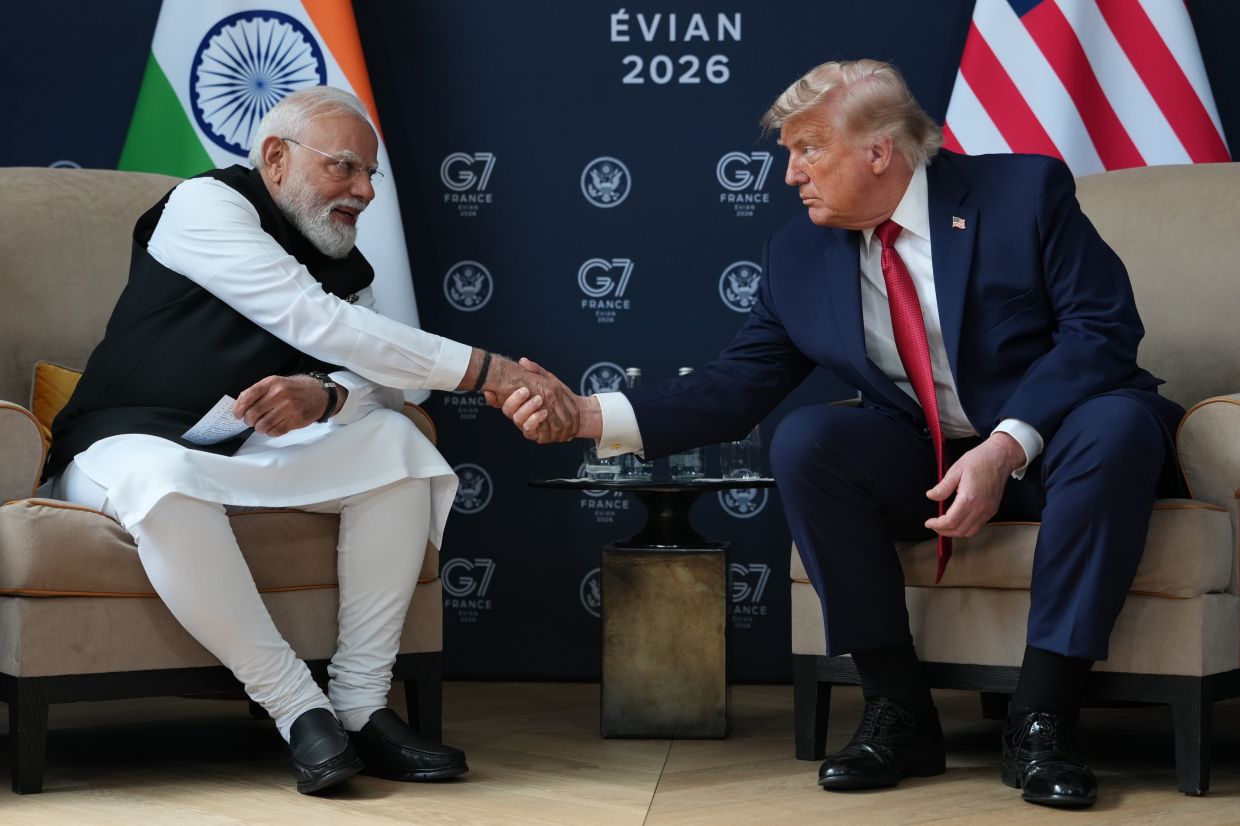
President Trump declined to express regret or offer condolences for the deaths of three Indian sailors following US military strikes on a commercial vessel last week, according to remarks made during his first bilateral meeting with Indian Prime Minister Narendra Modi in over a year. When questioned by journalists after the meeting, Trump characterised the incident involving the Palau-flagged MT Settebello as an unfortunate but inevitable consequence of maritime operations, stating that such tragedies have "been happening throughout time" while insisting that Washington and New Delhi "work together" on the matter.
The fatal strike on the commercial vessel, which killed three Indian nationals, represents a significant rupture in the carefully cultivated strategic relationship between the United States and India. US Central Command had justified the attack and two additional assaults on other merchant vessels carrying Indian crew members as necessary responses to what it deemed violations of an American blockade on Iranian ports operating in the Strait of Hormuz. The escalation underscores rising tensions in one of the world's most economically critical shipping corridors, where competing geopolitical interests intersect with vital international commerce.
Indian External Affairs Minister S. Jaishankar conveyed a "strong protest" to his American counterparts regarding the killings during direct communications with the State Department. However, Washington's official readout of the conversation revealed a starkly different tone, with American officials emphasising their determination to enforce the blockade and warning against what they characterised as illicit transport of Iranian petroleum products. This divergence in messaging exposed deep fissures beneath the veneer of partnership, with the United States seemingly prioritising its containment strategy against Iran over acknowledgment of Indian casualties.
The diplomatic friction quickly spilled into India's domestic political arena, triggering a wave of public anger that manifested in unexpected ways across the country. Videos circulated widely on social media showing auto rickshaw drivers in Delhi removing and tearing down promotional banners featuring Trump's image, which had been part of the US embassy's campaign to celebrate American Independence Day with messages wishing "Happy Birthday America." The symbolic rejection of Trump imagery demonstrated the depth of popular sentiment against what many Indians perceived as American indifference to their countrymen's deaths.
Opposition politicians seized upon the incident to challenge Prime Minister Modi's government, accusing it of excessive deference to American interests. Rahul Gandhi, a prominent opposition leader, took to social media to assail the prime minister's muted response, declaring that "a free country would never tolerate such language" and characterising the government as compromised and obedient. His criticism reflected broader concerns within Indian political circles that the pursuit of strategic alignment with Washington was coming at too high a cost to national sovereignty and the protection of Indian citizens.
Despite the palpable tension surrounding the maritime incidents, Trump and Modi emphasised the strength of their personal relationship and the broader US-India partnership. Trump remarked that while the two nations lack a formal mutual defence treaty, they would assist each other in times of crisis, and proclaimed that relations between himself and Modi had never been closer. He characterised the Indian prime minister as both a "tough trader" and a "great guy," signalling his intention to maintain the relationship despite the immediate friction over the sailor deaths.
The two leaders have been pursuing an ambitious bilateral trade agreement that would position India among the first nations to negotiate comprehensive commercial terms with the Trump administration following its return to power. Their previous meeting in February 2025 in Washington marked the beginning of these negotiations, reflecting Washington's strategic interest in deepening economic ties with New Delhi as part of its broader Indo-Pacific strategy. Trade Representative discussions continue over an interim agreement, with both sides working toward resolving outstanding commercial differences.
Since the bilateral meeting, Secretary of State Marco Rubio has reinforced the strategic messaging by visiting India and characterising the nation as among America's "most important strategic partners." His trip appeared designed to contain diplomatic damage and reaffirm Washington's commitment to the relationship despite the tensions surrounding the maritime incidents. The contrast between Trump's casual dismissal of the sailor deaths and Rubio's reassuring statements about partnership underscores the contradiction between rhetorical commitment to Indian partnership and the operational priorities driving American military and naval policy in critical shipping lanes.
For Malaysia and the broader Southeast Asian region, the tensions between Washington and New Delhi carry significant implications for regional stability and maritime commerce. The incidents in the Strait of Hormuz highlight how great power competition over Iran policy can directly endanger the interests of developing nations whose merchant fleets depend on these vital waterways. As Malaysia maintains its own delicate balancing act between Chinese and American interests, the case of Indian sailors caught in US blockade operations serves as a cautionary reminder of how smaller nations and their citizens can become collateral damage in superpower strategic competition.
The unresolved friction between the US and India also suggests potential limits to the depth of strategic alignment that Washington can achieve in the region despite its efforts to cultivate partnerships against China. If American military operations in pursuit of Iran policy can result in the deaths of strategic partner India's nationals without meaningful American acknowledgment or apology, other nations may question the reliability and reciprocal nature of such partnerships. This calculation could influence how Southeast Asian governments, including Malaysia, navigate their own relationships with Washington and assess the tangible benefits of closer alignment with American strategic objectives in the Indo-Pacific.

