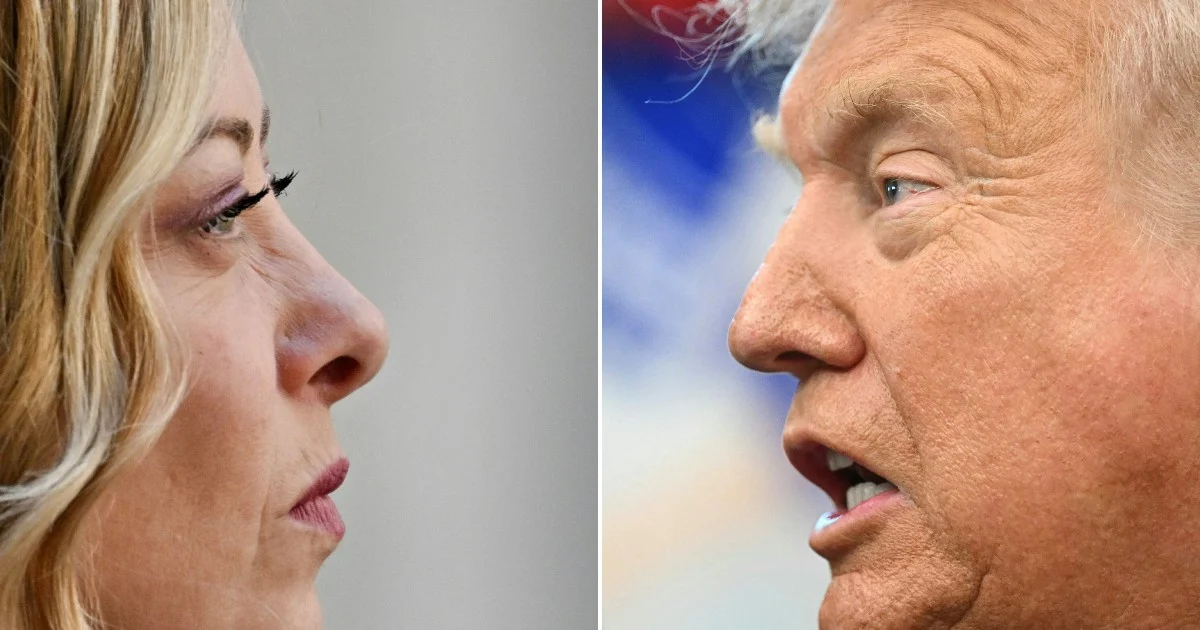
The relationship between Washington and Rome has grown visibly strained as President Donald Trump levelled fresh accusations against Italian Prime Minister Giorgia Meloni on Saturday, claiming she had persistently sought photo opportunities with him. Trump's public airing of the complaint marked a significant escalation in what had already become an unusually tense exchange between two leaders of major Western democracies, suggesting deeper rifts extending beyond mere optics to substantive policy disagreements.
The US president connected his allegations about Meloni's photograph-seeking behaviour to unresolved disputes between the two nations on weightier matters including Iran strategy and NATO military commitments. By linking these grievances together, Trump appeared to signal that the photograph controversy was merely symptomatic of broader diplomatic friction between Washington and the Italian government. This framing suggests that disagreements over how the Western alliance should approach Iran's regional activities and the appropriate level of European defence spending have festered without resolution at recent high-level encounters.
The public nature of Trump's complaints stands out as particularly unusual in modern diplomacy, where leaders typically resolve such tensions through private channels before escalating to public statements. The decision to air this dispute openly indicates either a breakdown in behind-the-scenes diplomatic communication or a deliberate strategy to apply pressure on the Meloni government through media attention. Such public rebukes can complicate future negotiations and create domestic political challenges for both leaders, particularly as they navigate the complex requirements of maintaining a cohesive Western alliance.
Italy's position within the G7 and NATO alliance places Rome in a delicate position when tensions with the United States arise. As a founding NATO member and a crucial southern flank contributor to European security, Italy cannot afford prolonged friction with Washington without consequence. The Italian government under Meloni has generally maintained strong alignment with Western positions on Ukraine and Russia, yet Trump's complaints suggest friction exists on other fronts where Italian and American interests may diverge or where Rome's commitment levels have not met Washington's expectations.
The photograph dispute, while seemingly trivial on its surface, carries symbolic weight in diplomatic circles. Leaders seek photos together to demonstrate partnership and alignment before domestic and international audiences. Trump's accusation that Meloni repeatedly pursued such images might imply that Italy's government felt the need to shore up public perceptions of the bilateral relationship, suggesting underlying concerns about the strength of Rome's standing with Washington. Alternatively, Trump's complaint could reflect his broader frustration with what he perceives as other nations taking insufficient responsibility within shared security arrangements.
The involvement of Iran policy in Trump's dispute with Meloni points to genuine substantive disagreements within the Western alliance. Europe's approach to Iran has historically differed from Washington's more confrontational stance, particularly following Trump's first administration's withdrawal from the Joint Comprehensive Plan of Action. Italy, as a trading nation with Mediterranean and Middle Eastern interests, may have different calculations regarding engagement with Tehran than the Trump administration favours. These divergent strategic assessments can create friction that manifests in disputes about NATO burden-sharing and alliance cohesion.
NATO spending commitments represent another persistent source of tension between Washington and various European allies. Trump has repeatedly criticised European NATO members for not spending sufficiently on defence, and Italy—while gradually increasing its defence budget—may still fall short of Washington's expectations. The president's linkage of these concerns to his personal grievances with Meloni suggests that frustration over perceived free-riding within the alliance has accumulated beyond his specific complaints about photograph-seeking behaviour, pointing toward a larger reassessment of the US commitment to European security arrangements.
For regional observers in Southeast Asia, this transatlantic friction carries implications for global security architecture. The visible strain in Western alliance cohesion, even among longstanding partners like the United States and Italy, raises questions about the reliability and durability of the international order that underpins regional stability. Southeast Asian nations that depend on Western security commitments and the rules-based international system watch closely as tensions emerge between major powers, calculating how such rifts might affect their own strategic positioning and security arrangements.
The timing of this escalation matters significantly. If the dispute erupted at or shortly after a G7 gathering, it suggests that in-person encounters between Trump and Meloni failed to resolve underlying tensions, or alternatively that no genuine reconciliation attempt was made before public statements. This pattern could signal a broader shift in how the Trump administration approaches alliance relationships, prioritising public messaging and pressure tactics over quiet diplomatic resolution. Such an approach carries risks for alliance cohesion and could encourage other nations to recalibrate their relationships with Washington.
Looking ahead, the resolution of this dispute will likely depend on whether Meloni's government can address Washington's substantive concerns regarding NATO contributions and Iran policy coordination, rather than simply managing the photograph optics. Italy's ability to navigate this tension while maintaining its important role in European security and Mediterranean affairs will test Rome's diplomatic skill. The incident also serves as a reminder that even deeply rooted alliances require consistent attention and that public grievances, once aired, become more difficult to resolve quietly.

