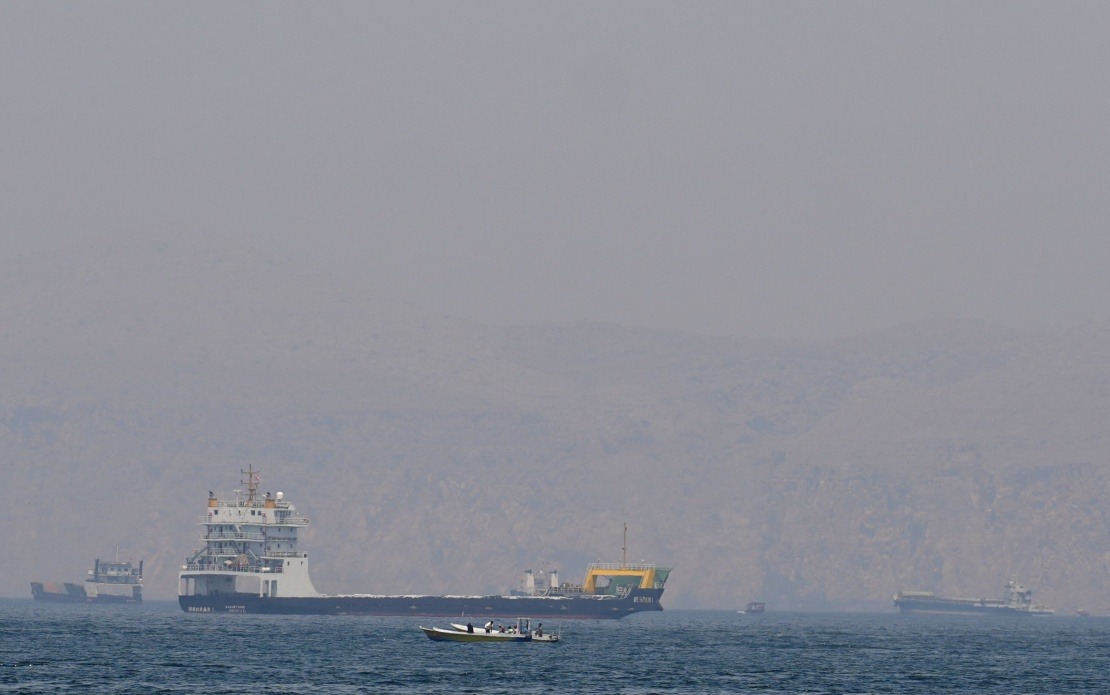
US President Donald Trump has staked out a controversial position on one of the world's most critical shipping lanes, declaring via social media that no tolls will be permitted in the Strait of Hormuz during an ongoing 60-day ceasefire period. However, his statement carried an implicit threat that Washington itself may introduce fees after that window closes, fundamentally altering the framework governing passage through this strategic chokepoint that handles roughly one-third of global seaborne oil trade.
Trump's pronouncement, made on his Truth Social platform, reframes the debate around maritime access through the Persian Gulf's narrowest corridor. His formulation—that tolls would be permitted only if "imposed by and for the United States of America"—signals a unilateral approach to managing international waters and sets the stage for potential conflict between American interests and the established principle of free navigation that has underpinned global commerce for decades.
The timing of Trump's statement coincides with heightened tensions following an announcement by Iran's Khatam al-Anbiya Central Headquarters that it would close the Strait of Hormuz in response to alleged breaches by the United States and what Tehran characterizes as Israeli violations of a ceasefire agreement in Lebanon. This escalatory rhetoric reflects the precarious state of regional stability, with multiple actors signalling their willingness to weaponize the vital waterway in pursuit of political objectives.
For Malaysian policymakers and business leaders with interests in Middle Eastern trade and energy imports, the implications are substantial. Malaysia relies significantly on oil and liquefied natural gas shipments routed through the Strait of Hormuz, and any disruption—whether through Iranian closure, American toll collection, or military confrontation—would directly impact energy costs and supply security. The uncertainty introduced by Trump's conditional offer creates planning challenges for regional economies already navigating post-pandemic supply chain instability.
The Trump administration's justification for potential future tolls frames them as compensation for what it describes as "services rendered as the guardian angel" to West Asian nations. This framing attempts to repackage unilateral American military presence in the region as a service meriting financial return, a characterization that may provoke resistance from nations already uncomfortable with US hegemonic assertions. The proposal suggests that Washington views its naval deployments not primarily as geopolitical positioning but as a tradeable commodity.
US Central Command moved quickly to counter Iranian assertions about closing the waterway, with spokesperson Captain Tim Hawkins flatly stating that "Iran does not control the Strait of Hormuz" and asserting that American forces remain "present and vigilant" to ensure compliance with ceasefire terms. CENTCOM's confidence in maritime traffic remaining "intact" attempts to project stability, yet the very need for such reassurance underscores underlying fragility. The command's emphasis on US vigilance suggests Washington views maintaining shipping security as contingent on American military dominance rather than international law or cooperative arrangements.
The 60-day window Trump referenced appears designed as a negotiating period during which a permanent settlement might be reached. His warning that tolls become possible should "a final deal not be completed" essentially creates a financial incentive for other parties to accept American terms, transforming what might be presented as a security arrangement into a coercive bargaining mechanism. This linkage between access to vital sea lanes and diplomatic concessions represents a significant departure from post-World War II norms.
For Southeast Asian nations operating as neutral parties in great-power competition, Trump's approach presents a dilemma. Malaysia and regional peers benefit from the existing international law framework governing freedom of navigation, yet increasingly find themselves dependent on American security guarantees for that very freedom. The prospect of unilateral toll collection challenges the fiction that these waters remain open to all on equal terms, potentially forcing smaller nations to choose between paying American fees or risk having trade routes disrupted.
The broader context of this dispute involves competing visions for regional order. Iran has long sought to challenge what it views as American monopolization of security arrangements in the Persian Gulf, while the Trump administration appears determined to monetize and formalize American predominance rather than move toward regional balancing or multilateral frameworks. These irreconcilable visions suggest the 60-day ceasefire may prove merely a prelude to renewed confrontation rather than a genuine pathway toward lasting agreement.
Shipping companies and energy traders are likely reassessing their exposure to Strait of Hormuz routes given the compounding uncertainties. Insurance premiums for vessels transiting the waterway may rise, ultimately increasing costs for Malaysian consumers purchasing imported energy. The mere prospect of American tolls or Iranian closure creates a risk premium that markets will price into transactions, affecting inflation and competitiveness across the broader regional economy.
The precedent being set here extends beyond the Strait of Hormuz itself. Should Trump successfully establish American toll collection through strategic chokepoints, it would establish a model for controlling access to other vital corridors—the Malacca Strait, the Suez Canal zone, or South China Sea passages—creating a framework where control of geography becomes synonymous with the right to extract rent from commerce. For Malaysia, which sits astride the Strait of Malacca through which even more traffic flows than through Hormuz, this precedent carries particular significance.
Regional governments watching this situation unfold face uncomfortable questions about how to preserve commercial stability when great powers view strategic geography as negotiable assets. The 60-day period will test whether diplomatic solutions can override the logic of coercion, but Trump's framing suggests Washington sees little reason to accept anything less than explicit recognition of American primacy and its monetary equivalent. What happens when that period expires will reverberate throughout Asian supply chains and energy markets for years to come.

