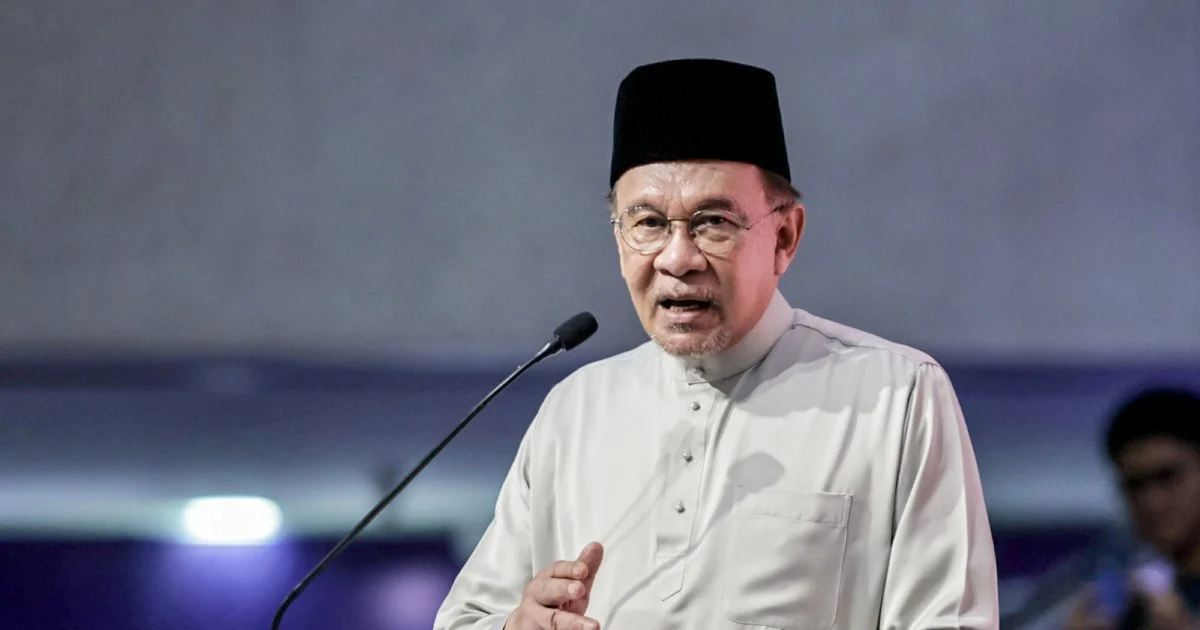
The Tunku Mahkota of Johor, Tunku Ismail Sultan Ibrahim, held a meeting with Prime Minister Datuk Seri Anwar Ibrahim in Kuala Lumpur, with both parties characterising the encounter as cordial and marked by harmony. The audience took place today and represented a formal engagement between the federal leadership and the royal household of Johor, one of Malaysia's most prominent sultanates.
Such high-level meetings between the prime minister and members of the royal family carry significant constitutional and political weight in Malaysia's system of governance. The conference underscores the collaborative relationship between the executive branch and the institution of monarchy, which remain fundamental pillars of Malaysia's federal structure. Regular consultations and audiences between the premier and royal rulers are customary practice, reflecting the need for alignment on matters of national importance and institutional coordination.
The Tunku Mahkota of Johor occupies a position of considerable influence within both the Johor sultanate and the broader Malaysian political landscape. As the heir apparent to the Johor throne, Tunku Ismail Sultan Ibrahim has increasingly assumed public responsibilities and has become a recognisable figure in regional business and developmental initiatives. His meetings with national leadership demonstrate the significance accorded to the Johor royal house in discussions affecting the nation's direction.
Johor, as Malaysia's second-largest state by area and a major economic contributor, commands strategic importance in national policymaking. The state's ports, manufacturing sector, and proximity to Singapore make it vital to Malaysia's economic competitiveness and regional standing. Engagement between the federal government and Johor's leadership therefore carries implications extending beyond ceremonial protocol, potentially touching upon infrastructure development, economic cooperation, and governance matters affecting the state's residents and Malaysia's broader development agenda.
The characterisation of the meeting as harmonious carries particular relevance in the context of Malaysia's contemporary political environment, which has witnessed shifting coalitions and occasional tensions between federal and state governments. Positive relations between the prime minister and rulers of major states signal stability in the federation's functioning and suggest coordination on strategic priorities. Such visible cordiality also reassures stakeholders about the health of institutional relationships that underpin Malaysia's constitutional monarchy system.
The audience reflects established protocols governing interactions between the executive and the institution of royalty in Malaysia. The prime minister, as head of government, regularly seeks counsel from and maintains formal relations with the Yang di-Pertuan Agong and the various sultans of the Malaysian states. These consultations, whilst often conducted privately, occasionally become public knowledge and carry symbolic importance in demonstrating respect for the constitutional role of the monarchy.
For Malaysian observers, such meetings represent continuity in the functioning of established governance structures. The emphasis on cordiality suggests that any outstanding differences, should they exist, have been addressed in a manner befitting both parties' positions. This becomes particularly noteworthy given that effective collaboration between federal and state governments remains essential for implementing national programmes, managing fiscal transfers, and coordinating development projects that span jurisdictional boundaries.
The Tunku Mahkota's role has expanded considerably in recent years beyond traditional ceremonial duties associated with succession to the Johor throne. He has positioned himself as an advocate for youth engagement, regional development, and has maintained a visible public presence through social media and direct interaction with constituents. His meetings with national leadership thus represent not merely protocol but substantive engagement between government and an increasingly influential member of the royal establishment.
Looking forward, the significance of this audience extends to the broader relationship between federal authorities and state rulers as Malaysia navigates economic challenges, regional geopolitical shifts, and domestic political adjustments. Strong institutional relationships between the prime minister's office and the sultanates reinforce the federation's structural integrity. For Malaysian stakeholders and regional observers, such positive engagements signal a functioning constitutional framework capable of accommodating diverse interests whilst maintaining institutional harmony.
The meeting adds to recent instances of high-level diplomatic activity involving Malaysia's royal households and the federal government. These interactions, collectively viewed, reflect the ongoing relevance of the institution of monarchy in Malaysia's governance ecosystem and underscore the necessity of maintaining strong working relationships between constitutional bodies. As Malaysia continues to address complex challenges spanning economic development, social cohesion, and international relations, such collaboration between the executive branch and the sultanates becomes increasingly valuable for ensuring coordinated and effective national responses.

