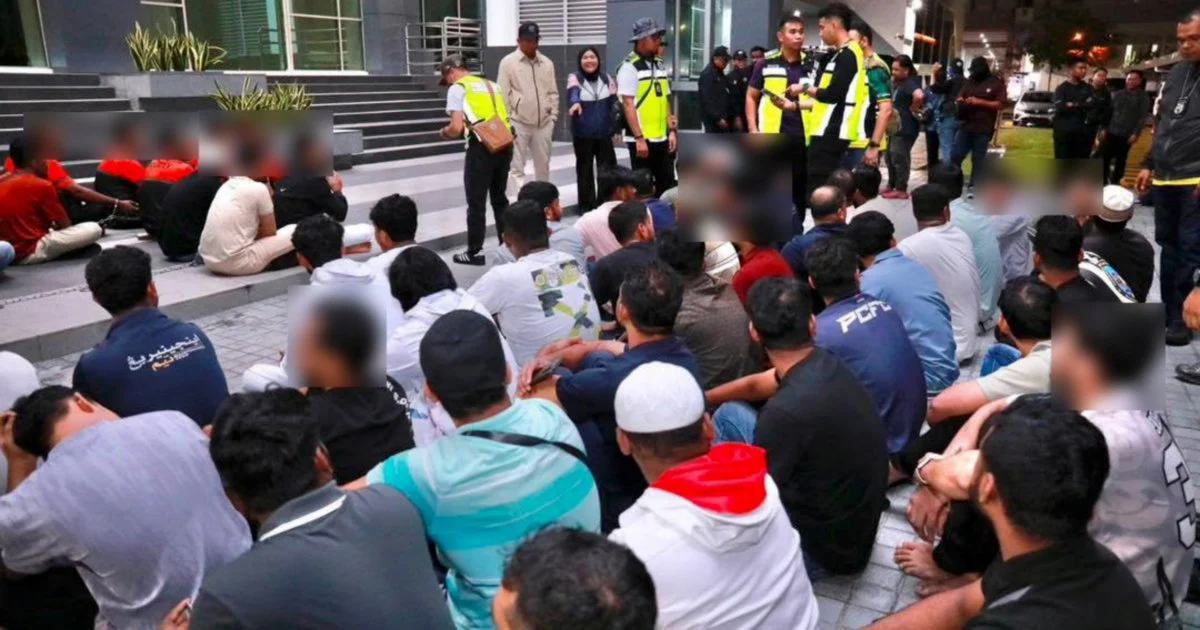
An enforcement operation targeting an unnamed frozen food processing factory in Pulau Indah, Klang, has exposed systematic identity fraud among migrant workers, with immigration officials detaining 20 individuals on suspicion of using fraudulent or borrowed credentials to secure employment. The discovery reveals a troubling pattern of document abuse that sidesteps Malaysia's foreign worker registration system, raising concerns about the vulnerability of manufacturing facilities along the industrial corridor to labour law violations.
Among those apprehended was a 20-year-old Indonesian national who claimed ignorance of Malaysian law when questioned about his possession and use of his cousin's MyKad—a serious breach that authorities treat as a compound offence under immigration and identity fraud statutes. His assertion of unfamiliarity with the regulations, however, has limited bearing on his culpability; both knowledge of legality and intent to defraud are secondary to the actus reus, or guilty act, of using another person's identity document for economic gain. Immigration enforcement officials view such claims with scepticism, particularly when the scheme requires deliberate coordination and sustained deception across multiple pay cycles and workplace systems.
The use of relatives' legitimate identity cards represents a lower-cost alternative to producing entirely fabricated documents, yet it creates acute vulnerabilities in Malaysia's employment verification infrastructure. By leveraging family connections—often exploiting networks established through smuggling operations or informal labour brokers—foreign workers can bypass biometric registration and tax withholding systems that might otherwise flag irregularities. In this case, the frozen food sector, which relies heavily on migrant labour for processing and packaging roles, appears to have offered minimal workplace vetting, allowing multiple individuals to operate under false credentials simultaneously.
The operation, conducted during evening hours when factory output typically peaks, suggests authorities had actionable intelligence regarding the facility's hiring practices. Immigration raids of this type have intensified across Selangor's industrial zones over the past eighteen months, partly in response to growing awareness that undocumented or fraudulently documented workers undercut wage floors and workplace safety standards for both Malaysian and legitimate migrant employees. The timing of the Pulau Indah action, coupled with its focus on a food processing operation, aligns with heightened scrutiny of supply chains critical to Malaysia's agro-industrial export sector.
Forged identity documents—as opposed to borrowed genuine ones—present a distinct investigative challenge, as they often originate from sophisticated printing operations based in source countries or transit hubs. Officials involved in the raid will likely scrutinise whether any of the detained individuals possessed entirely fabricated MyKads or relied exclusively on borrowed documents. Such distinctions matter considerably under the penal code; manufacturing counterfeit identity documents carries sentencing exposure roughly double that of mere possession or use of a genuine card belonging to another person.
The factory's complicity in the scheme remains an open question. Malaysian employers are statutorily obliged to verify the authenticity of identity documents and maintain accurate records; failure to do so constitutes negligent hiring and can result in substantial fines or temporary suspension of foreign worker quotas. Yet enforcement against employers, while theoretically stringent, has historically lagged prosecution of workers themselves. Investigators will examine whether management conducted even basic document verification, whether payroll systems recorded multiple workers under the same identity, and whether brokers or labour contractors placed individuals at the facility with prior knowledge of their documentation status.
The broader context for such raids involves Malaysia's ongoing struggle to regulate a migrant workforce that contributes substantially to manufacturing output but frequently operates in a grey zone between legal and illegal status. Roughly two million documented foreign workers reside in Malaysia, concentrated in construction, agriculture, domestic service, and light manufacturing; an estimated one to three million undocumented workers exist alongside them, creating a parallel labour market characterised by wage suppression and safety compromises. Identity document fraud—particularly the reuse of legitimate MyKads—represents a cost-effective entry point for employers seeking to expand capacity while minimising regulatory friction.
For foreign workers themselves, the incentive structure is straightforward: documented employment often requires language proficiency for registration interviews, literacy to complete forms, and fees that consume weeks of wages. Using a relative's MyKad eliminates these barriers, though it exposes the worker to deportation, blacklisting, and potential prosecution as an accessory to identity fraud. The Indonesian worker's claimed ignorance of Malaysian law likely reflects the reality that labour brokers operating in source countries furnish minimal guidance on legal obligations; migrants are frequently coached only on how to appear credible during document presentation, not on the substantive legality of their status.
The frozen food processing sector's involvement carries implications for Malaysian food safety and export certification. If significant portions of a factory's workforce operate under false identities, traceability systems, worker health records, and safety training documentation become compromised. Buyers—both domestic retailers and overseas importers—may face reputational risk if supply chain audits later reveal systemic hiring violations at their suppliers. Some multinational retailers have begun implementing third-party audits of Malaysian food manufacturers precisely to detect such practices before they escalate into public scandals.
Moving forward, the outcome of charges against the 20 detainees will influence how aggressively employers and labour contractors test immigration enforcement resolve. Prosecutions that result in substantial fines and temporary loss of hiring privileges would signal heightened consequences; conversely, lenient sentencing or suspended sentences for first-time offenders would likely perpetuate the practice. The Indonesian worker's claim of ignorance may resonate with some sympathetic observers, yet it underscores the reality that those profiting most from document fraud—brokers, factory managers, and international supply chains—remain insulated from direct legal jeopardy while migrants absorb the enforcement risks.

