Southern Thailand experienced a day of heightened volatility on Friday, June 19, when two separate bombing incidents within hours targeted police units across the troubled border provinces of Yala and Pattani. The attacks, which claimed victims among the security forces tasked with maintaining order in one of Southeast Asia's most volatile regions, underscored the persistent security challenges that have long plagued these strategically sensitive areas near Malaysia's border.
The first strike occurred at 8:10 in the morning along the Ban Pulo Saniyae–Ban Sakai road in Thanto district, Yala province, where a coordinated assault by unidentified attackers detonated explosives targeting border patrol police from a teacher protection unit. The blast, which struck officers in the rural Moo 4 area of Ban Rae sub-district, resulted in six casualties requiring immediate medical intervention. The incident suggested a level of tactical coordination and foreknowledge, as the attackers appeared to have identified the precise location and timing of the patrol's movement through the district.
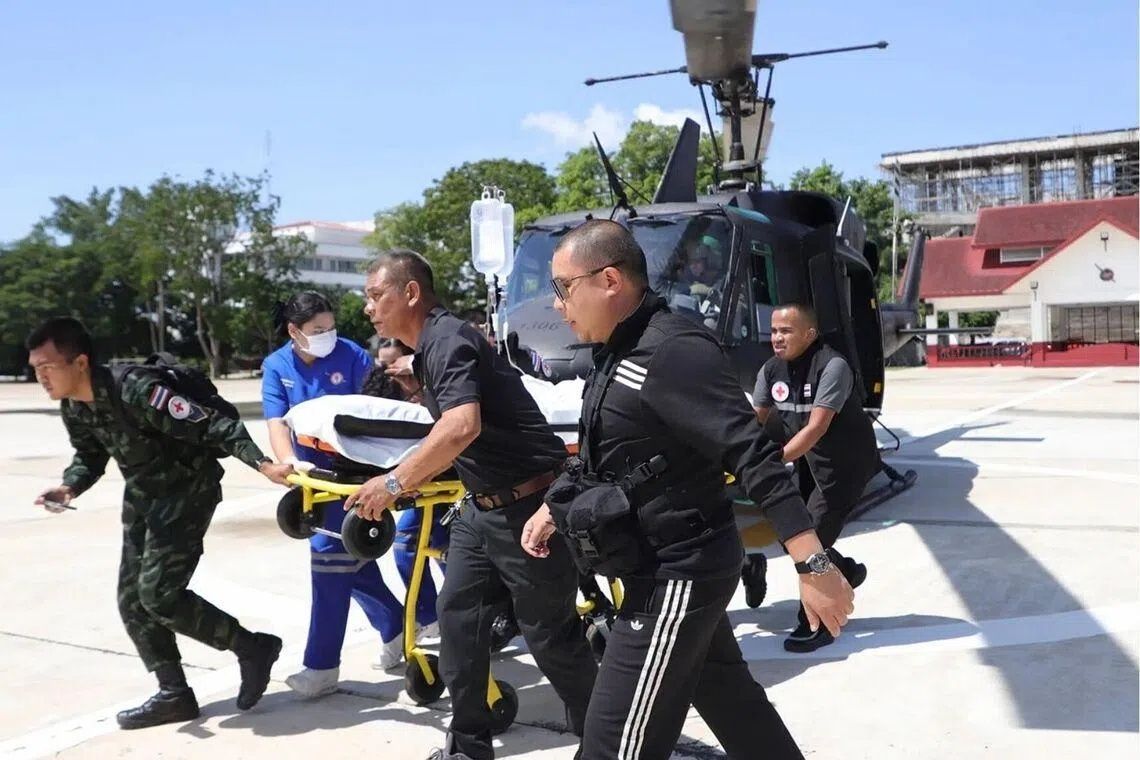
Among the wounded, two officers sustained injuries of particular severity that demanded urgent specialist intervention. Corporal Kittisak Saksang suffered extensive shrapnel wounds to his face and head, while Corporal Poraphat Wongruaydee sustained thoracic trauma causing chest tightness and partial immobility, though his mental faculties remained intact throughout the immediate aftermath. The remaining four officers sustained injuries of lesser gravity but nonetheless serious enough to warrant hospitalisation. Initial treatment took place at Thanto Hospital, where medical staff stabilised the patients before the two most critically injured were evacuated by helicopter to the more specialised trauma facilities at Yala Hospital.
The condition of Wongruaydee deteriorated in hospital assessment, with radiological examination revealing the accumulation of blood within his pleural cavity—the space surrounding the lungs. Yala Regional Hospital subsequently issued an urgent call for blood donations of all types to support the anticipated emergency surgical intervention required to drain the accumulated fluid and repair pulmonary damage. The call represented a telling indicator of the seriousness of his condition and the resource intensity of treating blast injuries in a region where specialist trauma capacity remains limited relative to demand.
Scarcely more than three hours after the Yala attack, a second bombing struck the Pattani Police Special Operations unit in Mayo district, further south. This attack targeted officers in Ban Khuan Yi, Pado sub-district, as they returned from establishing a security checkpoint in the wider area. The apparent timing sequence—two coordinated attacks within a single morning—suggested possible planning by elements seeking to overwhelm security resources or send a coordinated message to Thai authorities and the public alike.
The Pattani incident, whilst resulting in fewer officers wounded, nonetheless added five more casualties to the day's toll. Sergeants Anuchit, Bunyawat, Wisitphon, Aphisit and Sumit all sustained blast-related injuries manifesting as chest tightness and respiratory distress—injuries consistent with exposure to blast overpressure or fragmentation trauma. All five were transported to Mayo Hospital for treatment, joining the earlier casualties in occupying hospital beds and consuming medical resources across the southern provinces.
The coordinated nature of these attacks, occurring in quick succession across two separate provinces and targeting specific police units, carried wider implications for security assessments in the region. For Malaysian observers, the incidents reinforced long-standing concerns about the spillover potential of southern Thailand's internal security challenges. The restive southern border provinces, home to a Muslim-majority population and site of a decades-long insurgency by various separatist and militant groups, have historically served as a source of transnational security concerns affecting neighbouring Malaysian states including Kedah, Perlis and Kelantan.
The authorities' response involved immediate establishment of security cordons around both incident sites to facilitate forensic investigation and evidence collection. Explosive ordnance disposal teams and forensic specialists from both provincial authorities and national-level agencies descended on the scenes to document the attack methodology, gather fragments and materials that might reveal bomb construction techniques or origin, and attempt to identify perpetrators. The intensified investigative effort and promised expedited tracking of those responsible reflected the seriousness with which Thai authorities regarded these incidents.
The attacks occurred within the broader context of Thailand's complex internal security landscape, where the southern provinces have experienced recurring violence stemming from multiple sources including separatist insurgency, organised crime, and sporadic communal tensions. The targeting of police protection units—whose ostensible purpose includes safeguarding teachers and civilian population—underscored how security operations in the region touch civilian welfare even as they draw militant response. For regional security analysts, the incidents reinforced the notion that despite periodic lulls or negotiations, the underlying drivers of violence in Thailand's south—grievance, territorial assertion, and political contestation—remain substantially unresolved.

