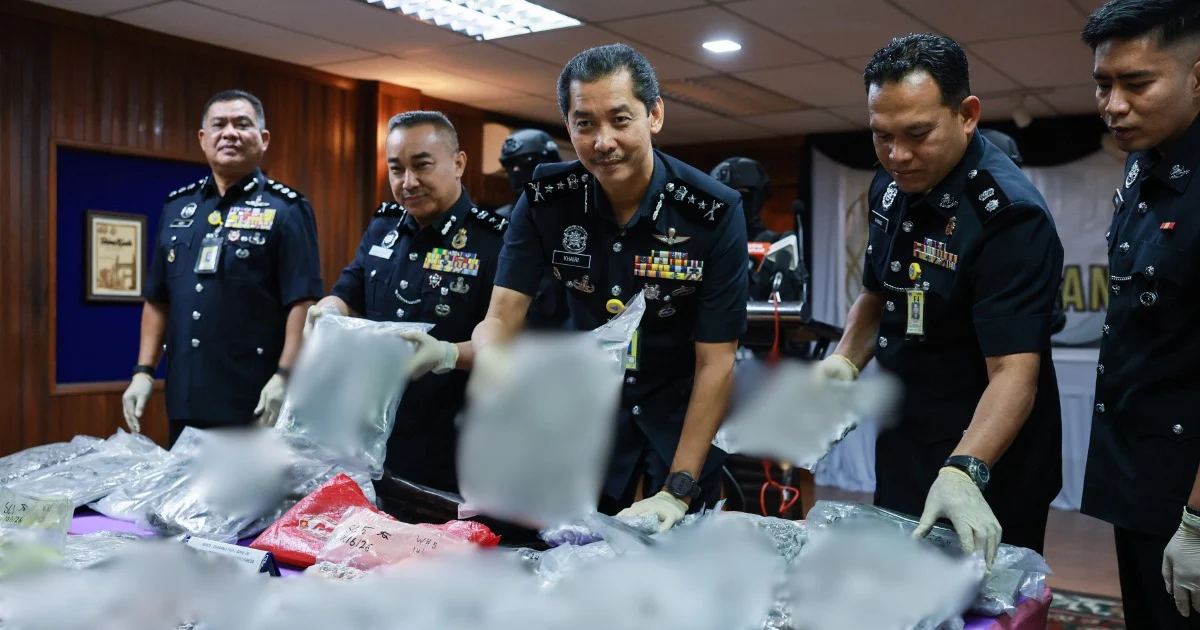
Police in Kuala Terengganu have arrested two brothers on suspicion of operating a substantial drug warehouse from their residential premises in Kampung Duyong Besar, with law enforcement officials recovering a consignment worth RM1.76 million during the operation. The apprehension marks another significant breakthrough in the state's ongoing campaign against large-scale narcotics trafficking, highlighting the increasingly sophisticated methods employed by drug syndicates to conceal their operations within residential neighbourhoods.
The discovery underscores a troubling trend across Malaysia where organised criminals have turned to family residences as concealment points for their illicit goods. Rather than maintaining centralised distribution hubs that attract regulatory scrutiny, traffickers are diversifying their storage strategies by leveraging private homes, often in relatively remote or semi-rural areas where neighbourhood surveillance may be comparatively lax. This approach complicates enforcement efforts, as investigators must balance community intelligence gathering with the need to maintain operational confidentiality during sensitive investigations.
For Malaysian law enforcement agencies, such seizures represent both victories and reminders of the scale of the challenge ahead. A RM1.76 million haul translates to substantial drug quantities that would have reached streets across the East Coast region, potentially affecting thousands of users. The value underscores the profitability driving these operations—margins sufficiently attractive to incentivise criminal networks to take considerable risks and invest resources in maintaining supply chains.
Terengganu's position along established trafficking corridors makes it a strategic location for narcotics operations. The state's coastal geography, maritime borders, and transportation infrastructure create multiple ingress points for foreign and domestic suppliers. Additionally, the state's position relative to major urban centres like Kuala Lumpur and Penang places it within logistical reach of significant consumer markets, making it an attractive staging ground for criminal enterprises.
The involvement of family members in such operations reflects the desperation and financial vulnerability that traffickers sometimes exploit. Brothers working together suggest either consensual participation in the enterprise or possible coercion and familial pressure to facilitate the operation. Regardless of individual circumstances, their arrests initiate legal proceedings that will examine their specific roles and culpability, with consequences potentially ranging from money laundering charges to drug trafficking offences carrying severe penalties under Malaysian law.
From an enforcement perspective, the operation demonstrates the effectiveness of ground-level intelligence and community cooperation. Police typically discover residential storage facilities through tip-offs from alert citizens, behavioural patterns inconsistent with normal residential activity, or information gathered during investigations targeting upstream suppliers. The successful identification and seizure suggest the Terengganu Police Contingent continues to develop investigative capabilities necessary for combating increasingly adaptable criminal networks.
The implications for broader narcotics control extend beyond immediate arrests and seizures. Each successful interdiction disrupts established supply chains, forces criminal organisations to recalibrate operations and sourcing arrangements, and generates intelligence that informs subsequent investigations. Over time, cumulative enforcement successes raise operational costs and risks for traffickers, theoretically shifting risk-benefit calculations that motivate participation in the trade.
Regional cooperation remains essential for addressing the transnational dimensions of drug trafficking affecting Malaysia. Narcotics destined for Malaysian markets frequently originate from international sources, transiting through multiple jurisdictions before reaching distributor networks. Collaborative frameworks involving neighbouring countries, maritime authorities, and international agencies amplify enforcement effectiveness beyond what unilateral action can achieve.
Looking forward, the case highlights the continued importance of sustained enforcement effort against large-scale traffickers, complemented by prevention and treatment initiatives addressing demand-side dimensions. While seizures and arrests occupy critical roles within comprehensive drug control strategies, addressing root causes of trafficking—including poverty, limited legitimate economic opportunity, and corruption that facilitates criminal activity—remains equally vital for achieving meaningful progress.
For Malaysian readers, particularly those in the East Coast, such operations serve as reminders of the narcotics crisis affecting communities across the nation. While headline-grabbing seizures capture public attention, the steady drumbeat of enforcement activity reflects committed police work against entrenched criminal enterprises seeking to profit from human vulnerability. The investigation into these brothers will contribute incremental knowledge about operational methods and supply chain structures that authorities can leverage in targeting other organisations engaged in similar activities.

