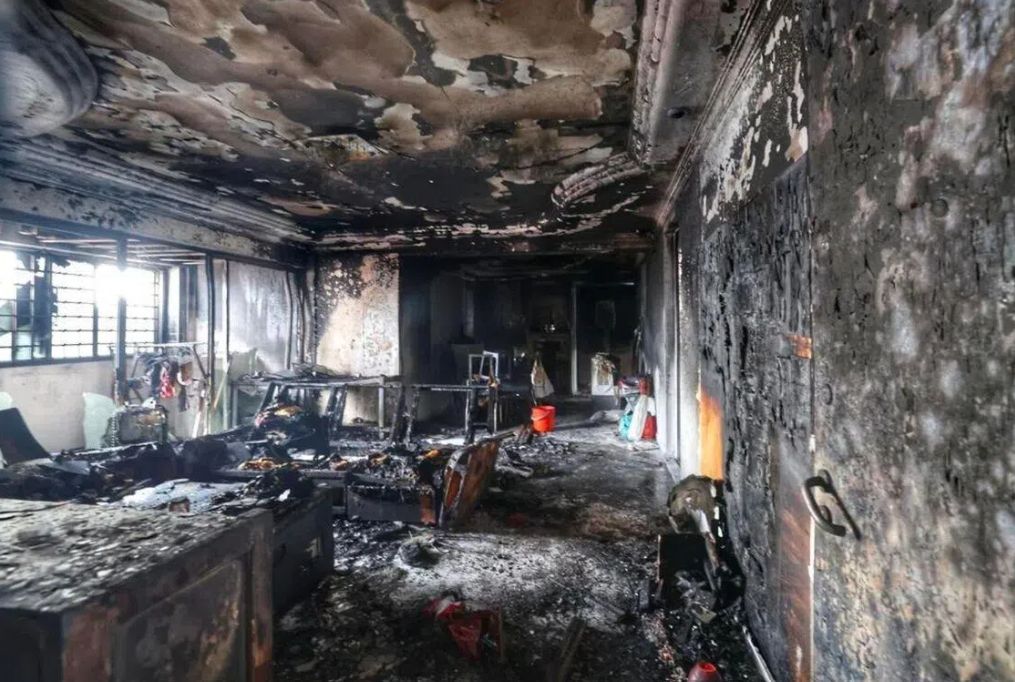
Two residents were pulled to safety after a fire engulfed a 13th-storey flat at Block 842 Jurong West Street 81 in the early hours of June 17, marking another serious residential fire incident in Singapore's densely populated housing estates. The Singapore Civil Defence Force received the emergency call at approximately 3.35am and arrived to find the living room of the unit fully ablaze, requiring firefighters to enter through thick smoke to contain and extinguish the flames using water jets.
The four-member family living in the affected unit were all transported to Singapore General Hospital for treatment, whilst approximately 40 neighbouring residents were evacuated from the block as a safety precaution. The incident highlights the rapid spread of fire in high-rise residential buildings and the critical importance of early detection and swift emergency response in such confined spaces.
According to preliminary investigations by the SCDF, the fire most likely originated from an electrical source within the living room itself. Such fires, though often preventable through proper electrical maintenance and safe usage practices, remain a persistent hazard in residential blocks across Singapore and the broader Southeast Asian region where older electrical systems and overloaded circuits are common concerns.
The family had been asleep when the fire broke out, leaving them vulnerable to the sudden threat. Fortunately, an 18-year-old student residing directly above the affected unit played a crucial role in alerting residents to the danger. The teenager, who had been awake and gaming, noticed smoke filtering through his window and promptly investigated by checking the floor below.
Upon touching the door of the affected unit and finding it dangerously hot, the quick-thinking student began knocking forcefully on neighbours' doors to raise an alarm, then rushed home to alert his own family to evacuate immediately. His mother subsequently contacted the police and SCDF, ensuring emergency services were dispatched without further delay. This intervention likely prevented additional casualties or injuries.
The student further recounted witnessing the extent of the fire's impact on the residents. A young woman from the affected household appeared at his door asking to borrow towels, revealing visible injuries from the blaze—her hair had been singed and her face was covered in soot. He also observed a male resident with severe burns across his back and arms, the skin appearing bright red from thermal damage. These observations underscore the rapid and intense nature of the fire's progression.
When reporters from the Chinese-language daily Lianhe Zaobao visited the site around 4pm that same day, the devastation was stark and unmistakable. The unit's walls and ceiling bore heavy charring, blackened from intense heat and smoke, whilst the windows had been shattered, likely by pressure from the fire or water jets used in firefighting operations. The structural damage visible from outside the unit conveyed the severity of the blaze that firefighters had contained.
A resident from the 12th floor reported observing at least five fire engines positioned outside the block, reflecting the scale of the emergency response mobilised to manage the incident. Such a deployment demonstrates how Singapore's civil defence authorities treat high-rise residential fires as major incidents requiring substantial resources and multiple units to ensure comprehensive safety measures.
In response to this and other recent fire incidents, the SCDF has reiterated critical safety recommendations for the public. Residents are advised to avoid overloading electrical outlets, a common practice in homes where multiple devices compete for limited power points, and to switch off appliances when they are not in active use. The agency emphasises that only electrical devices and plugs certified with Singapore's Safety Mark, a credential issued by the Consumer Product Safety Office, should be used in residential settings.
Additionally, the SCDF warns against leaving batteries and electronic devices to charge unattended overnight or for extended periods, a habit that has been linked to numerous fire incidents across the region. These guidelines reflect lessons learned from past incidents and represent straightforward preventive measures accessible to all households.
The timing of this incident is significant given recent fire statistics in Singapore. According to the SCDF's latest annual data released in February, the overall number of fires increased by three percent, rising from 1,990 incidents in 2024 to 2,050 in 2025. More alarmingly, residential buildings accounted for more than half of these fires, with 1,051 occurring in homes and apartments. This trend suggests that residential fire prevention must become an increasingly urgent priority for both authorities and individual householders across Singapore and Southeast Asia, where rapid urbanisation and increasing appliance usage create heightened risks.