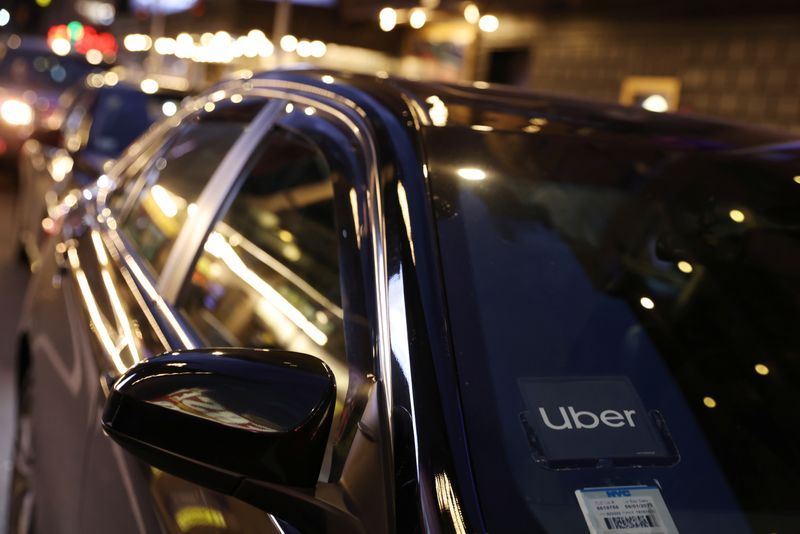
Shareholders of ride-sharing giant Uber Technologies have initiated legal action against the company's board of directors in San Francisco federal court, arguing that senior management systematically failed to enforce adequate safeguards against sexual misconduct by drivers and other regulatory breaches. The complaint, filed on Monday and led by the Police and Fire Retirement System of the City of Detroit, contends that board members received multiple warnings from both internal and external sources regarding the company's inadequate response to sexual abuse incidents, yet chose to deprioritise remedial action.
The derivative lawsuit represents a significant challenge to Uber's governance structure, targeting not just individual executives but the collective oversight responsibilities of the board. The shareholders argue that this pattern of negligence constitutes a breach of fiduciary duty and violates federal securities law. Among those named as defendants is Chief Executive Dara Khosrowshahi, who has led the company for nearly nine years. The plaintiffs acknowledge that Khosrowshahi has adopted a somewhat less aggressive regulatory posture than his predecessor, yet maintain that compliance investments remain substantially inadequate relative to the risks the company faces.
The litigation unfolds against a backdrop of mounting legal exposure for the San Francisco-based company. As of June 1, Uber was defending itself in 3,571 pending lawsuits in the same federal court, each alleging sexual misconduct by drivers. This staggering caseload underscores the magnitude of the safety crisis the company has struggled to contain. The sheer volume of litigation suggests systemic vulnerabilities in driver vetting, training, and monitoring protocols—vulnerabilities that shareholders contend the board should have prioritised far more aggressively.
Beyond the sexual misconduct allegations, Uber faces additional regulatory vulnerability stemming from a federal government lawsuit filed last year. That action accuses the company of systematically discriminating against disabled passengers, refusing to serve individuals with service animals or stowable wheelchairs. The same federal complaint alleges deceptive billing practices and improper cancellation fees. Shareholders assert that these violations reflect the same underlying culture of cutting corners on compliance that pervades the organisation, and that directors bear responsibility for failing to establish sufficient internal controls to prevent such conduct.
The shareholders' complaint characterises Uber as "a serial compliance offender," a designation that carries significant reputational weight in the context of investor confidence. The filing notes that negative media coverage resulting from these various controversies has "irredeemably damaged" the company's reputation. This assertion has particular relevance for investors concerned about long-term brand value and customer retention. The accumulation of scandals—whether related to driver safety, discrimination against vulnerable populations, or billing impropriety—creates a perception of institutional dysfunction that extends beyond any single legal exposure.
Internal research cited in the complaint reveals the depth of the trust deficit that Uber has created with its user base. The shareholders note that fewer than 40 percent of users believe the company takes safety seriously, a metric that should alarm any board concerned with maintaining customer loyalty and competitive positioning. When less than two-fifths of a platform's user base has confidence in the company's commitment to their protection, the organisation faces a fundamental crisis of trust that extends well beyond legal and regulatory penalties.
Uber's stock performance reflects the market's assessment of these mounting challenges. The company's share price has declined more than 25 percent since reaching a peak on September 22 of the previous year, representing substantial erosion of shareholder value. This decline occurred despite the broader ride-sharing industry benefiting from increased demand for mobility services. The underperformance relative to sector peers suggests that investors view Uber's governance and compliance failures as distinctive vulnerabilities rather than industry-wide concerns.
Interestingly, Uber's board is not the only entity facing scrutiny over regulatory practices. Earlier in June, Uber and its main competitor Lyft initiated legal action against New York City, challenging a new municipal law designed to prevent ride-sharing companies from removing drivers who pose passenger safety threats. The lawsuit represents Uber's pushback against regulatory efforts to tighten safety standards, a posture that somewhat ironically mirrors the shareholders' core complaint that the company prioritises operational flexibility over safety compliance.
The timing of the shareholder derivative suit highlights an apparent disconnect between the company's executive leadership and investor expectations regarding governance priorities. Derivative lawsuits, which allow shareholders to pursue claims on behalf of the corporation itself, succeed only when plaintiffs can demonstrate that the board abdicated its fiduciary responsibilities. The breadth of evidence the shareholders cite—thousands of pending sexual misconduct cases, federal discrimination accusations, and user surveys indicating safety concerns—suggests they have constructed a formidable factual foundation for their allegations.
For Malaysian and Southeast Asian investors and stakeholders, this litigation carries important implications. The region has seen rapid growth in ride-sharing and gig economy platforms modelled largely on Uber's business structure. Uber itself operates extensively throughout Southeast Asia, including Malaysia, Thailand, Indonesia, and Singapore. The governance failures exposed in this lawsuit demonstrate risks inherent in regulatory arbitrage strategies, where platforms attempt to operate with minimal compliance investment in jurisdictions perceived as having weak enforcement capacity. Regulators across the region are watching closely as these cases proceed, and may use them to justify stricter oversight and higher safety standards for platform operators.
The shareholders' legal strategy seeks to compel the board members themselves to reimburse Uber for losses resulting from their alleged fiduciary breaches. If successful, such an outcome would establish a powerful precedent for investor accountability in cases involving systematic governance failures. The San Francisco federal court will ultimately determine whether the board's approach to compliance constitutes permissible business judgment or actionable breach of duty, a distinction with significance extending far beyond Uber itself into the broader question of how boards should approach compliance and safety risks in platform-based businesses.

