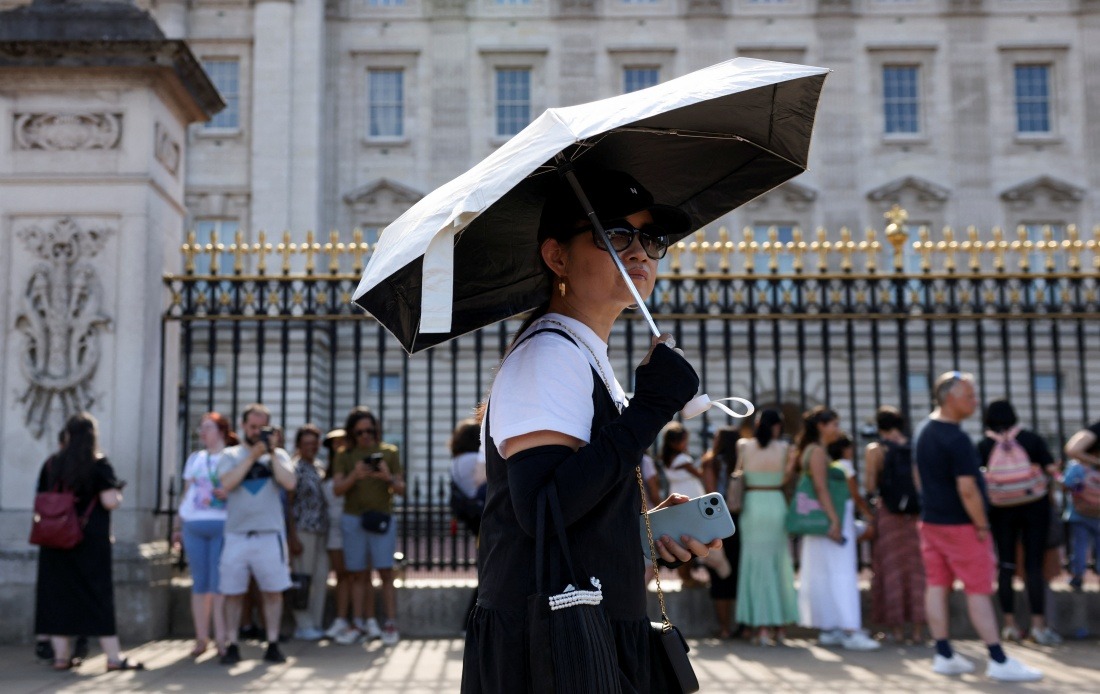
The United Kingdom's Household Division has taken the unprecedented step of cancelling all ceremonial guard changes across Windsor and London, including the world-famous spectacle at Buckingham Palace, as the country braces for dangerously high temperatures this week. The decision, announced on Tuesday, reflects growing concern over the welfare of soldiers, military horses, and the large crowds that typically gather to witness these traditional ceremonies. It marks a rare disruption to one of Britain's most recognisable cultural institutions, underscoring the severity of the weather emergency facing the nation.
Britain's meteorological authority, the Met Office, issued a rare red weather alert covering Wales and large portions of England on Monday, signalling exceptionally dangerous heat conditions. This highest level of warning is reserved for situations posing genuine risks to public health and safety. Forecasters predict temperatures will soar to 39 degrees Celsius on Wednesday and Thursday, with some regions potentially recording even more extreme readings. Such heat in the UK is extraordinarily unusual, as the country's infrastructure and population have evolved in a temperate climate with far milder conditions as the norm.
The Household Division's statement emphasised that protecting the wellbeing of military personnel and animals must take precedence over ceremonial tradition. The soldiers performing these duties typically wear heavy ceremonial uniforms, including bearskin caps and full regalia, in conditions that offer little protection from intense solar radiation. The military horses that participate in the processions face equal hazard, as prolonged exposure to such extreme temperatures places severe stress on their cardiovascular systems. Additionally, the crowds assembling outside Buckingham Palace to witness the ceremony would themselves be vulnerable, potentially straining emergency services during a period of maximum heat stress on the health system.
The Royal Horse Guards' Wednesday changing ceremony will proceed in a modified format, beginning earlier in the morning when temperatures remain somewhat lower. The military has committed to stationing soldiers in shaded areas and implementing more frequent rotation schedules to minimise heat exposure. These adaptations represent a practical compromise, allowing some ceremonial continuity while substantially reducing the danger to participants. The staggered approach demonstrates how institutions can balance cultural significance with contemporary safety imperatives.
The impact of this extraordinary heat extends far beyond London's ceremonial heart. Educational authorities across southern England have made the difficult decision to close hundreds of schools, acknowledging that many institutions lack adequate air conditioning and cooling systems. Somerset's county council announced the closure of approximately 100 schools, while Buckinghamshire reported similar numbers. Gloucestershire suspended classes in over 80 schools. London itself, where nearly 10 major schools have cancelled in-person instruction, faces particular challenges given its urban heat island effect, which amplifies temperatures in built-up areas. These closures disrupt educational continuity but reflect the genuine risks posed to children and staff in overheated buildings.
The geographic pattern of these closures is telling. All affected areas fall within the red weather warning zone covering southern and central England. This concentration reflects the uneven distribution of heat stress across the country, with southern regions bearing the brunt of the extreme temperatures. Schools in these regions typically operate without climate control systems designed for such conditions, as such temperatures have historically been regarded as virtually impossible in British circumstances. The rapid shift in climate patterns is forcing institutions to confront infrastructure limitations that were previously considered irrelevant.
For Malaysia and Southeast Asia, this British heat emergency offers instructive parallels and contrasts. While tropical Southeast Asian nations routinely manage ambient temperatures exceeding 35 degrees Celsius, the difference lies in acclimatisation, infrastructure design, and social adaptation developed over centuries. British society, buildings, and public services were engineered for considerably cooler conditions, making sudden temperature spikes far more disruptive than equivalent heat would be in climate-adapted regions. However, the principle remains universal: extreme weather events strain even well-developed societies when conditions exceed design specifications.
The Buckingham Palace suspension also highlights how climate change is reshaping traditional practices worldwide. As global temperatures continue rising, institutions across multiple climates will face increasing pressure to modify operations during heat events. What appears anomalous in London may become regular in coming decades, necessitating permanent infrastructure and procedural changes. The immediate crisis prompts questions about longer-term adaptation: will Britain redesign its military ceremonies for warming conditions, or invest heavily in cooling infrastructure for public spaces and schools?
From a regional perspective, this incident demonstrates that extreme weather disruptions are not confined to developing nations or tropical regions. Britain's experience shows that wealthy, industrialised countries with advanced meteorological prediction systems remain vulnerable when weather patterns shift beyond historical norms. The UK's response—combining early warning systems, institutional flexibility, and prioritisation of public safety—offers lessons in crisis management applicable across different climate zones and development contexts throughout Asia and beyond.

