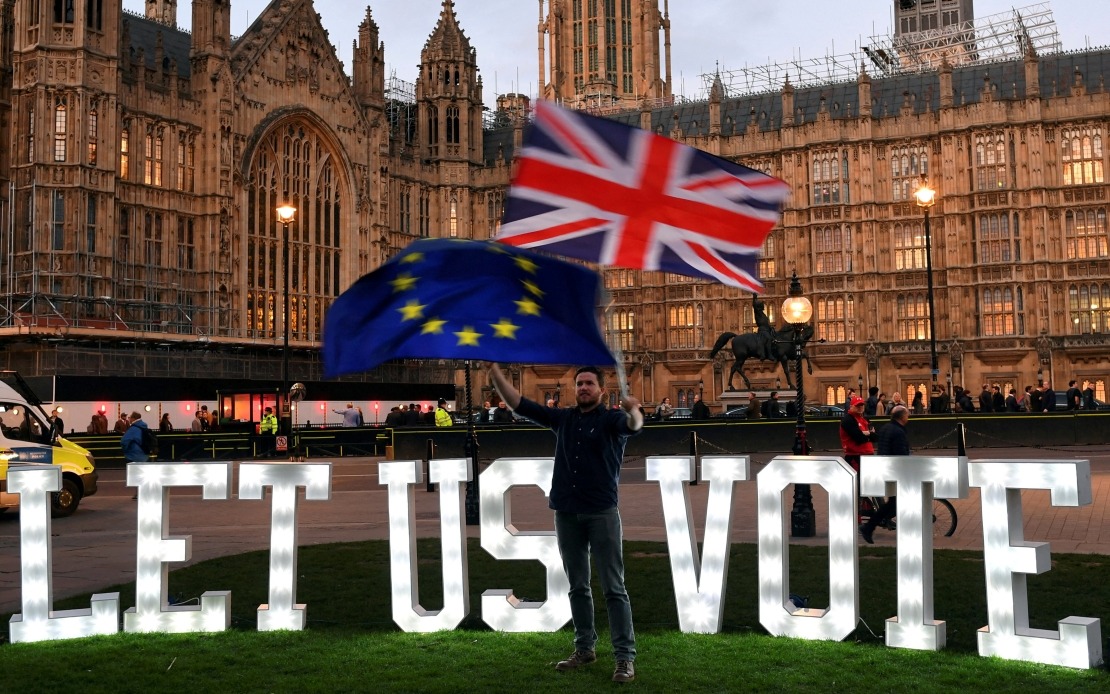
As the United Kingdom faces a significant political transition with the selection of a new Labour Party leader to succeed Prime Minister Keir Starmer, a prominent voice from the Conservative benches has poured cold water on speculation that Britain might reverse its departure from the European Union. Richard Balfe, a senior member of the House of Lords and Conservative Party stalwart, believes the trajectory of British politics makes a return to the EU bloc fundamentally improbable, regardless of which administration holds power.
Balfe's assessment carries weight given his experience and standing within Conservative circles. When pressed on whether a fresh government might successfully navigate the complex diplomatic and political pathways necessary to restore EU membership, the peer acknowledged the question with a dismissive qualifier. His response suggested that while theoretical discussions about rejoining might occur, the practical achievement of such an outcome faces insurmountable obstacles. The lawmaker characterised any such efforts as destined to fail, indicating that the fundamental political will required to execute such a reversal simply does not exist within either major party.
The peer's prognosis for Britain's relationship with the continental bloc under new leadership centres on continuity rather than transformation. Balfe expects the incoming government to adopt what he terms a "muddle along" approach—essentially maintaining the status quo whilst managing Brexit's ongoing complications on a case-by-case basis rather than pursuing systematic repositioning. This characterisation reflects a pragmatic assessment that domestic political capital will be consumed by other priorities, leaving little appetite for the monumental task of EU reintegration.
Balfe further contends that Britain's strategic orientation will increasingly align with Washington rather than Brussels. This observation touches upon a broader geopolitical tension that has intensified since the Brexit referendum: whether Britain's future lies in deeper transatlantic partnership or in renewed European integration. The peer's expectation suggests the likely trajectory favours the former, positioning the UK as a separate entity moving closer to American interests and foreign policy objectives rather than gravitating back toward the European fold.
The timing of these remarks coincides with significant domestic political upheaval. Keir Starmer announced his resignation as Labour Party leader on Monday, though he will remain as Prime Minister until the party selects his successor. The election process to determine his replacement commences on July 9 and concludes before Parliament reconvenes in September, meaning Britain will navigate several months with considerable uncertainty about its political direction despite Labour's continued grip on executive power.
This moment arrives as Britain marks a decade since the Brexit referendum of June 23, 2016, when 52 percent of voters endorsed withdrawal from the European Union. The intervening years have witnessed the formal implementation of that decision on January 31, 2020, after Britain's 47-year membership came to an end. What followed was a transition period extending through the end of 2020, during which European regulations remained operative and cross-border travel remained simplified for British citizens.
On January 1, 2021, a new trade and cooperation agreement between Britain and the EU replaced the transition framework, establishing the current parameters governing commerce and relations between the parties. Assessment of this arrangement's practical effects has been decidedly mixed. International financial observers, including major publications such as The Financial Times, have documented substantial costs associated with Britain's departure. The loss of standing as a significant international trade hub represents perhaps the most significant structural consequence, with analyses indicating that investment in British enterprises has become considerably more complicated and less attractive for foreign capital compared to the pre-Brexit environment.
For Malaysian and Southeast Asian observers, Britain's political trajectory carries important implications. Malaysia, as an important Commonwealth nation with deep historical ties to Britain, maintains complex trade relationships with both the UK and the European Union. The prospect of Britain's permanent detachment from EU structures affects regional trade dynamics and investment patterns. Malaysian companies and financial institutions must navigate different regulatory frameworks when operating in Britain versus the European Union, a complication that a potential UK reintegration would theoretically simplify—though Balfe's analysis suggests such simplification remains distant.
The broader narrative emerging from Balfe's commentary suggests that Brexit, contrary to perceptions during earlier debates that it represented a temporary aberration, has calcified into a permanent feature of British governance. The political costs of reversing such a consequential decision appear to outweigh any benefits that proponents of rejoining might articulate. The decision to leave was sufficiently momentous and socially divisive that returning would require overcome substantial psychological and political resistance, something the Conservative peer deems unlikely under any foreseeable government.
Moreover, the institutional and regulatory infrastructure Britain has constructed since departing the EU would require substantial reconstruction to facilitate reintegration. Trade agreements now in place with non-EU partners, modifications to regulatory frameworks, and shifts in administrative structures all represent sunk costs and embedded interests that would resist reversal. These structural factors operate independently of partisan considerations, suggesting that even sympathetic policymakers would encounter formidable technical obstacles.
Balfe's perspective also reflects a calculation about Britain's future role in global affairs. Rather than seeking renewed continental integration, the emerging consensus within British political circles appears oriented toward asserting independent agency and cultivating special relationships beyond Europe. This positioning aligns with certain strands of British political thought that emphasise a distinctive British identity separate from European frameworks, a sentiment that the Brexit referendum crystallised but did not originate.
The incoming Labour government will inherit a Britain substantially transformed by its European departure. Managing the practical complications arising from Brexit represents a consuming challenge that will dominate administrative attention. Against this backdrop, the ambitious diplomatic undertaking required to reverse course appears simultaneously implausible and politically toxic. Balfe's assessment, while emanating from the opposition, likely captures the thinking of many within Labour circles as well—a recognition that for better or worse, Britain has embarked upon a distinct trajectory that will define the nation's positioning for decades to come.

