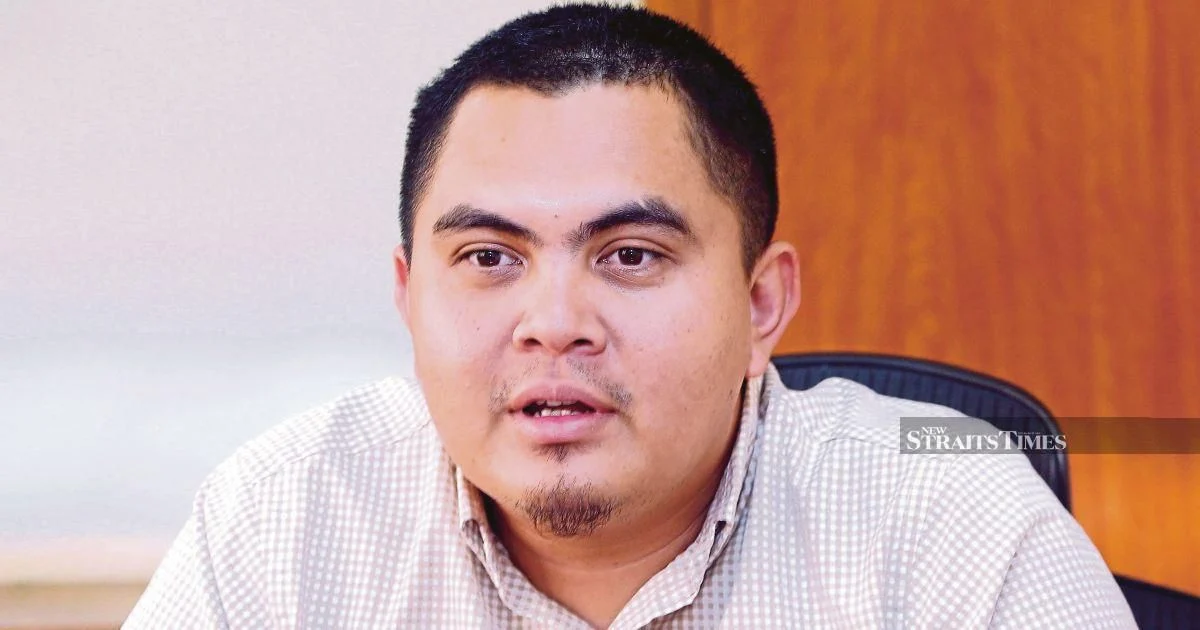
Umno Youth chief Datuk Dr Muhamad Akmal Saleh delivered a robust defence of the party's nomination practices in Johor Baru, pushing back against contentions that Umno allocates candidacies on the basis of family connections. The remarks, directed at fellow party member Puad, underscore mounting internal debate within Malaysia's largest Malay-Muslim political organisation regarding the transparency and fairness of its candidate selection mechanisms.
The assertion arrives amid broader scrutiny of whether Malaysia's established political parties have evolved beyond personalised structures dominated by dynastic interests. This concern resonates particularly in Umno, which has historically grappled with perceptions of centralised power concentrated among senior figures and their networks. Akmal's emphasis on principle-based selection processes signals an attempt to reshape the party's public image and address grassroots frustrations about access to party nominations.
For Malaysian observers, the exchange highlights the generational tension within Umno between custodians of the old guard and younger leaders seeking institutional reform. Akmal represents the faction advocating for modernisation and stricter internal governance standards. His willingness to challenge narratives about family nepotism suggests a strategic pivot toward appealing to voters and party members who prize meritocratic advancement over inherited privilege.
The timing of this intervention reflects Umno's continuing efforts to consolidate internal unity following years of political turbulence. Between 2018 and 2020, the party experienced profound fracturing that culminated in its loss of federal power and spawned bitter intra-party conflicts. Rebuilding credibility requires demonstrating that leadership selection and candidate vetting occur through transparent frameworks rather than opaque patronage networks centred on prominent families.
Within Umno's current context, the Youth wing carries considerable organisational clout and represents a constituency increasingly conscious of institutional legitimacy. By asserting that candidate selection transcends family boundaries, Akmal positions himself as an advocate for younger members and activists aspiring to parliamentary or state assembly representation based on capability rather than genealogical proximity to established party hierarchies.
Puad's apparent counterargument—whether implicit or explicit—taps into real anxieties within Umno regarding whether promised meritocratic reforms materialise in practice. Cynicism about nomination processes persists among party grassroots, particularly when high-visibility seats consistently flow toward recognisable surnames or close associates of divisional and state leaders. Akmal's categorical rebuttal attempts to address these concerns directly, even as such tensions inevitably persist within any major political formation.
The broader Malaysian political landscape has grown increasingly sensitive to nepotism accusations following high-profile controversies involving candidate selection across multiple parties. Public discourse about political dynasties and intergenerational power transfers has intensified, influenced partly by global conversations about democratic accountability and representation. For Umno, a party that has governed Malaysia for decades and contains numerous family networks, this scrutiny carries particular weight.
From a Southeast Asian perspective, Umno's internal wrestling with these questions reflects regional patterns whereby traditional power structures confront demands for institutional modernisation. Political maturation in the region increasingly necessitates formal mechanisms that constrain arbitrary decision-making and constrain informal hierarchies based on kinship. Umno's public acknowledgment that family politics represents a legitimate concern—even while Akmal denies its prevalence—indicates the topic now commands sufficient political salience to require explicit rebuttal.
Looking forward, the credibility of Akmal's assertion will depend substantially on observable patterns in upcoming candidate announcements and nomination cycles. Party members will monitor whether selection processes for competitive parliamentary and state seats reflect genuine competitiveness or reproduce existing family advantages under reformed terminology. The Youth wing's own leadership elections and representation within party structures will serve as barometers of whether reform rhetoric translates into institutional practice.
This moment also carries implications for Umno's electoral positioning. Malaysian voters increasingly scrutinise parties on governance standards and internal democratic norms. An organisation perceived as hierarchical, familial, and opaque faces headwinds in recruiting younger supporters and reclaiming urban constituencies that shifted away from Umno in recent electoral cycles. Akmal's messaging appeals precisely to this demographic by framing Umno as progressive on institutional matters and responsive to modern democratic expectations.
The conversation between Akmal and Puad encapsulates Umno's broader effort to project institutional renewal while maintaining internal cohesion among factions with divergent visions. Whether this rhetorical stance translates into substantive transformation remains an open question, but the very articulation of anti-nepotism principles by senior Youth leadership indicates the party recognises that traditional practices no longer command uncontested legitimacy among its own membership, let alone broader society.

