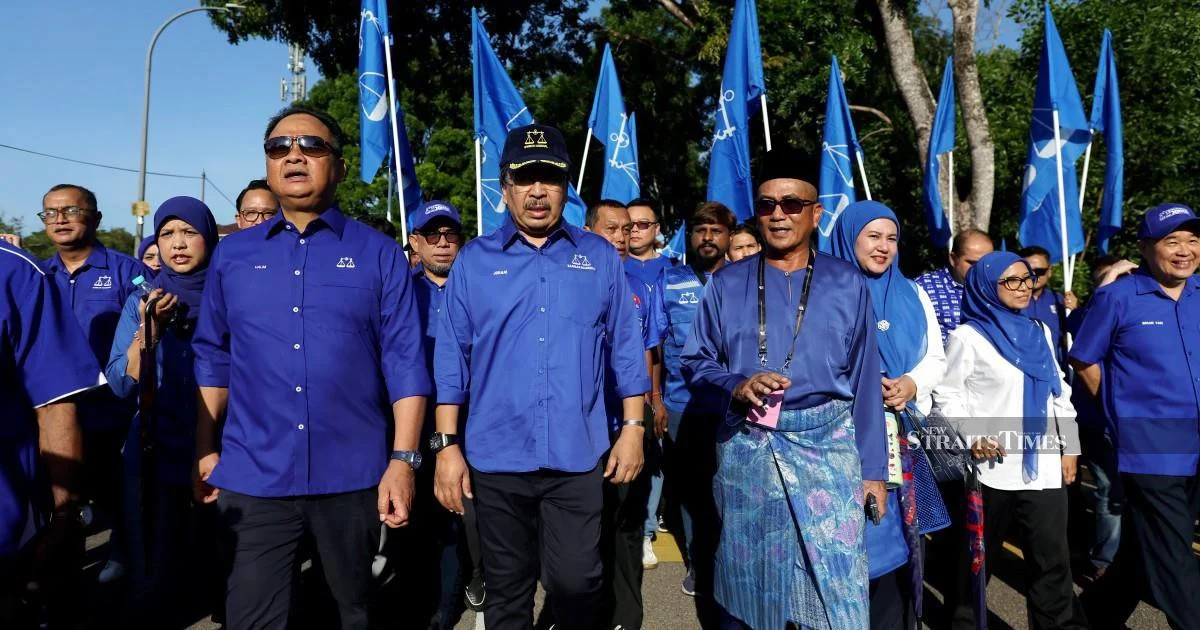
Umno vice-president Datuk Seri Johari Abdul Ghani descended on Johor Baru's Taman Pelangi Indah community hall to galvanise support for the Barisan Nasional candidate contesting the Tiram seat, signalling the coalition's intensified ground presence in one of the state's closely-watched electoral battlegrounds as campaign momentum builds across the southern state.
The deployment of senior party machinery underscores Barisan Nasional's strategic focus on Tiram, a constituency that has proven competitive in recent electoral cycles and reflects the broader challenge facing the ruling coalition to consolidate voter confidence ahead of polling day. The appearance of Johari, who holds significant sway within Umno's leadership hierarchy, represents a calculated effort to energise the party's grassroots machinery while simultaneously sending a signal to voters about the coalition's commitment to the locality.
Johor has emerged as a critical testing ground for Malaysian politics, particularly following the 2022 general election results that exposed fissures within the traditional power structure. Barisan Nasional's performance in state-level contests carries outsized significance for the coalition's narrative of relevance and resilience, making every constituency contest a proxy battle for broader claims about voter sentiment and organisational capacity. The Tiram seat specifically represents the type of demographically mixed urban-fringe area where coalition cohesion and ground organisation can prove decisive in determining electoral outcomes.
The deployment of high-ranking party officials such as Johari reflects a calculated electoral strategy wherein senior figures are strategically positioned to maximise their influence across multiple constituencies. These high-profile appearances serve multiple tactical purposes simultaneously: they generate local media coverage, elevate the profile of the candidate, provide visible endorsement from party leadership, and demonstrate to grassroots members that their electoral efforts are backed by senior party machinery. For voters, such visits often serve as barometers of a party's confidence in its prospects within a particular area.
Within Umno's internal dynamics, Johari occupies a position of considerable influence as party vice-president, a role that carries responsibility for overseeing organisational matters and serving as a bridge between the leadership and divisional structures. His participation in ground-level campaigning reflects the traditional Malaysian political practice whereby senior leaders share the burden of electoral mobilisation across constituencies where internal party calculations suggest additional high-level presence may yield electoral returns. This distribution of senior party figures across key constituencies is part of carefully choreographed campaign strategy designed to maximise media coverage and voter engagement.
The Tiram constituency itself reflects the demographic composition that increasingly defines competitive battlegrounds across Johor: a mix of urban and semi-urban voters with varying economic interests, educational backgrounds, and socioeconomic circumstances. These constituencies have become proving grounds where traditional patronage politics must compete with emerging voter preferences for performance-based governance and effective service delivery. Barisan Nasional's ability to maintain relevance in such areas depends significantly on candidate quality, grassroots organisation, and the broader perception of the coalition's effectiveness in governance.
The campaign dynamics in Johor more broadly have evolved considerably since the 2018 political realignment that fractured the long-standing dominance of established coalitions. Voters have demonstrated increased willingness to shift allegiances based on specific local considerations, candidate credentials, and perceived responsiveness to community needs. This volatility has forced all contending political forces to invest substantially in ground organisation and direct voter engagement, reducing the efficacy of purely top-down campaign approaches that characterised earlier electoral periods.
The Barisan Nasional strategy of deploying senior party figures such as Johari serves both immediate campaign purposes and longer-term organisational functions. These appearances provide opportunities to reinforce party messaging, coordinate campaign activities at the divisional level, assess ground sentiment through direct interaction with party workers and voters, and identify emerging organisational challenges or opportunities that might otherwise remain obscured by formal reporting structures. The informal intelligence gathering that occurs during such visits often proves as valuable to senior party leadership as the direct electoral impact.
For Johor's voters, the involvement of national-level party figures in local campaigns reflects the deeply intertwined relationship between state and national politics within Malaysia's federal system. Electoral outcomes at the state level carry implications for the composition of state governments, distribution of resources and positions, and the broader balance of power within national coalition structures. This interconnection ensures that national-level party leaders maintain intense focus on state-level campaigns, particularly in electorally significant states such as Johor that can influence perceptions of party strength and political momentum at the national level.
The Tiram campaign represents only one front within the broader Johor electoral contest, yet each constituency election aggregates into a collective verdict on the coalition's continued relevance and electoral viability. Barisan Nasional's capacity to maintain dominance or recapture lost ground depends on successful execution across numerous constituencies simultaneously, requiring coordinated deployment of party resources, messaging discipline, and organisational coherence. The appearance of senior figures such as Johari contributes to this broader effort, providing symbolic and practical support to local campaign structures tasked with the granular work of persuading individual voters.

