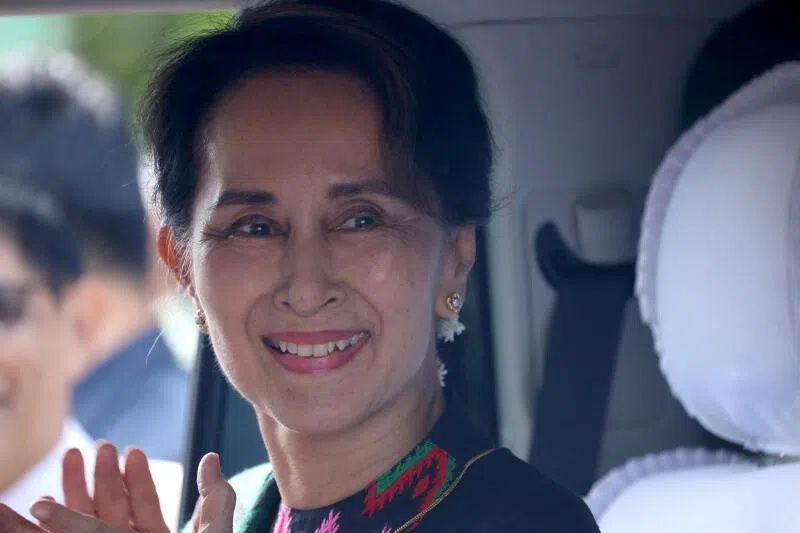
The United Nations special envoy for Myanmar has intensified calls for the immediate release of Aung San Suu Kyi, the country's ousted political leader, who spent her 81st birthday this week confined within the military-controlled nation. Julie Bishop made the renewed appeal to UN member states on Friday, just weeks after completing her fourth visit to Myanmar's junta leadership in the capital Naypyidaw, highlighting the urgency and persistence of international concern regarding her fate.
Bishop's intervention underscores the deepening diplomatic isolation facing Myanmar's military administration over its treatment of the Nobel Peace Prize winner. The UN envoy stressed that despite her repeated representations to the junta authorities, the situation surrounding Suu Kyi remains unchanged and increasingly troubling. She emphasised that the detained leader was democratically elected in November 2020, only to be subjected to what the UN characterises as harsh and punitive confinement following the military's dramatic power seizure in early 2021.
A critical concern animating international pressure is the absolute absence of independent verification regarding Suu Kyi's current living conditions. Bishop pointedly noted that no credible, verifiable reports about her circumstances have emerged for years, leaving the international community and her family in the dark about her wellbeing. This opacity has become a defining feature of the junta's approach to political detainees, creating a climate of uncertainty that amplifies concerns about potential abuse or mistreatment behind closed military doors.
For Southeast Asian governments and observers, Suu Kyi's case carries profound symbolic weight. Her detention represents the reversal of decades of democratic struggle and international recognition of Myanmar's right to self-determination. Many regional leaders view her imprisonment as incompatible with any meaningful progress toward political reconciliation or peace within Myanmar. The junta's handling of her case has become a litmus test for whether the military administration intends any genuine engagement with the democratic forces it displaced.
The military leadership, headed by General Min Aung Hlaing, has constructed its political legitimacy partly through elections that were systematically designed to exclude democratic opposition parties. When Aung Hlaing declared himself president following these controlled elections, he simultaneously ensured that no genuine political alternatives remained viable. This rigged electoral process stands in stark contrast to Suu Kyi's 2020 victory, when her National League for Democracy won a landslide mandate from the population.
Suu Kyi's legal situation remains deliberately obscured by the military authorities. She has been handed multiple convictions totalling sentences exceeding 30 years of imprisonment, sentences that many international observers view as entirely politically motivated and lacking legitimate legal foundation. In April, the junta announced a shift in her status from conventional imprisonment to house arrest, a move that appeared designed partly to mollify international criticism while maintaining absolute control over her movements and communications.
However, the announced house arrest announcement has failed to provide clarity or transparency. The precise location where Suu Kyi is being held remains undisclosed, and the conditions of her confinement remain unknown to the outside world. This opacity extends to whether she has received adequate medical care or maintained contact with her family and legal representatives, basic humanitarian standards that should apply to any detainee regardless of political circumstances.
Her son Kim Aris, who lives outside Myanmar, has become the public voice demanding accountability from the military administration. He has explicitly called upon the junta to provide tangible proof that his mother remains alive and in adequate health, a demand that reflects the family's legitimate fears about her vulnerability in military custody. The military's refusal to provide such evidence has only deepened international concern and strengthened perceptions that the regime has something to conceal.
For Malaysia and other ASEAN nations, Suu Kyi's case presents a delicate diplomatic challenge. While some regional governments have privately expressed concerns, public criticism has remained muted, reflecting both diplomatic protocols around non-interference and complex bilateral relationships with Myanmar. Yet the situation demands engagement from the region, particularly from nations like Malaysia that have democratic institutions and human rights traditions that distinguish them from Myanmar's authoritarian path.
The broader implications of Suu Kyi's detention extend beyond one individual's fate. Her imprisonment signals to democratic activists throughout Southeast Asia the potential consequences of political engagement under military rule. It demonstrates that even iconic leaders with international recognition offer no protection against a determined military establishment intent on maintaining power. This sobering reality shapes political calculations across the region and contributes to regional instability.
International pressure, while vocal, has proven ineffective in securing Suu Kyi's release. The junta has largely ignored UN appeals, multilateral criticism, and statements from democratic governments. This defiance reflects the military's confidence that it can sustain itself without international legitimacy, a calculation that invites further isolation and humanitarian deterioration within Myanmar. For ASEAN, the unresolved situation represents a continuing stain on regional credibility and stability that will persist unless genuine political progress occurs.

