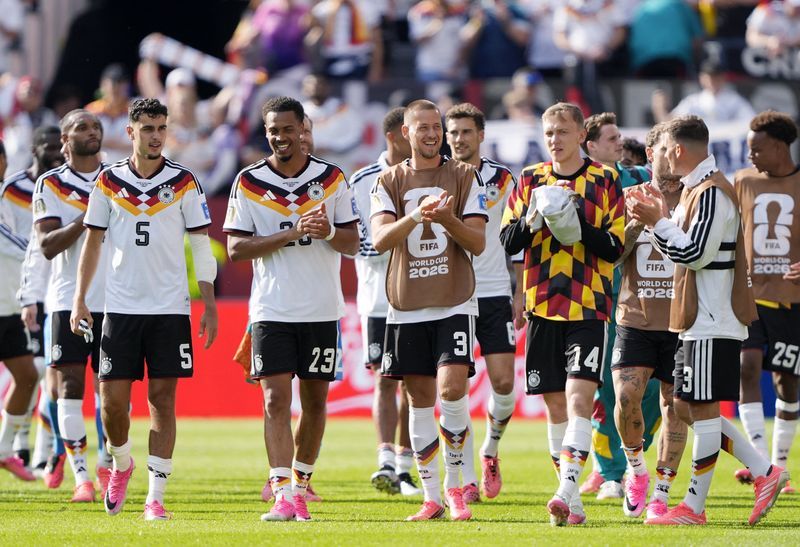
Germany clawed their way back from behind to defeat Ivory Coast 2-1 in a pulsating Group E encounter at the World Cup in Toronto on Saturday, with substitute Deniz Undav's clinical finishing proving decisive in booking the European champions a place in the last 32. The result represents a significant milestone for Julian Nagelsmann's side, who had endured an unexpectedly shaky campaign prior to this match and faced mounting pressure to demonstrate the technical superiority expected of a squad built on their illustrious pedigree.
Despite dominating possession for long stretches and executing the intricate passing sequences Germany has become known for, the four-time World Cup winners found themselves frustratingly unable to convert their territorial advantage into goals during the opening 45 minutes. Ivory Coast's West African flair and directness created a volatile contest, with both teams demonstrating attacking intent that kept the 100,000-strong crowd in Toronto—a city with a substantial German-diaspora population of over 100,000—engaged throughout the encounter. The contrast in style between Germany's methodical build-up play and Ivory Coast's more explosive attacking approach created a compelling tactical battle that showcased the diversity of modern football.
Frank Kessie gave Ivory Coast the lead in the 27th minute when he converted a rebound following Amad Diallo's attempt on goal, with Yan Diomande's marauding run down the left flank providing the initial attacking thrust. This represented the seventh consecutive World Cup match in which the Ivorians had found the target—a sequence unmatched in their tournament history—demonstrating their emerging potency as an attacking force on the global stage. The goal appeared to have shifted momentum decisively in their favour, yet Germany's response would prove characteristically composed.
Germany's frustration mounted as they had two legitimate-looking goals ruled out in the first period. Aleksandar Pavlovic's 25th-minute header from a short corner was disallowed for an alleged foul on goalkeeper Yahia Fofana, a decision that drew vehement protest from the German contingent in the crowd and left the midfielder visibly bewildered. Later, Jamal Musiala's effort was similarly chalked off following a subjective contact call on Odilon Kossounou in the buildup. These disallowances might have derailed less resolute sides, but Nagelsmann's men remained mentally engaged despite their lack of reward for eight first-half attempts.
The introduction of Undav as a substitute fundamentally shifted the trajectory of the match. The versatile striker, who now boasts nine goals across his last eight appearances and has become an increasingly vital asset for German tactical flexibility, equalised in the 68th minute with a composed volleyed finish that demonstrated technically assured finishing. His second goal arrived shortly afterwards when he received possession on the turn, executed a sharp swivel, and despatched a low drive that left Fofana with no defensive options.
Undav's intervention illustrated a key strategic advantage possessed by established footballing nations: the ability to maintain quality depth and inject game-changing personnel from the substitutes' bench. For emerging teams like Ivory Coast, such personnel interchangeability remains a luxury, yet the West Africans continued pressing for an equaliser despite their reversal. Simon Adingra spurned a late opportunity to restore parity when he failed to generate a clear shooting chance in the penalty area, and Germany's subsequent counter-attack saw substitute Nathaniel Brown's low effort blocked by Fofana in desperately last-ditch defending.
The victory positions Germany atop Group E with six points and guarantees their progression to the knockout phase, a considerable relief given the widespread scrutiny their squad has faced entering this tournament. Ivory Coast, despite an impressive showing, remain on three points and must navigate a difficult path to advancement in their remaining fixtures. The Ivorians' inability to capitalise on their superiority in stretches underscores how fine the margins can be at football's highest level, where clinical finishing and emotional resilience often prove decisive.
Germany's progression carries broader implications for the tournament's group-stage dynamics and regional football development. Their comeback demonstrated that even established powers cannot take for granted matches against improving African confederations, and Ivory Coast's competitive display serves notice that the continent's representation continues evolving positively. For Malaysian readers and Southeast Asian observers, the match exemplified how disciplined, technically proficient football can overcome early setbacks, offering lessons applicable across all competitive levels of the sport.
Nagelsmann's team will conclude their group-stage obligations against Ecuador on Thursday in New Jersey, while Ivory Coast travel to Philadelphia to face Curaçao. Germany's advancement significantly eases pressure for their final encounter, potentially allowing tactical flexibility and squad rotation, whereas Ivory Coast must approach their remaining matches with the urgency befitting teams fighting for knockout-stage qualification. The contrasting positions underline how quickly momentum shifts in tournament football and reinforce the precarious nature of World Cup group-stage competition where single matches can define campaigns.

