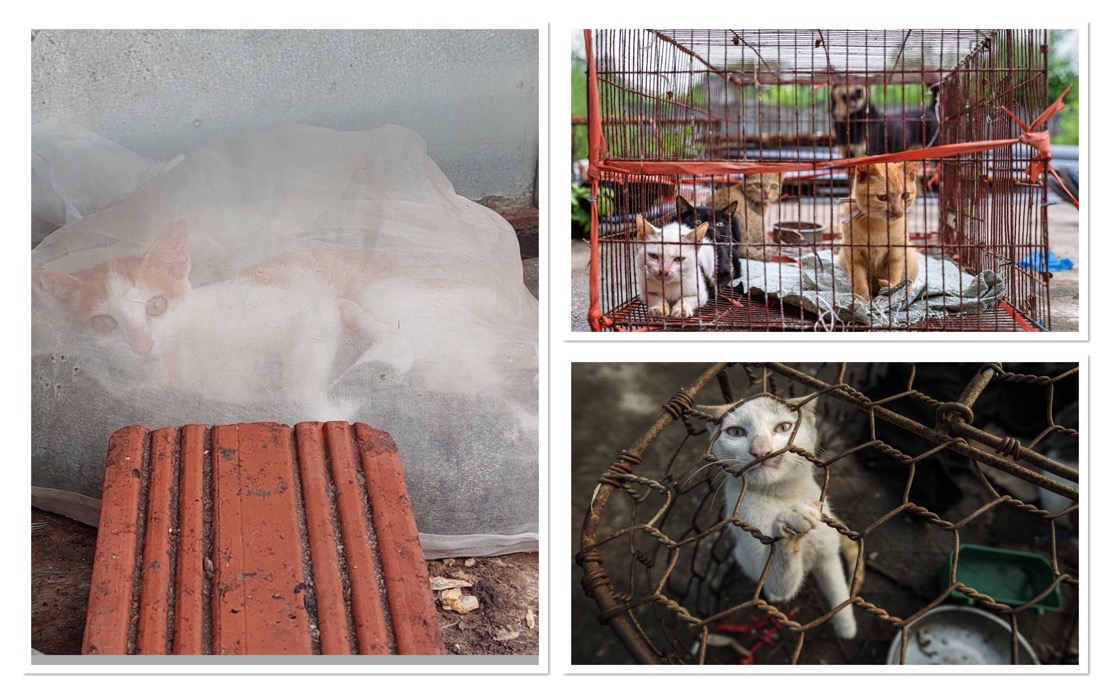
A clandestine yet persistent trade in cat meat continues to ravage communities across Indochina, with animal welfare organisations documenting that approximately one million cats are killed annually in Vietnam alone. The brutal network extends into Cambodia and Laos, where smaller numbers of felines meet similarly grim fates, typically justified by claims of medicinal utility. This underground economy persists despite decades of public campaigns by governments and international advocates determined to eradicate the practice from the region.
The trade is fundamentally rooted in cultural superstitions rather than dietary necessity. In Vietnam, certain traditions associate the consumption of cat meat during specific phases of the lunar calendar with reversing misfortune and attracting prosperity. Beyond these luck-based motivations, some consumers are convinced that feline flesh possesses therapeutic properties beneficial to human health. Jon Rosen Bennett, who directs global animal welfare efforts for FOUR PAWS, emphasised that cat meat consumption operates within a framework of belief and custom rather than serving as a mainstream protein source. The organisation's investigations reveal that cultural attitudes, not nutritional requirements, sustain demand for this controversial commodity.
Recent law enforcement operations have pulled back the curtain on the scale of organised trafficking. Ho Chi Minh City police dismantled a gang engaged in inter-provincial smuggling operations that had stolen and commercialised cats over a three-year span, rescuing approximately 500 animals in the process. Nine individuals were detained in connection with the ring, illustrating that cat trafficking involves coordinated criminal networks rather than isolated incidents. These discoveries underscore the infrastructure supporting a market that treats companion animals as commercial goods subject to theft, transport, and slaughter.
The economic structure of this trade reveals deep market inefficiencies and demand distortions. FOUR PAWS investigations conducted in 2020 documented that live cats commanded prices between US$6 and US$8 per kilogramme, while processed meat fetched US$10 to US$12 per kilogramme. A particularly troubling premium applies to black cats, which command higher prices due to widespread beliefs in their enhanced luck-bringing or medicinal potency. This price differentiation demonstrates how superstition directly translates into market signals, creating perverse incentives that encourage continued poaching and trafficking despite their illegality.
Legally, Vietnam remains without comprehensive national legislation criminalising the slaughter, sale, or consumption of cat meat. This regulatory vacuum permits the trade to operate with minimal governmental obstruction, though enforcement challenges plague any attempts to restrict the practice. The absence of explicit prohibition creates a grey zone where suppliers operate without formal legal jeopardy, complicating efforts by animal welfare organisations to combat the industry through legal channels. Neighbouring Cambodia and Laos similarly lack comprehensive protections, enabling cross-border trafficking that exploits jurisdictional gaps.
Public opinion data presents a stark contrast to the persistence of the trade itself. Bennett noted that approximately ninety per cent of Vietnamese survey respondents indicated support for banning the dog and cat meat trade entirely. Furthermore, over ninety per cent of respondents rejected the notion that such consumption constitutes authentic Vietnamese cultural practice. These statistics suggest that the trade operates contrary to contemporary public sentiment, sustained by minority constituencies whose superstitious beliefs and economic interests diverge sharply from majority preferences. This gap between public opposition and market reality indicates that enforcement mechanisms and legal frameworks, rather than cultural acceptance, represent the critical constraint preventing trade expansion.
Beyond animal welfare considerations, the trade generates substantial public health hazards that affect human populations across borders. The unregulated, undocumented movement of cats through trafficking networks creates conditions for disease transmission, particularly concerning rabies and other zoonotic pathogens capable of jumping to human populations. Bennett warned that the dispersed, informal nature of the supply chain—involving theft, transport through non-commercial channels, and slaughter in uncontrolled environments—provides no epidemiological oversight. Cross-border trafficking amplifies these risks by ensuring that diseases originating in remote areas can rapidly reach urban centres where they threaten broader populations.
The feline trade exists within a broader ecosystem of animal trafficking across Southeast Asia. Dogs have similarly become victims of comparable networks, with animal activists estimating that over ten million canines are slaughtered for meat annually throughout the region. However, dogs have benefited from greater organisational attention and public mobilisation, generating growing resistance to consumption. The comparative invisibility of the cat trade may reflect its smaller absolute scale, though this obscurity potentially permits continued trafficking with minimal scrutiny from international animal welfare advocates now focused heavily on the dog meat issue.
FOUR PAWS has intensified advocacy efforts through technological and community engagement approaches. The organisation launched an online platform in June enabling citizens to report suspected trafficking activities in Cambodia, attempting to decentralise enforcement by mobilising public participation. This strategy acknowledges that formal governmental mechanisms have proven insufficient, necessitating grassroots monitoring systems. Such initiatives represent evolving responses to the challenge of combating clandestine trade networks that deliberately operate outside institutional visibility.
For Malaysian readers, this trade matters as both a regional phenomenon and a harbinger of governance challenges affecting Southeast Asia broadly. The persistence of superstition-driven practices despite overwhelming public opposition and demonstrable public health risks illustrates how informal economies can persist when legal frameworks remain inadequate and enforcement capacity insufficient. Additionally, the cross-border nature of trafficking means that animals originating in Vietnam or Cambodia may transit through Malaysia or other nations, potentially introducing diseases into local animal populations. The experience of Indochina demonstrates that voluntary campaigns alone cannot eliminate harmful trades; coordinated regional legislation with meaningful enforcement mechanisms represents the necessary complement to awareness-raising efforts already underway across the region.

