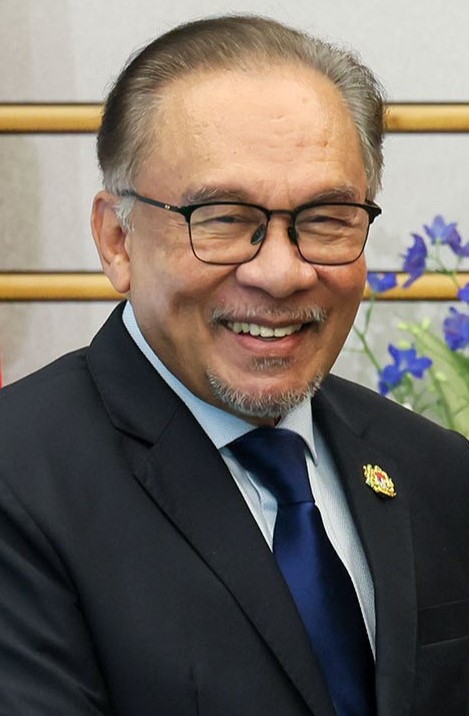
The United Kinabalu Progressive Organisation has officially entered the Gabungan Rakyat Sabah coalition, marking a significant consolidation of local political forces in Malaysian Borneo. Following the formal acceptance of UPKO's application, party president Datuk Ewon Benedick, who serves as Sabah's Deputy Chief Minister, announced the party's firm commitment to bolstering the coalition's capacity to lead state administration and drive development initiatives under Chief Minister Datuk Seri Hajiji Noor's tenure.
The timing of this development reflects broader efforts to unify Sabah's political landscape around a locally-rooted coalition structure. UPKO's integration brings GRS to six component parties, a composition that now includes Parti Gagasan Rakyat Sabah, Parti Bersatu Sabah, Parti Liberal Demokratik, Parti Harapan Rakyat Sabah, and Parti Cinta Sabah. This expansion strengthens the coalition's claim to represent Sabahan interests through parties formed and operated within the state rather than national entities headquartered on Peninsular Malaysia.
Ewon's public statements emphasise UPKO's conviction that GRS represents the most appropriate platform for Sabah-based political organisations. His assertion that GRS constitutes the singular coalition of local parties in Sabah highlights a strategic distinction the coalition has cultivated, positioning itself as fundamentally different from peninsular-dominated national coalitions. This messaging carries particular weight in Sabah, where concerns about local autonomy and self-determination have historically influenced electoral preferences and political alignment.
The reference to the Malaysia Agreement 1963 in Ewon's remarks underscores how contemporary Sabah politics remains tethered to foundational questions about the state's constitutional position within the federation. By invoking this agreement, UPKO signals that its participation in GRS derives from a shared understanding that only parties genuinely rooted in Sabahan soil can authentically interpret and advance the state's interests as envisioned in 1963. This constitutional framing serves as a unifying rhetorical device that transcends partisan competition and appeals to Sabahans' broader identity concerns.
The coalition has adopted the slogan "Sabah First, Sabah Prosper, Sabah United" as its governing vision, and Ewon's call for Sabahans to rally behind this banner reflects an attempt to position GRS as transcending narrow party interests. This messaging strategy seeks to reframe coalition politics in Sabah as fundamentally about pursuing collective state advancement rather than factional competition. For Malaysian political observers, such rhetoric demonstrates how local coalitions attempt to leverage state-level identity narratives to sustain electoral dominance.
From a structural perspective, UPKO's accession to GRS addresses a practical political challenge facing Chief Minister Hajiji. Consolidating multiple local parties under a single coalition banner can enhance legislative stability by reducing the number of independent or opposition voices in the state assembly. With six component parties now aligned within GRS, the coalition strengthens its parliamentary position and creates a more unified decision-making structure, which theoretically facilitates more coherent policymaking and reduces legislative obstruction.
However, the expansion also presents organisational challenges typical of multi-party coalitions. Balancing the interests of six distinct parties, each with its own historical base, leadership hierarchy, and policy preferences, requires careful political management. The coalition's ability to function effectively depends on maintaining sufficient discipline among component parties while permitting them sufficient autonomy to retain their individual identities and supporter bases. This balance proves especially delicate in Sabah's political environment, where party switching and defections have historically been relatively fluid.
The broader Southeast Asian context suggests that locally-based coalitions face perpetual pressure from both national political forces and internal factionalisation. GRS's emphasis on Sabahanism and local control represents a conscious differentiation strategy in an era when state-level politics increasingly intersects with federal dynamics. For Malaysian policymakers tracking regional stability, the strength and cohesion of GRS will significantly influence Sabah's political trajectory over the coming years.
Ewon's expression of gratitude to Hajiji, both as GRS chairman and Supreme Council member, reveals the hierarchical structure of coalition decision-making. This public acknowledgment reinforces Hajiji's preeminent position within GRS while suggesting that UPKO's entry reflects acceptance of his leadership by both the Chief Minister's office and the broader coalition structure. Such public displays of unity, while necessary for coalition maintenance, occasionally mask underlying tensions that emerge when resource allocation or policy disagreements arise.
For Sabahans evaluating their political options, GRS's expansion potentially offers a clearer choice between supporting a locally-rooted coalition versus pursuing alternative political arrangements. The consolidation of six parties into a unified coalition reduces the fragmentation that has sometimes characterised Sabah politics, though it remains unclear whether this consolidation will translate into demonstrable improvements in state governance and service delivery, measures by which voters ultimately assess political coalitions.
Looking ahead, UPKO's formal entry into GRS establishes a benchmark against which the coalition's effectiveness will be measured. The coming years will reveal whether this expanded coalition can translate its unifying rhetoric into sustained legislative cooperation and tangible developmental outcomes for Sabah. Success would reinforce the GRS model as a sustainable framework for Sabah politics; failure could reignite the factional dynamics that have historically characterised the state's political landscape.