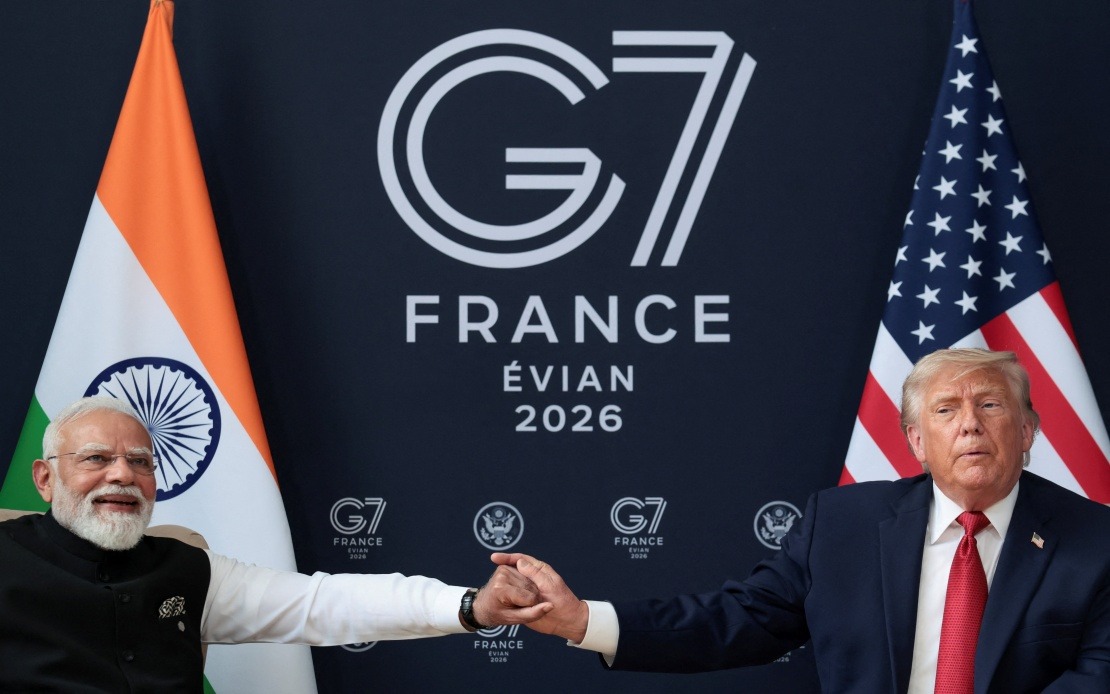
India and the United States have signalled meaningful advancement in their protracted negotiations toward a comprehensive trade agreement, according to statements following high-level discussions between Prime Minister Narendra Modi and President Donald Trump during the Group of Seven summit held in Evian, France. The two leaders underscored their satisfaction with progress achieved so far and directed their respective trade teams to accelerate work towards finalising a balanced arrangement that serves both nations' economic interests.
The declaration from India's External Affairs Ministry framed the momentum as a key achievement, emphasising the commitment to reaching what officials describe as a "commercially meaningful agreement" in the near term. This language reflects the intricate balancing act both countries must perform: negotiating deals that satisfy domestic constituencies while maintaining diplomatic relations and addressing mutual concerns about market access, tariffs, and supply chain vulnerabilities.
The timing of these talks carries particular weight given the ongoing trade tensions that have characterised the bilateral relationship. In 2025, Trump's administration imposed 25 per cent tariffs on Indian goods and levied an additional 25 per cent penalty specifically targeting India's purchases of Russian oil, measures that significantly disrupted trade flows and prompted urgent diplomatic engagement. These tariffs represented a substantial escalation that Indian exporters had to navigate, affecting industries from steel and pharmaceuticals to information technology services.
An interim trade agreement was reached in February of this year, representing a temporary breakthrough in the negotiations. Under this arrangement, the United States reduced its tariff rate on certain Indian goods to 18 per cent, providing some relief from the earlier 25 per cent baseline. However, this intermediate accord always functioned as a stepping stone rather than a final settlement, with both governments recognising the need to move toward a more comprehensive and durable framework.
The planned visit of US Trade Representative Jamieson Greer to India in the coming week signals genuine momentum in the negotiation process. Such high-level trade delegation visits typically occur when substantive progress has been made and officials are positioned to make meaningful decisions on contentious issues. Greer's presence in New Delhi will likely focus on bridging remaining gaps on key sectors of concern for each side, whether agricultural products, industrial goods, or services.
President Trump characterised Modi as a formidable negotiator, employing somewhat colourful language to describe the Indian Prime Minister's approach to trade discussions. Trump's observation that Modi appears deceptively gentle but proves exceptionally tough underscores the competitive nature of these negotiations and the resistance India has mounted against what it views as unfavourable terms. This dynamic reflects India's broader economic positioning as a nation increasingly confident in asserting its interests on the global stage.
For Southeast Asian observers, the US-India trade negotiations carry significant implications. An agreement between these two major economies could reshape regional trade patterns and investment flows, potentially affecting how countries throughout Asia position themselves economically. The success or failure of this bilateral arrangement may influence how other nations approach their own trade discussions with the Trump administration, which has signalled a preference for bilateral arrangements over multilateral frameworks.
India's negotiating stance appears anchored in protecting key domestic sectors while securing meaningful market access in the United States. The petrochemicals industry, automobile manufacturing, and agricultural exports remain particularly sensitive areas where Indian interests intersect with American producer concerns. Additionally, the question of intellectual property protections and technology transfer continues to feature prominently in discussions between developing and developed nations.
The Russian oil dimension adds geopolitical complexity to these commercial discussions. The additional 25 per cent penalty imposed on Indian energy purchases reflects American efforts to enforce sanctions against Russia, yet India maintains strategic energy partnerships that it views as essential to national security and economic stability. Reconciling these competing interests represents one of the more delicate aspects of the broader trade negotiation.
Modi and Trump's alignment on the need for progress suggests both leaders recognise the political value of reaching an agreement. For India, a successful trade deal demonstrates its ability to negotiate effectively with major powers and secure outcomes beneficial to its economy. For the Trump administration, concluding an agreement with a significant emerging market provides tangible evidence of effective dealmaking and can be presented as a foreign policy success.
The broader context of US-India relations remains important to consider. Beyond trade, the two countries have strengthened defence and security cooperation, particularly as both monitor developments in the Indo-Pacific region and seek to manage China's growing economic and military influence. Trade agreements, when successfully concluded, tend to reinforce these deeper strategic partnerships and create constituencies within each country that benefit from continued cooperation.
As negotiations advance toward a comprehensive agreement, attention will focus on whether the two sides can reconcile their respective priorities without either nation feeling compelled to compromise on fundamental interests. The language of "balanced and mutually beneficial" suggests both governments understand the importance of reaching an outcome that can withstand domestic scrutiny and support from key stakeholders in their respective countries.