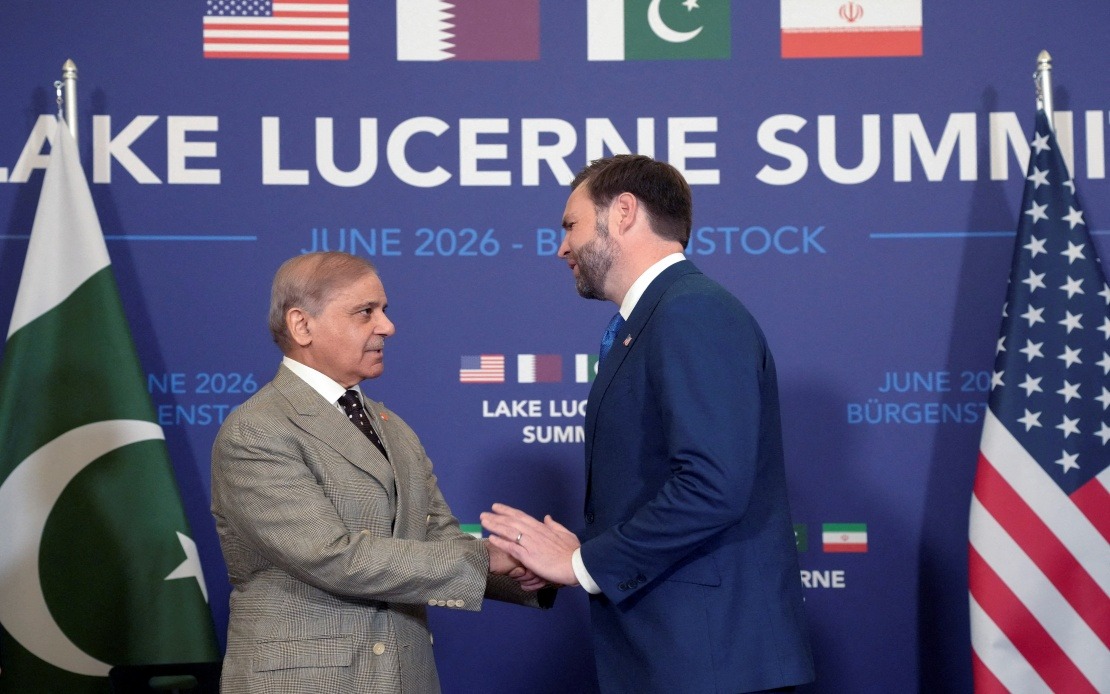
Diplomatic momentum accelerated in the Swiss Alps on Sunday as high-ranking American and Pakistani officials convened for critical discussions amid broader negotiations aimed at resolving longstanding tensions between Washington and Tehran. The gathering at the Burgenstock resort brought together Vice President JD Vance alongside presidential envoys Steve Witkoff and Jared Kushner, who engaged directly with Pakistan's Prime Minister Shehbaz Sharif and Pakistan Army Chief Field Marshal Asim Munir. The face-to-face engagement underscored the multilayered diplomatic efforts underway, with Pakistan positioned as a key mediator in the Middle Eastern negotiations that have captured international attention.
The meeting between the two delegations took place against the backdrop of technical-level negotiations involving the United States, Iran, and mediating nations Pakistan and Qatar. These discussions were scheduled to commence the same day at the Swiss resort, operating under strict confidentiality protocols typical of sensitive geopolitical negotiations. The involvement of multiple parties reflected the complexity of the underlying issues and the necessity for trusted intermediaries to facilitate productive dialogue between nations with historically adversarial relationships.
Just days before this gathering, the United States and Iran had crossed a significant threshold by executing a memorandum agreement that formally addressed the military conflict ignited on February 28. The remote signing of this document represented a pivotal moment in efforts to de-escalate tensions in one of the world's most volatile regions. The agreement contained specific provisions designed to create mutual confidence, including predetermined timelines for American withdrawal of its naval blockade and corresponding Iranian restoration of maritime passage through the Strait of Hormuz, a waterway critical to global energy supplies and Southeast Asian shipping routes.
For Malaysian readers and regional stakeholders, the ramifications of stability in the Strait of Hormuz carry substantial economic weight. The waterway serves as a chokepoint through which enormous quantities of oil and liquefied natural gas transit daily, making it essential for energy security across Asia. Any prolonged military confrontation in this area poses direct risks to regional economies, including Malaysia's energy sector and broader trade networks that depend on unimpeded maritime commerce. The agreement's focus on restoring Iranian shipping capabilities therefore carries implications extending well beyond bilateral US-Iran relations.
The nuclear dimension of these negotiations represents another cornerstone of the emerging framework. Iran has formally committed to renounce acquisition of nuclear weapons under the terms of the memorandum. However, the intricate details of Iran's existing nuclear programme remain unresolved and require separate comprehensive negotiations. Parties have established a sixty-day window within which to hammer out these technical details, suggesting a structured timeline for addressing what has been among the most contentious aspects of US-Iran relations since the 2015 Joint Comprehensive Plan of Action and its subsequent collapse.
For Tehran, the primary incentive driving participation in these negotiations centres on the prospect of sanctions relief. International economic restrictions have severely constrained Iran's economy, limiting its capacity to engage in global trade and investment. The lifting of anti-Iran sanctions therefore constitutes a central objective for Iranian leadership, providing leverage and motivation for sustained engagement with American negotiators. This dynamic illustrates how economic incentives can facilitate diplomatic breakthroughs even among adversarial parties with deep historical grievances.
Pakistan's role as a mediating power reflects its strategic location and historically complex relationships with both the United States and Iran. As a nation with significant geostrategic interests in Middle Eastern stability, Pakistan maintains diplomatic channels with major regional and international powers. The presence of its Prime Minister and top military leadership at these negotiations signals Islamabad's commitment to regional peace efforts and its willingness to invest political capital in facilitating dialogue. For Southeast Asian nations, Pakistan's active mediation underscores how regional powers outside one's immediate neighbourhood can influence broader geopolitical dynamics.
The involvement of Qatar alongside Pakistan as a mediator reflects the diplomatic architecture increasingly prevalent in contemporary conflict resolution. Both nations possess credibility with various stakeholders and maintain relationships enabling them to shuttle information and proposals between parties reluctant to engage directly. Qatar, in particular, has cultivated an international reputation for hosting and facilitating sensitive negotiations on matters ranging from Israeli-Palestinian issues to Afghan peace talks, demonstrating how smaller but strategically positioned nations can punch above their weight in diplomatic contexts.
The White House's decision to dispatch both Vance and the special envoys indicates the seriousness with which the Biden administration approached these negotiations. The participation of figures like Jared Kushner, known for his involvement in Middle Eastern initiatives, suggested continuity of certain diplomatic approaches alongside new personnel. This composition signalled to Pakistan and other regional observers that the American commitment extended across different segments of the administration, lending weight to any agreements reached or frameworks established during the discussions.
For Malaysia and other Southeast Asian nations maintaining balanced relationships with both Western powers and Middle Eastern states, these developments carry strategic importance. Regional stability in the Middle East directly influences energy prices, security dynamics, and trade patterns affecting Southeast Asia. A sustained de-escalation between the United States and Iran could reduce proxy conflicts in the region, potentially decreasing instability that sometimes spills into other areas or affects shipping and commerce. Conversely, failure to consolidate these agreements would revert the situation to its previous dangerous trajectory.
The sixty-day timeline for nuclear agreement negotiations provides a compressed but manageable window for resolving technical disputes. This timeframe suggests both parties recognize the urgency of reaching conclusive arrangements while acknowledging that fundamental disagreements require serious negotiation rather than rushed compromises. The structured approach reflected diplomatic sophistication, acknowledging that sustainable agreements require adequate time for technical experts to address complex details while maintaining overall momentum.
Looking forward, the success of these negotiations depends on sustained political will from all parties and the ability of mediators like Pakistan and Qatar to manage competing interests. Any breakthrough regarding Iran's nuclear programme and sanctions relief could reshape Middle Eastern geopolitics substantially, affecting everything from regional military balances to investment flows and trade relationships. For Malaysian policymakers and business leaders, monitoring these developments remains essential, as outcomes will influence regional security architecture and economic opportunities in the coming years.

