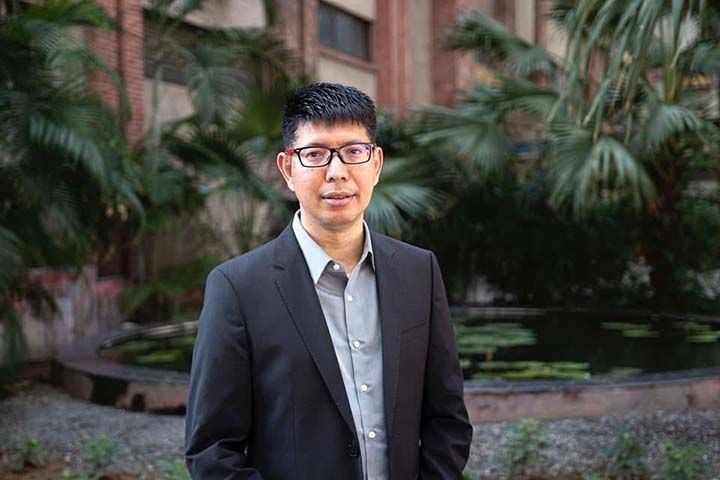
An American scholar of Myanmar detained in China's Kunming city in early June was on an academic mission when apprehended, according to the think tank he founded. Min Zin, executive director of the Institute for Strategy and Policy (ISP) - Myanmar, was arrested while traveling to the southwestern metropolis to participate in an intellectual workshop. His organization released a statement on Wednesday calling for his unconditional release and rejecting what it characterized as baseless allegations against him.
China's foreign ministry confirmed last week that Min Zin had been taken into custody on suspicion of espionage and endangering national security. The arrest marks an escalation in Beijing's approach toward individuals critical of or investigating China's regional relationships, particularly with Myanmar's military government. The timing of the detention, occurring in early June, preceded a scheduled five-day state visit by Myanmar's junta leader Min Aung Hlaing, suggesting possible coordination with broader diplomatic initiatives.
The Institute for Strategy and Policy issued a forceful statement defending its detained director and condemning what it termed groundless accusations. The organization emphasized that Min Zin's sole purpose in traveling to Kunming was to engage in scholarly dialogue and intellectual exchange. The think tank, which operates independently from Myanmar's military establishment, has become increasingly important as an analytical voice since the 2021 coup d'état disrupted Myanmar's democratic institutions and displaced the government of Aung San Suu Kyi.
The United States State Department has similarly rejected Beijing's allegations, asserting that American consular officers have visited Min Zin in detention and that the department remains actively engaged with Chinese authorities to secure his release and provide appropriate consular support. This diplomatic intervention underscores Washington's commitment to protecting its citizens abroad and signals concern about the implications of such detentions for academic freedom and international scholarly exchange in the region.
China's foreign ministry, when questioned by Reuters about the case, maintained its position that Min Zin is suspected of espionage activities and reiterated its intention to handle the matter according to Chinese law. The ministry's stance reflects Beijing's broader security concerns and its approach to managing dissenting or critical voices, particularly those examining China's strategic interests in Southeast Asia. The arrest also demonstrates how geopolitical tensions between Washington and Beijing can intersect with Myanmar's internal political struggles, potentially complicating efforts to understand the country's trajectory.
Min Zin brings a distinctive background to his scholarship on Myanmar. A former student activist who participated in the country's pivotal 1988 democracy movement, he later pursued formal academic training in political science at the University of California, Berkeley. This combination of lived experience during Myanmar's earlier democratic uprisings and rigorous Western-style education positioned him to offer nuanced analysis of his homeland's complex political dynamics. His personal history reflects the broader narrative of Myanmar's struggle for democratic governance and institutional reform.
The Institute for Strategy and Policy, which Min Zin helped establish, has evolved into a significant research organization tracking Myanmar's political and economic developments. Initially headquartered within Myanmar itself, the organization relocated its operations abroad following the February 2021 military coup that ousted Aung San Suu Kyi's democratically elected administration. This geographical shift reflects the constraints placed on independent research and critical analysis within Myanmar under military rule. The think tank's relocation enabled continued scholarly work despite the restrictive environment created by the junta's consolidation of power.
The institute's research agenda has concentrated on several interconnected dimensions of Myanmar's contemporary crisis. Its publications examine the armed conflict engulfing the country, analyze pathways toward potential political transition and reconciliation, assess the deterioration of Myanmar's economic fundamentals under military management, and scrutinize the intricate relationship between Myanmar and China. These research priorities position ISP-Myanmar as an important independent voice attempting to understand the forces shaping the nation's future. The organization's work has become increasingly vital as international attention to Myanmar's internal strife has evolved in complexity.
Myanmar's military has emerged as heavily dependent on Chinese support, both diplomatically and materially. Since the 2021 coup, Beijing has consistently defended the junta's legitimacy in international forums and maintained robust economic and military ties with Naypyidaw. This strategic partnership has deepened even as Myanmar has descended into civil conflict, with pro-democracy forces and ethnic armed organizations challenging military rule. China's economic interests in Myanmar, including infrastructure projects and regional stability favorable to its Belt and Road Initiative, have made Beijing reluctant to criticize the junta's governance.
The arrest of Min Zin occurs against the backdrop of escalating internal conflict within Myanmar. The initial protests against the 2021 coup have evolved into sustained armed struggle, with newly formed pro-democracy militia groups collaborating alongside longstanding ethnic armed organizations to challenge military authority. This conflict has displaced hundreds of thousands of civilians, created severe humanitarian crises, and fundamentally destabilized Myanmar's social and economic structures. Independent research organizations like ISP-Myanmar have attempted to document these developments and analyze their implications for regional security and humanitarian outcomes.
The detention raises serious questions about the conditions for academic research and policy analysis in Myanmar and across Southeast Asia. Independent scholars and think tanks operating in the region face mounting pressures from multiple quarters, including military governments, authoritarian security apparatus, and external powers seeking to shape narratives about the region's political evolution. The case of Min Zin exemplifies how the overlap between academic inquiry, policy advocacy, and geopolitical competition can place researchers in precarious positions, particularly when their work examines sensitive bilateral relationships or criticizes authoritarian governance structures.
The ISP-Myanmar statement emphasizing the necessity for academic and research organizations to function without intimidation addresses fundamental principles of intellectual freedom. In an era when governments increasingly view independent analysis and critical scholarship as potential threats to national security, protecting researchers' ability to investigate and publish findings about contentious issues becomes crucial. This principle extends beyond individual cases to encompass the broader ecosystem of policy analysis that should inform democratic decision-making and international understanding.
The situation underscores the complex intersection of Myanmar's internal political crisis, China's regional strategic interests, and international norms regarding academic freedom and consular protection. Min Zin's detention demonstrates how individuals working on Myanmar's contemporary challenges may face legal jeopardy despite engaging in legitimate scholarly activities. The response from his organization, the United States government, and international observers will influence how such cases are addressed going forward and whether academic inquiry into sensitive geopolitical questions remains feasible in Southeast Asia.

