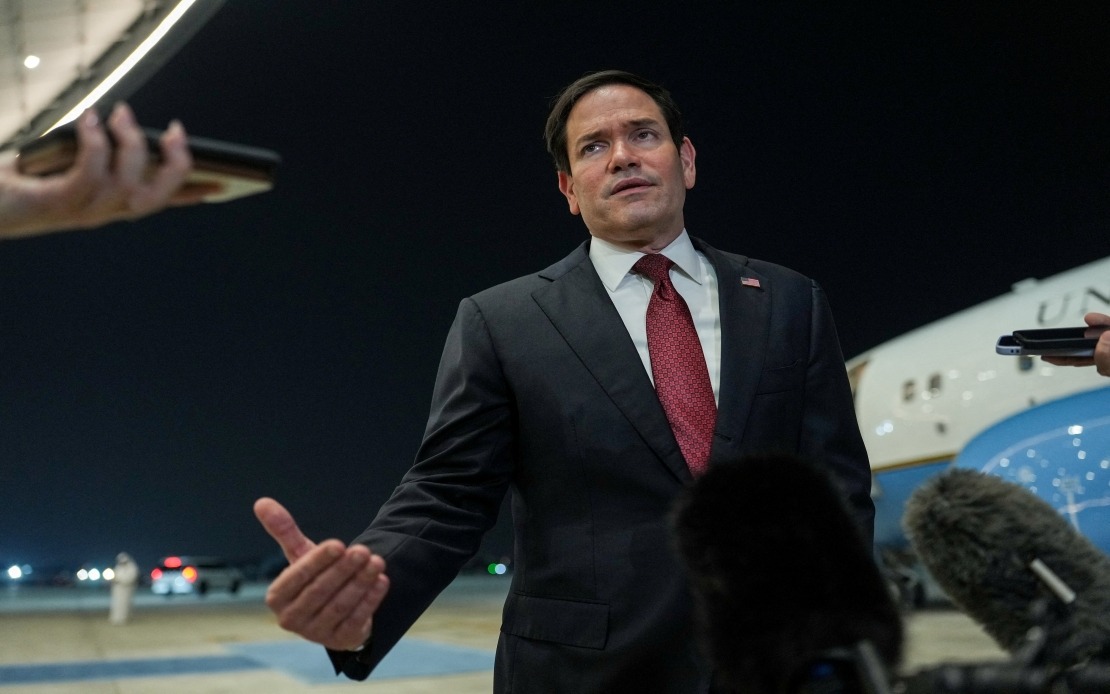
United States Secretary of State Marco Rubio has firmly rejected speculation that Washington will bankroll a reconstruction initiative for Iran, even as diplomatic channels between the two countries show signs of thawing. Speaking to journalists on Tuesday, Rubio clarified that while various proposals for economic rehabilitation of Iran may be under discussion internationally, direct US government funding would not be forthcoming. His comments arrived in the wake of swirling reports about a proposed US$300 billion reconstruction package, which President Donald Trump had already dismissed as premature speculation just days earlier.
Rubio's measured language reflects the cautious stance the Trump administration is adopting toward deepening economic ties with Iran at this juncture. The secretary of state indicated that should Iran choose to pursue economic development opportunities, such initiatives would need to emerge organically through private sector or allied-nation channels rather than through direct American investment. His comment that "it won't be our government money" suggests Washington sees a role for other regional powers, particularly wealthy Gulf Cooperation Council states, in any reconstruction efforts that might materialise.
The diplomatic breakthrough that prompted these reconstruction discussions occurred during peace negotiations held in Burgenstock, Switzerland, on Sunday. Qatar and Pakistan facilitated the historic talks, which marked a significant attempt to de-escalate tensions between Washington and Tehran following military confrontations that erupted on February 28. The US delegation was represented by Vance, while Iran's parliamentary speaker Mohammad Bagher Ghalibaf led the Iranian negotiating team. Both sides emerged from those discussions expressing optimism about potential progress, with Iranian Foreign Ministry spokesman Ismail Baghaei and American officials confirming substantive movement on key issues.
The memorandum recently signed between Iran and the United States represents a watershed moment in their fraught relationship, establishing a formal pathway toward ending active military hostilities. The agreement establishes specific timelines for several critical undertakings, including Washington's commitment to lift its naval blockade of Iranian waters and Tehran's reciprocal obligation to restore shipping activities through the Strait of Hormuz. These provisions carry enormous implications for regional stability and global energy markets, given the strategic importance of this vital maritime passage through which roughly one-third of seaborne traded oil transits annually.
Crucially, the memorandum addresses the nuclear dimension that has poisoned US-Iran relations for nearly two decades. Iran commits to foregoing the acquisition of nuclear weapons, marking a significant concession that mirrors earlier commitments made under international frameworks. However, rather than settling all nuclear questions immediately, the parties have agreed to pursue detailed negotiations within a 60-day timeframe to establish a comprehensive nuclear accord. This deliberate sequencing suggests negotiators recognise that resolving the military conflict represents a necessary prerequisite to building sufficient trust for addressing the more technically complex and politically sensitive nuclear portfolio.
Rubio's emphasis that economic progress remains contingent upon advances on "a host of other security issues" signals that the Trump administration views reconstruction financing as a potential incentive rather than an immediate commitment. This approach aligns with Washington's historical use of economic leverage as a diplomatic tool, reserving financial rewards for verifiable compliance with security arrangements. The secretary of state's framing suggests that any reconstruction fund will likely require demonstrated progress on implementation of the military cessation terms and successful completion of the nuclear negotiations before substantial resources flow toward Iran's economic rehabilitation.
The potential involvement of Gulf states in financing Iranian reconstruction marks an intriguing development for regional dynamics. Countries such as Saudi Arabia and the United Arab Emirates, long positioned as counterweights to Iranian regional influence, would face complex calculations about whether funding Iranian development serves their strategic interests. Such engagement could potentially facilitate greater regional integration and reduce zero-sum competition, though it also risks empowering a state that Gulf monarchies view with strategic suspicion. For Malaysia and other Southeast Asian nations with interests in regional stability and maritime commerce, the implications extend beyond bilateral US-Iran relations toward broader patterns of Middle Eastern geopolitical alignment.
The timing of these discussions underscores shifting American foreign policy priorities under the current administration. Rather than maintaining maximum pressure through sanctions and military posturing, the Trump approach apparently emphasises negotiated resolution coupled with strategic ambiguity about American financial commitments. This represents a departure from the previous administration's approach and reflects calculations that managed engagement may yield superior strategic outcomes compared to indefinite confrontation. The willingness to negotiate, even while refusing direct investment, suggests Washington believes it can influence Iranian behaviour through conditional diplomatic engagement without exposing American taxpayers to reconstruction costs.
For Malaysian observers, these developments carry significance beyond geopolitical theatre. Iran represents an important trading partner and energy supplier for the region, and any reduction in tensions benefits ASEAN economies through stabilised energy prices and reduced regional militarisation. Conversely, uncertainty about Iran's economic trajectory creates unpredictability in regional markets and international commerce. The clarification that reconstruction financing will likely come from Gulf sources rather than Western governments suggests Iran's economic rehabilitation, if it proceeds, will occur within a regional Middle Eastern framework rather than through broader international mechanisms. This dynamic could influence investment patterns and trade relationships that indirectly affect Southeast Asian commerce and stability.
The pathway forward remains uncertain despite apparent diplomatic momentum. Rubio's careful hedging about future contributions to any reconstruction effort reflects Washington's determination to maintain leverage throughout the implementation process. His insistence that progress on security matters must precede financial commitments protects American interests while signalling to allies and adversaries alike that the Trump administration has not abandoned its concern for regional balance of power. For investors and policymakers across Southeast Asia monitoring these developments, the key takeaway remains that American involvement in financing Iran's reconstruction appears off the table, even as diplomatic engagement continues advancing on multiple fronts.

