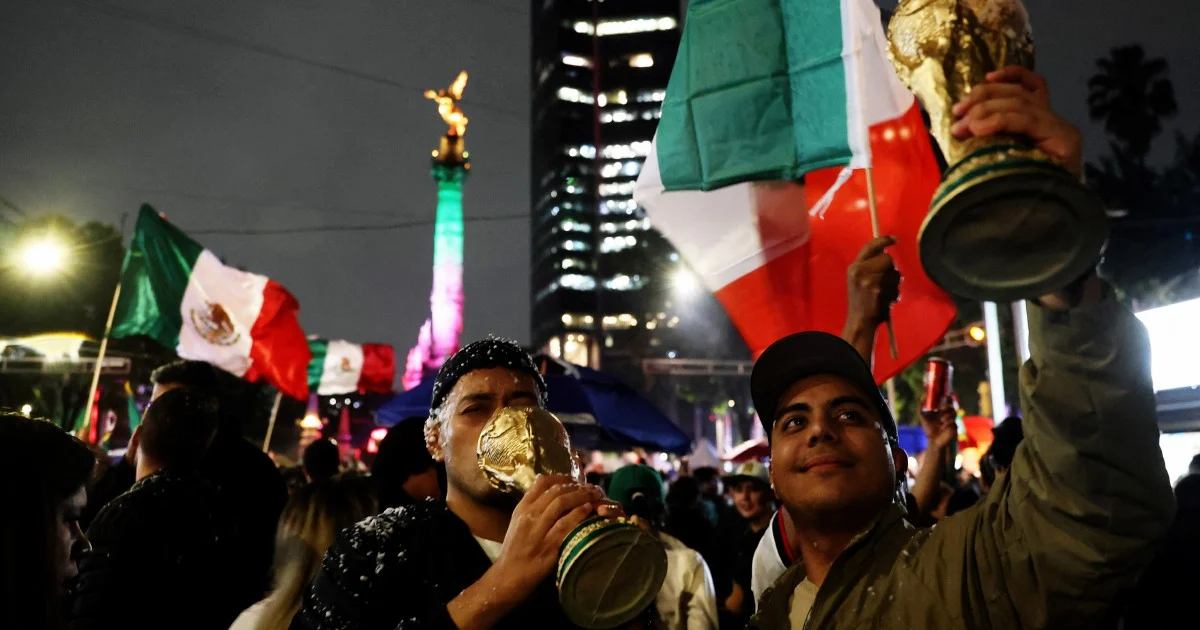
Mexico's festive celebrations following a World Cup match victory descended into chaos on Wednesday evening when a vehicle ploughed through a gathered crowd in the beachfront resort town of Cabo San Lucas. The incident left 17 people requiring medical attention, according to a statement released by the municipality's administration. Among the injured was the vehicle's driver, who was apprehended at the scene and now faces investigation into the circumstances surrounding the collision.
Cabo San Lucas, situated at the southern tip of the Baja California Peninsula where the Pacific Ocean meets the Sea of Cortez, has long been a magnet for international tourists and Mexican holidaymakers alike. The resort destination's prominence as a premier vacation spot made it an ideal gathering place for supporters seeking to commemorate their national team's performance on the world stage. The intersection of celebratory crowds and vehicular traffic in such densely populated tourist zones creates inherent risks that authorities continue to grapple with across Mexico's major entertainment precincts.
Social media footage captured and authenticated by Reuters news agency documented the moments preceding and following the collision. Video evidence shows a black vehicle initially surrounded by jubilant supporters attired in the green, white, and red colours of Mexico's national football team. The vehicle then accelerated sharply into the throng, propelling multiple individuals skyward before coming to rest against protective bollard barriers installed presumably to prevent such incidents. The sudden violence of the acceleration and the resulting dispersal of the crowd speaks to the force with which the vehicle struck those gathered in its path.
Subsequent imagery verified by the international news agency reveals the aftermath's grim reality. Members of the crowd appear to have extracted an occupant from the vehicle and engaged in a physical altercation as other individuals lay motionless on the pavement, some showing visible signs of injury. The abruptness with which celebrations transformed into a crisis situation underscores how quickly public gatherings can turn dangerous when vehicles and pedestrians converge in uncontrolled circumstances.
The incident raises critical questions about event management and public safety protocols at spontaneous celebrations that materialise organically around sporting events. Unlike formal stadium events or sanctioned street parties where authorities deploy barriers, coordinate traffic management, and position medical personnel, impromptu fan gatherings lack such structured safeguards. The dense concentration of people blocking roadways and the potential impairment or emotional heightening of revellers create an environment where judgment on both pedestrian and driver sides can become compromised.
Mexico's football culture commands passionate engagement from supporters across socioeconomic and demographic lines, making major tournament performances occasions for nationwide celebration. However, such exuberance, when channelled into public spaces without formal organisation, has historically resulted in safety complications. Authorities across Mexico's major cities have implemented various crowd management strategies during football celebrations, ranging from designated viewing zones to enhanced police presence in entertainment districts, yet preventing every uncontrolled gathering remains operationally and legally challenging.
The driver's apprehension indicates that law enforcement responded promptly to secure the scene and preserve investigative evidence. The nature of the vehicle's acceleration—whether intentional, accidental, or resulting from mechanical failure or driver incapacity—will determine both the severity of charges and the broader narrative surrounding the incident. Preliminary video evidence suggesting deliberate acceleration would carry profound implications for public safety awareness and potential copycat concerns, whereas mechanical failure or medical incapacitation of the driver would reframe the incident as tragic accident rather than malicious act.
For Southeast Asian readers and the broader region, this incident echoes patterns visible across Asia during major sporting celebrations. Similar crowd incidents have occurred in Vietnam, Thailand, and Indonesia during football-related festivities, prompting regional sporting authorities and municipal governments to evaluate crowd control methodologies. The challenge of balancing spontaneous public expression of national pride with systematic safety measures remains unresolved across developing and emerging economies where formal event management infrastructure may be inconsistently applied.
Cabo San Lucas authorities will face mounting pressure to review existing safety protocols and determine whether additional measures should be implemented during future high-profile sporting occasions. Potential responses might include prepositioned barriers in known gathering areas, traffic restrictions around fan congregation points during major matches, increased police visibility and coordination with venue operators, and public safety campaigns educating supporters about hazards associated with roadway occupation. The medical response capacity also merits examination, given that 17 concurrent patient admissions would strain even well-resourced emergency departments.
The incident serves as a sobering reminder that celebrations, regardless of their underlying joyful purpose, carry inherent risks when large numbers of people occupy spaces designed for vehicle traffic. For football supporters across Mexico and the broader Americas, the evening's events will likely prompt reflection on safer alternatives for expressing collective enthusiasm, while municipal administrators contemplate preventive measures that do not unduly restrict public expression during moments of national sporting achievement.

