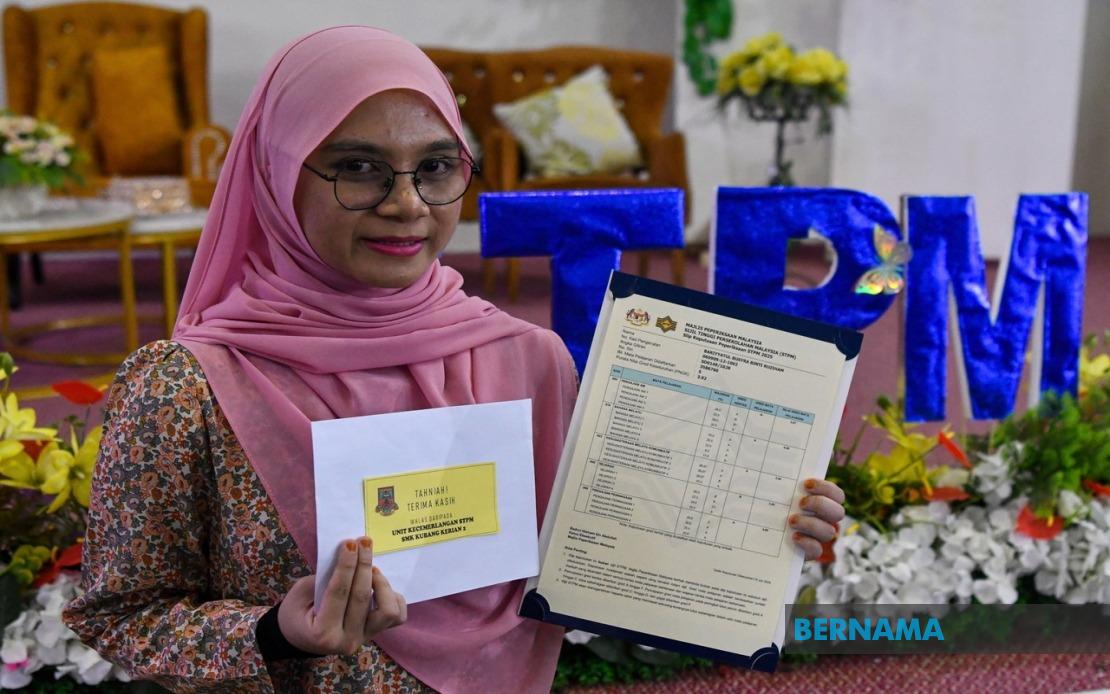
Bariyyatul Busyra Ruziham, a 20-year-old from Kota Bharu, has become a compelling example of academic perseverance, securing a Cumulative Grade Point Average of 3.92 in the 2025 Sijil Tinggi Persekolahan Malaysia (STPM) examinations despite living with retinitis pigmentosa, a progressive degenerative eye disease. Her achievement underscores the crucial role that institutional support mechanisms play in enabling students with disabilities to compete on a more level playing field, a particularly significant message in Malaysia's education system where accessibility provisions remain inconsistently implemented across institutions.
Retinitis pigmentosa manifests through progressive vision loss that forces Bariyyatul Busyra to adopt unconventional study habits to manage her condition. She described how her eyesight frequently becomes blurred and strained during extended periods of concentration, necessitating careful management of screen time and reliance on amplified lighting. The degenerative nature of the condition means that typical classroom environments—with standard overhead lighting and board-based instruction—present genuine obstacles to her learning. Rather than viewing these challenges as insurmountable, she has developed personalised coping strategies, including studying during the quieter early morning hours when she can focus more effectively and adjusting digital materials to larger font sizes that reduce eye strain.
The examination accommodations provided during her STPM sittings—specifically a dedicated desk lamp and an extension of 30 per cent additional time—proved instrumental in allowing her to demonstrate her academic capabilities. These provisions, while appearing modest, represent essential equalisation measures that address the fundamental disadvantages imposed by her condition. The extra time allocation acknowledges that processing information through compromised vision requires extended duration, while the supplementary lighting directly ameliorates the physiological strain inherent to her situation. Bariyyatul Busyra's success suggests that Malaysian examination bodies have recognised these principles, though broader implementation across pre-university and university-level assessments remains inconsistent.
Her academic journey has not proceeded without complications. A particularly challenging period emerged when extended laptop usage triggered eye inflammation, a common consequence for individuals with retinitis pigmentosa who rely heavily on digital devices for study materials. This inflammation significantly disrupted her academic momentum, highlighting the precarious position of students with progressive visual conditions who must constantly balance their learning needs against the physiological limitations of their eyes. Managing such health crises whilst maintaining examination performance requires not merely academic discipline but considerable emotional resilience and adaptive capacity.
Bariyyatul Busyra's career aspirations reflect her determination to transcend the limitations her diagnosis might impose. She aspires to study business at Universiti Sains Malaysia, indicating her intention to pursue tertiary education and ultimately establish herself professionally in the commercial sector. Her ambition suggests that she views her STPM achievement not as a culmination but as a foundation for further advancement, positioning herself within Malaysia's competitive undergraduate environment where students with disabilities historically face additional barriers to admission and completion.
The family context surrounding her achievement reveals both the longstanding nature of her condition and its prevalence within her immediate household. Bariyyatul Busyra's mother, Engku Radziah Engku Ahmad, first detected signs of retinitis pigmentosa when her daughter was approximately five years old, noticing subtle developmental changes in how the child navigated her immediate environment and manipulated objects. Clinical investigations subsequently confirmed the diagnosis, establishing what would become a lifelong management challenge. The revelation that two of Bariyyatul Busyra's sisters also carry the same genetic condition transforms her educational achievement into a family narrative about resilience and adaptation, as well as raising questions about access to support services for multiple family members experiencing the same progressive condition.
Engku Radziah, who works as an educator at Sekolah Kebangsaan Kampung Sireh, occupies a particular vantage point from which to appreciate her daughter's accomplishment. Her professional background in education endows her with understanding of curriculum demands and assessment processes, perhaps enabling her to advocate more effectively for her daughter's needs within the schooling system. Her public acknowledgment of Bariyyatul Busyra's achievement emphasises not merely the numerical outcome but the extraordinary personal determination required to attain such grades whilst managing a progressive degenerative condition, recognising that identical CGPA figures carry fundamentally different significance depending on the circumstances under which they were earned.
The positioning of Bariyyatul Busyra as among Kelantan's top-performing special needs candidates carries implications for how Malaysian society conceptualises disability and academic merit. Rather than categorising her within a separate tier of achievement, this framing acknowledges her accomplishment within the broader state-level rankings whilst simultaneously recognising the additional effort her circumstances required. This dual recognition avoids the false choice between either dismissing her grades as products of lower standards or erasing acknowledgment of the structural obstacles she overcame, instead presenting her success as evidence of genuine capability demonstrated under more challenging conditions.
Bariyyatul Busyra's experience illuminates critical gaps in Malaysia's provision of accessibility support across educational levels. Whilst her secondary schooling apparently included formal accommodation mechanisms—the desk lamp and extended time were officially provided—the transition to university-level study presents uncertain terrain. Malaysian universities maintain inconsistent standards regarding disability support services, with some institutions offering comprehensive centres dedicated to accessibility whilst others treat such provisions as peripheral matters. Her progression to tertiary education will constitute a significant test of whether systemic support mechanisms can scale appropriately to meet university-level demands.
The broader implications of this achievement extend beyond individual inspiration into systemic questions about how Malaysia can better support students with disabilities at scale. Retinitis pigmentosa affects approximately one in 4,000 individuals in developed nations, suggesting that Malaysia likely encompasses several hundred citizens with this condition alone, excluding the far larger population managing other visual impairments, hearing loss, mobility challenges, and neurodevelopmental conditions. If Bariyyatul Busyra's 3.92 CGPA represents the ceiling of what becomes possible with minimal accommodations—a desk lamp and extended time—then the nation's educational system may be systematically underutilising the capabilities of students with disabilities by failing to implement more comprehensive support infrastructure.
The examination period during which Bariyyatul Busyra achieved her results coincided with Malaysia's broader implementation of STPM reforms, suggesting that her success occurred within an evolving assessment context. The 2025 cohort represented students navigating updated examination structures and standards, meaning her achievement reflects not merely management of her individual condition but also successful adaptation to institutional changes. Her performance thus validates the possibility that reformed examination systems, if designed with accessibility principles embedded from the outset rather than appended afterwards, can genuinely serve diverse student populations more effectively than legacy structures.
Moving forward, Bariyyatul Busyra's trajectory will likely influence conversations within Malaysian education about the relationship between accommodations and merit. Her high achievement using relatively simple, inexpensive modifications—supplementary lighting and extended time involve minimal institutional cost—provides compelling evidence that accessibility provisions need not compromise standards or validity of assessment. Rather, they represent mechanisms through which institutions can accurately measure the capabilities of students whose disabilities would otherwise distort assessment outcomes downward, obscuring their genuine academic potential. Her STPM results thus function as a proof of concept for more ambitious disability inclusion strategies across Malaysia's education system.