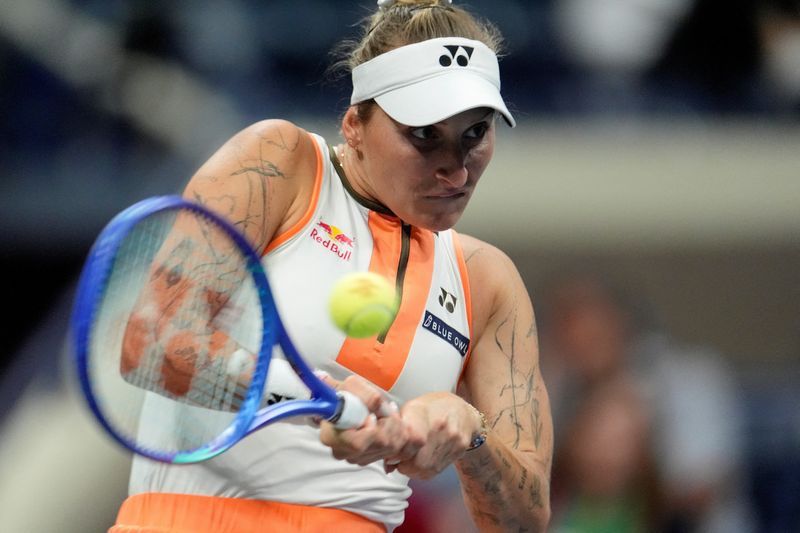
The suspension of Czech tennis champion Marketa Vondrousova for four years has reopened fundamental questions about how the sport balances rigorous anti-doping enforcement with the rights and welfare of its athletes. The International Tennis Integrity Agency announced the ban this week after determining that Vondrousova failed to provide a sample during an unannounced out-of-competition test at her home in December, setting off immediate controversy both within professional tennis circles and among player advocacy groups across the sport.
Vondrousova, the 2023 Wimbledon champion, has become the unlikely focal point of broader frustrations simmering within the professional tennis community. In public statements released in April, she described months of escalating physical and mental strain, emphasizing that an official's arrival at her residence at 8:15 p.m. demanding immediate compliance felt like an unwarranted invasion of her privacy and personal space. Her account resonated particularly strongly because it touched on vulnerabilities that many female athletes face, especially those living alone or in isolated locations where unannounced visits from unknown officials can feel genuinely threatening.
The Professional Tennis Players Association has seized on Vondrousova's case as a catalyst for systemic reform, releasing a statement that carefully separates sympathy for her specific circumstances from broader advocacy work. The association contends that imposing a four-year suspension on an athlete with no positive test results in her history, combined with legitimate safety concerns about late-evening visits from unidentified persons, represents a disproportionate response that warrants serious reconsideration of current protocols. Beyond Vondrousova's individual case, the PTPA has urged tennis authorities to establish genuine mechanisms through which active players can help shape the rules that govern their testing and potential punishment.
This intervention carries particular weight because it reflects accumulated frustration over perceived inconsistencies in how anti-doping cases are handled across different players. The sport has recently weathered considerable criticism following the lenient resolutions in cases involving higher-ranked athletes such as Jannik Sinner and Iga Swiatek, who received relatively short bans or avoided substantial sanctions despite positive drug test results. For many observers and players alike, the contrast between these outcomes and Vondrousova's severe punishment for a procedural violation rather than actual doping raises uncomfortable questions about whether enforcement operates with consistent standards or whether factors like ranking, profile, and marketability subtly influence outcomes.
The International Tennis Integrity Agency has consistently maintained that its decision-making framework operates independently of player reputation, ranking, or nationality, functioning within the globally harmonized World Anti-Doping Agency code that applies across all Olympic sports. Karen Moorhouse, the ITIA's chief executive, emphasized in her statement that while testing undoubtedly creates discomfort and adds burdens to athletes already managing demanding careers, such procedures remain absolutely essential for preserving competitive fairness. She stressed that the agency's approach reflects objective assessment of evidence and facts rather than subjective judgments about individual circumstances or personal hardship.
Despite these assurances, the safety dimension of Vondrousova's complaint has particular resonance in professional women's tennis, where unannounced visits to private residences carry real psychological weight. The 2016 knife attack on fellow Czech player Petra Kvitova at her home remains a traumatic reference point within the sport, illustrating why female athletes—particularly those based in solitary or vulnerable living arrangements—might reasonably hesitate to open their doors to unidentified individuals claiming official capacity. This context fundamentally changes how many people view Vondrousova's reluctance to comply with the test officer's demands during an evening visit.
The ITIA has attempted to address these legitimate safety concerns by describing rigorous protocols supposedly in place to verify tester credentials and ensure appropriate professional conduct. Moorhouse noted that all testers receive specialized training, carry identification at all times, and when testing female athletes, the accompanying witness always shares the same gender. She indicated that players unhappy about a tester's identity possess avenues to confirm credentials through alternative verification methods before cooperating. However, these procedural safeguards, while well-intentioned, may not fully assuage the genuine anxiety many athletes experience when unexpected late-evening visits occur at their homes.
The underlying tension reflects a genuine conflict between two legitimate principles: the sporting world's commitment to rigorous, unpredictable testing as the primary tool for detecting doping and performance-enhancing substance abuse, and athletes' fundamental entitlement to reasonable privacy, personal security, and meaningful participation in establishing the rules governing their professional lives. Moorhouse reiterated that an independent tribunal determined the principle of unpredictable testing at any location and time remains non-negotiable for maintaining clean sport, effectively signaling that authorities will not substantially modify these core testing protocols regardless of individual hardship cases.
For Malaysian and Southeast Asian tennis fans and sports administrators watching this situation unfold, the Vondrousova case offers important lessons about how anti-doping governance operates globally and where reforms might eventually occur. The PTPA's push for greater player voice in rule-making suggests that future modifications to anti-doping procedures—whether concerning timing of tests, witness presence, verification protocols, or appeal mechanisms—could emerge through persistent athlete advocacy rather than regulatory bodies acting unilaterally. This dynamic reflects broader trends in professional sports toward greater athlete agency in governance structures previously dominated entirely by administrators and sports organizations.
Vondrousova retains the legal right to appeal her suspension through the Court of Arbitration for Sport, the independent mechanism designed to provide athletes a final avenue for challenging anti-doping determinations. Her status as a former world number six and major champion ensures her appeal will receive substantial attention, potentially creating additional pressure on decision-makers to carefully reconsider whether the four-year ban proportionately addresses her specific circumstances. Meanwhile, her injury-forced absence from competition since January means the practical impact of the suspension will not be immediately visible, providing some temporal distance for the sport to address the underlying governance questions her case has raised.
The broader implications extend beyond individual cases to encompass how professional tennis structures its relationship with athletes and their representation in institutional decision-making. If the PTPA successfully negotiates expanded athlete participation in anti-doping rule development, such changes could establish precedents influencing how other sports organizations engage with their athletes on governance matters. For a region increasingly focused on developing tennis talent and hosting major tournaments, understanding these evolving power dynamics within professional tennis governance becomes relevant for anyone involved in the sport's administration or development across Southeast Asia.

