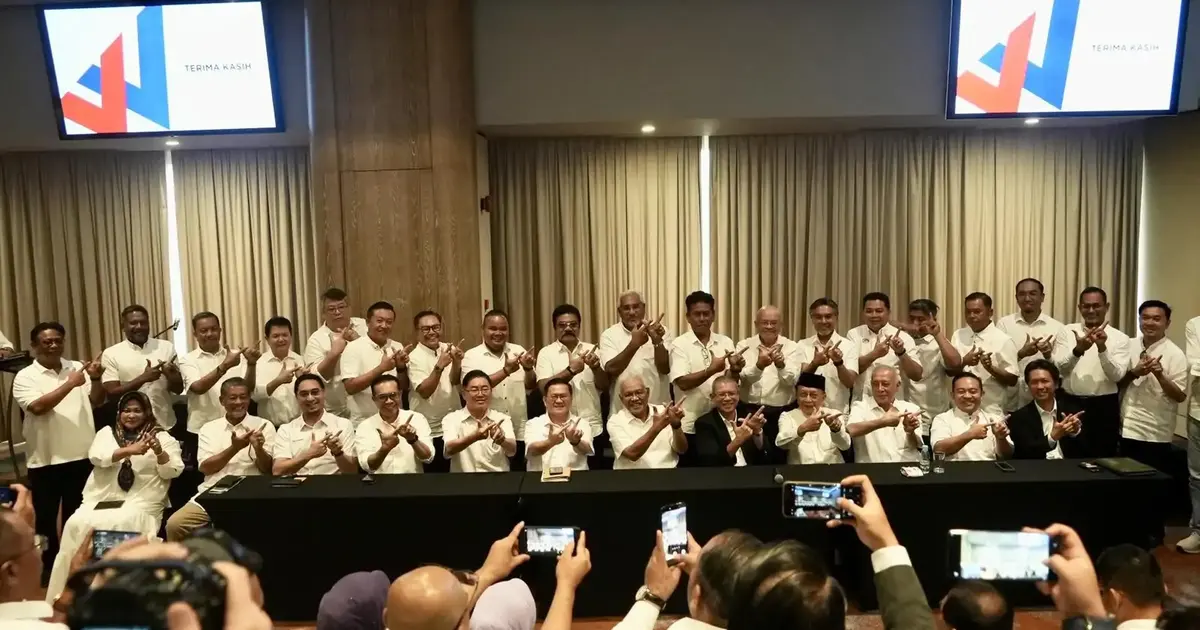
Perikatan Nasional has officially admitted Wawasan 2.0 into its coalition through a majority vote by the Supreme Council, according to PN election director Sanusi Md Nor, in a move that settles a contentious internal debate within the opposition alliance. The decision comes despite clear objections from Bersatu, one of PN's core member parties, highlighting the fractures that have emerged within the coalition as it navigates competitive pressures heading into electoral cycles.
Sanusi's confirmation indicates that while Bersatu's concerns were formally registered and acknowledged during deliberations, they ultimately did not carry sufficient weight to block the admission when put to a vote among the coalition's leadership. This procedural distinction underscores the tension between individual party autonomy and collective coalition decision-making mechanisms in Malaysian opposition politics, where disagreements over membership and strategy frequently threaten unity.
The Wawasan 2.0 party, which has positioned itself as a reformist alternative within the political landscape, apparently garnered sufficient support among PN's other member parties to secure acceptance. This suggests that beyond Bersatu's reservations, other coalition partners saw strategic value in expanding PN's parliamentary representation or believed the party could strengthen their electoral positioning in targeted constituencies.
Bersatu's objections likely stem from concerns about internal competition for voter support, ideological compatibility, or questions about Wawasan 2.0's commitment to PN's collective platform. In Malaysian coalition politics, admitting new parties can dilute existing members' influence within power-sharing arrangements and create uncertainty around resource allocation, candidate nomination processes, and policy direction. Bersatu's formal dissent suggests these practical concerns were substantial enough to warrant explicit opposition.
The Supreme Council's reliance on majority voting rather than consensus reflects a coalition operating under procedural constraints rather than organic harmony. Malaysian coalitions, whether governing or opposition, frequently grapple with the friction between maintaining unified fronts and accommodating the distinct interests of diverse member parties. The PN precedent here suggests that when disagreement arises, formal voting mechanisms can override particular parties' preferences, creating winners and losers within the alliance structure.
For Wawasan 2.0, admission into PN represents significant validation and access to the coalition's infrastructure, election machinery, and public platform. Joining an established opposition alliance dramatically improves a newer or smaller party's electoral prospects compared to contesting independently. However, coalition membership also imposes discipline and strategic constraints, requiring alignment with broader coalition positions even when individual party interests might diverge.
The timing of this development carries implications for Malaysia's electoral trajectory. PN has positioned itself as the primary opposition force against the federal government, and coalition expansion decisions influence which candidates contest which seats and how opposition votes distribute across constituencies. Accepting Wawasan 2.0 recalibrates PN's competitive strategy and signals confidence in the coalition's growth potential.
Bersatu's continued participation in PN despite this setback demonstrates the pragmatic calculation underlying Malaysian coalition politics. Despite losing this particular vote, remaining within the coalition likely offers Bersatu greater long-term advantage than withdrawal would provide. Coalition members accept internal defeats when the alternative—isolation or competition from allied parties—appears worse for their electoral and political prospects.
The Wawasan 2.0 admission also reflects broader trends in Malaysian opposition politics, where coalition consolidation alternates with fragmentation. PN itself emerged from PKR and other coalitions' realignments, and continues to attract parties seeking stronger platforms. This fluidity keeps opposition politics dynamic but also unstable, as members constantly reassess whether their coalition affiliation remains optimal.
Sanusi's public statement clarifying the decision-making process serves a diplomatic function, acknowledging Bersatu's concerns while affirming PN's collective legitimacy to override them. This communication style aims to contain damage to coalition cohesion by emphasizing procedural propriety and democratic process rather than presenting the outcome as defeat for Bersatu. In Malaysian politics, how disputes are framed often matters as much as their substantive resolution.
Looking forward, PN faces the challenge of integrating Wawasan 2.0 while managing Bersatu's lingering reservations and ensuring the coalition maintains sufficient unity to function effectively as an opposition force. Coalition tensions often fester if not actively managed, potentially eroding effectiveness during critical political moments. Sanusi's role as election director will involve navigating these dynamics when seat allocations and candidate nominations are finalised.
The admission decision also signals PN's confidence in its current trajectory and viability as an electoral coalition. Coalitions that are failing or declining typically resist admitting new partners; expansion suggests leadership believes the coalition possesses momentum and can productively absorb additional members. This strategic optimism may prove warranted or misplaced depending on forthcoming electoral performance and whether Wawasan 2.0 integration strengthens or complicates PN's messaging and execution.

