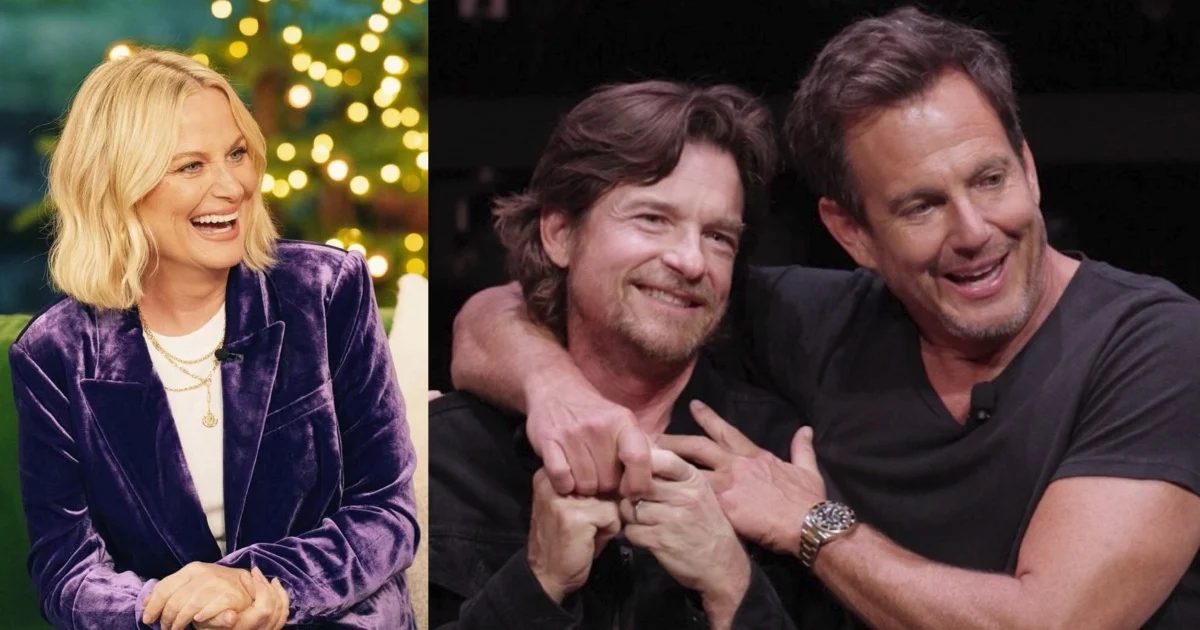
Will Arnett has drawn a firm boundary around personal matters, refusing to entertain questions from his longtime collaborator Jason Bateman about his previous marriage to Amy Poehler. The exchange occurred during a podcast appearance, where Bateman's probing prompted an unusually blunt response from the typically affable actor. Arnett's swift shutdown underscores how even close professional relationships have limits when it comes to discussing former partners, particularly those who remain prominent figures in entertainment.
The interaction highlights an interesting dynamic within Hollywood's inner circle, where friendships are sustained across decades yet certain subjects remain notably sensitive. Bateman and Arnett have built a substantial working partnership, collaborating across multiple projects and sharing a podcast platform that reaches devoted audiences. Yet despite this history of openness and creative collaboration, the actor made abundantly clear that his previous relationship with Poehler fell squarely outside the bounds of acceptable conversation topics.
This moment carries broader implications about privacy boundaries in contemporary celebrity culture, where podcasts and social media have fundamentally altered expectations around personal disclosure. Whereas traditional media interviews often feature carefully controlled narratives, the podcast format has created pressure for celebrities to share increasingly intimate details. Arnett's resistance demonstrates that some performers consciously resist this trend, maintaining distinct separation between their public professional personas and their personal histories.
The Amy Poehler marriage represents a significant chapter in Arnett's life that ended in 2016 after nine years of union. Both individuals have moved forward in their respective careers and personal lives, with Poehler establishing herself as a formidable creative force in film, television, and comedy. Rather than religate these historical details for entertainment or nostalgic purposes, Arnett's refusal suggests a mature approach to discussing relationships that, while publicly documented, merit respect and discretion.
Bateman's attempt to explore this territory, whether presented as friendly curiosity or pointed interrogation, crossed a line that Arnett found unacceptable. The exchange may have created temporary awkwardness between the two men, though their professional relationship appears resilient enough to withstand such moments of tension. This kind of friction occasionally emerges when podcast hosts push boundaries, testing whether their comfortable rapport extends to all conversational domains.
The incident also reflects generational shifts in how entertainers approach their private histories. Younger celebrities have increasingly normalised discussing relationships and personal challenges in public forums, yet many established actors maintain older conventions around discretion. Arnett appears to align with this more reserved perspective, believing certain chapters deserve to remain closed to public analysis.
Within Malaysia and Southeast Asia's entertainment landscape, where gossip media remains influential and celebrity relationships frequently dominate headlines, such interactions carry particular resonance. Regional audiences are accustomed to celebrities sharing intimate details, making Arnett's restraint notable and perhaps even refreshing to observers tired of manufactured transparency. His stance suggests that setting boundaries represents a viable alternative to the relentless oversharing that dominates contemporary celebrity discourse.
The moment also serves as a reminder that Hollywood friendships, despite their visible closeness, operate within unspoken parameters. Podcast collaborations can foster genuine camaraderie while simultaneously masking subtle tensions around what constitutes acceptable material. Bateman may have intended his questions as playful banter between intimates, yet Arnett's response indicated he perceived the line of inquiry differently, perhaps as inappropriate prodding.
Looking forward, this exchange may actually strengthen the dynamic between the two men by clarifying expectations around their interactions. Boundaries, once clearly established, can paradoxically deepen respect within professional relationships. Both Arnett and Bateman have sufficient maturity and career security to move past such moments without lasting damage to their collaboration.
The broader cultural conversation this incident generates touches on fundamental questions about celebrity consent and autonomy. Public figures remain entitled to privacy regarding personal matters, regardless of their prominence or the public's curiosity. Arnett's forceful response sends a clear message that fame does not automatically grant permission for endless scrutiny into one's romantic history, particularly when involving former partners who deserve consideration and respect.
For audiences invested in these entertainers' careers, the episode reinforces that behind the carefully curated public personas lie actual people with legitimate claims to privacy and dignity. This recognition, while sometimes disappointing to those seeking more salacious details, ultimately contributes to a more ethical and respectful entertainment ecosystem.

