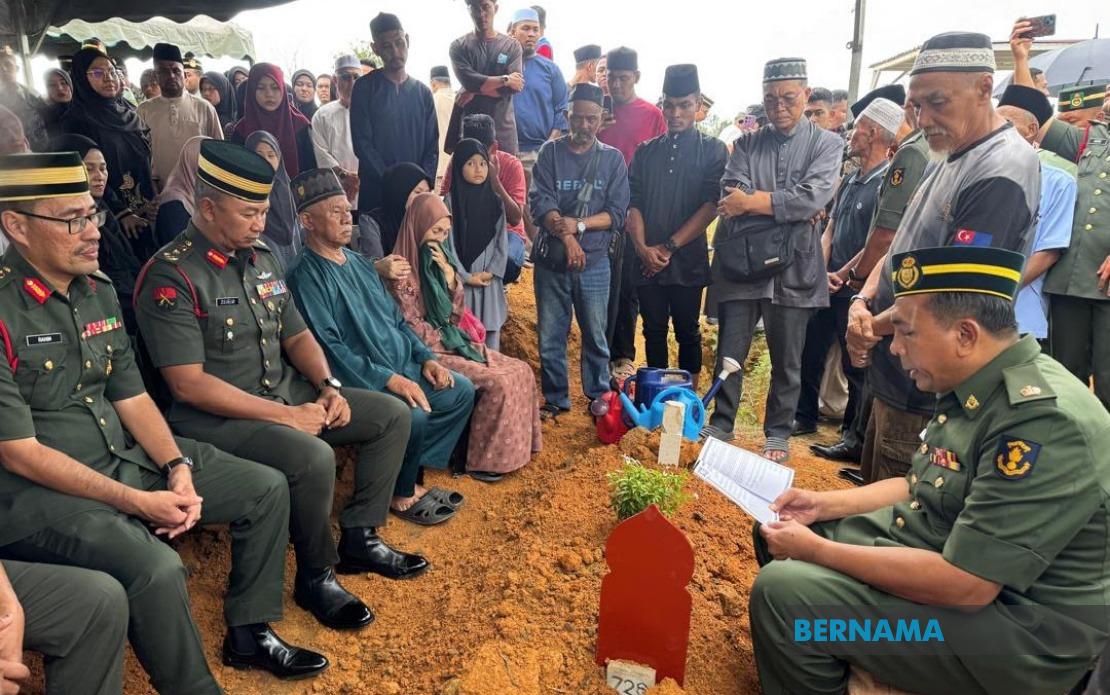
The Malaysian Army has been struck by tragedy with the death of Private Siti Khadijah Sungip, 24, during a grenade training exercise at Hobart Camp in Gurun, Kedah. The incident, which occurred at approximately 10:57 am on June 16, claimed another life as well—Corporal Norazmi Abu Bakar also succumbed to injuries sustained in the explosion while being transported to Sultan Abdul Halim Hospital in Sungai Petani. Both personnel died en route to medical care, marking a sobering reminder of the inherent dangers associated with military training operations in Malaysia.
For Siti Khadijah's father, Sungip Jais, a 65-year-old retired soldier who previously served with the Royal Artillery Regiment, the loss represents the painful end of a cherished family aspiration. During an interview at his home in Taman Sri Lambak, Kluang, the grief-stricken father described how his youngest daughter of seven siblings had harboured military ambitions since childhood. She viewed her father's decorated service not merely as a personal achievement but as a torch to be carried forward, a tradition that defined their family's character and values. Her decision to pursue enlistment reflected a deep, personal conviction rather than parental pressure—a distinction that makes her loss particularly poignant for the family.
Before joining the Malaysian Army last year, Siti Khadijah had completed a Diploma in Civil Engineering focusing on Highways and Transportation at the Mara Higher Skills College in Sri Gading. Her academic credentials and disciplined approach to her studies indicated a methodical, serious-minded individual committed to excellence. Upon successful recruitment, she underwent basic training at the Army Basic Training Centre in Port Dickson, Negeri Sembilan, as part of Juliet Company. Her dedication to military life quickly became apparent; she earned the Best Female Recruit (Academic) Award in January, a recognition of her exemplary performance and commitment during the foundational phase of her service. Following successful completion of basic training, she was posted to the Royal Army Engineers Regiment, where she continued to demonstrate the same level of professionalism and determination that had characterised her early months in uniform.
What distinguished Siti Khadijah within her family circle was not merely her professional ambitions but her deep filial devotion. Her father revealed that she had explicitly chosen to postpone marriage, prioritising instead her responsibilities toward her aging parents. This decision—to defer personal romantic aspirations in favour of familial duty—underscores a value system rooted in traditional Malaysian family structures and the weight of personal obligation. Such choices are particularly significant in contemporary Malaysia, where younger generations often face competing pressures between individual advancement and family expectations. Siti Khadijah had apparently resolved this tension by committing herself to both professional service to the nation and personal service to her parents.
The final communication between Siti Khadijah and her family provides a haunting snapshot of her state of mind in her last hours. Her elder sister, Siti Zaihah, 39, recalled receiving a WhatsApp photograph at midnight on June 15, sent from Hobart Camp. The image captured Siti Khadijah during a shooting practice session—an element of military training she had described as the most gratifying aspect of her service. In that same message, she informed her sister that additional training was scheduled for the following day and that the grenade exercise would commence around 8 am. The mundane details of her schedule, the casual mention of upcoming activities, now serve as the family's final keepsake, frozen moments of normalcy that would be shattered within hours.
The shock of the incident unfolded in devastating stages for the family. At approximately 1 pm on June 16, Siti Zaihah received her first notification that her sister had been involved in an accident. The initial interpretation, reasonable given the vagueness of the alert, suggested perhaps a minor mishap or vehicle-related incident—something manageable within the spectrum of military life's hazards. But a subsequent phone call delivered the catastrophic truth: the accident had occurred during training operations, and Siti Khadijah had not survived. This progression from tentative hope to absolute despair, compressed within minutes, captures the sudden and comprehensive nature of military training fatalities.
What rendered this tragedy even more difficult for the family to process was the absence of any prior warning signs or behavioural changes. When Siti Khadijah had returned home for the recent Aidiladha holidays—just a week before the incident—she had presented herself as uniformly content. According to Siti Zaihah's account, her sister displayed her characteristic cheerfulness, evinced no anxiety about her duties, and offered no indication that anything troubled her. This normalcy, retrospectively examined, amplifies the shock of sudden loss and raises questions about the nature of risk acceptance within military service. Personnel undertaking hazardous training must necessarily compartmentalise concerns about danger in order to function effectively; Siti Khadijah appears to have done precisely this, maintaining emotional equilibrium while pursuing her vocational calling.
Siti Khadijah was born on September 19, 2002, in Kluang, Johor, making her still in the early stage of what should have been a lengthy career and life. Her remains were committed to rest at Taman Sri Lambak Islamic Cemetery in her hometown that same afternoon, a funeral service conducted swiftly according to Islamic practice. The burial location, within walking distance of her family home, anchored her physically to the community in which she had grown up and from which she had derived her values and ambitions.
This incident raises significant questions about training protocols and safety measures within the Malaysian Army's operational procedures. Grenade exercises, by their very nature, involve controlled detonation of explosive devices and carry inherent risks that cannot be entirely eliminated. However, the simultaneous deaths of two trained personnel during what should constitute a routine training operation suggests the need for comprehensive review of safety procedures, supervision ratios, and emergency response protocols at training facilities. The Malaysian Defence Ministry and Army command structures will undoubtedly launch investigations to determine the precise circumstances that led to this tragedy.
For Malaysian families with military traditions, this incident serves as a stark reminder of the profession's genuine dangers beyond the formal recognition of service and sacrifice. While military service carries substantial social prestige and represents a pathway to national contribution, it simultaneously imposes real and sometimes terminal risks upon those who choose this vocation. Siti Khadijah's case exemplifies the personal cost that underpins national defence and security infrastructure. Her father's anguish, her family's grief, and her unfulfilled potential represent the human dimension of military service that often remains abstract in public discourse.
The tragedy also highlights the particular vulnerability of military trainees who, by definition, are still developing operational competency and experience. Although Siti Khadijah had completed basic training and been posted to an operational unit, she remained relatively junior in her career trajectory. The intensity and frequency of training during early service years, combined with personnel still developing situational awareness and procedural mastery, creates an environment where accidents, however carefully controlled, retain the capacity to inflict catastrophic consequences. Her death, alongside Corporal Norazmi Abu Bakar's, will likely feature in future safety reviews and procedural modifications intended to protect other young soldiers undertaking comparable training.
The broader implications for Malaysia's defence establishment and families contemplating military service merit careful consideration. Recruiting personnel—particularly highly motivated individuals like Siti Khadijah who bring passion and commitment to their duties—remains essential to military effectiveness. Yet the nation must simultaneously acknowledge and honour the real sacrifices made by those who answer this calling. Siti Khadijah's decision to pursue her father's legacy, made consciously and enthusiastically, has resulted in a loss that her family will navigate for the remainder of their lives. Her story will resonate particularly with other young Malaysians considering military enlistment and with families who have generations of military service woven through their histories, reminding them that patriotic service, however noble, carries consequences that extend far beyond official recognition and formal commemoration.