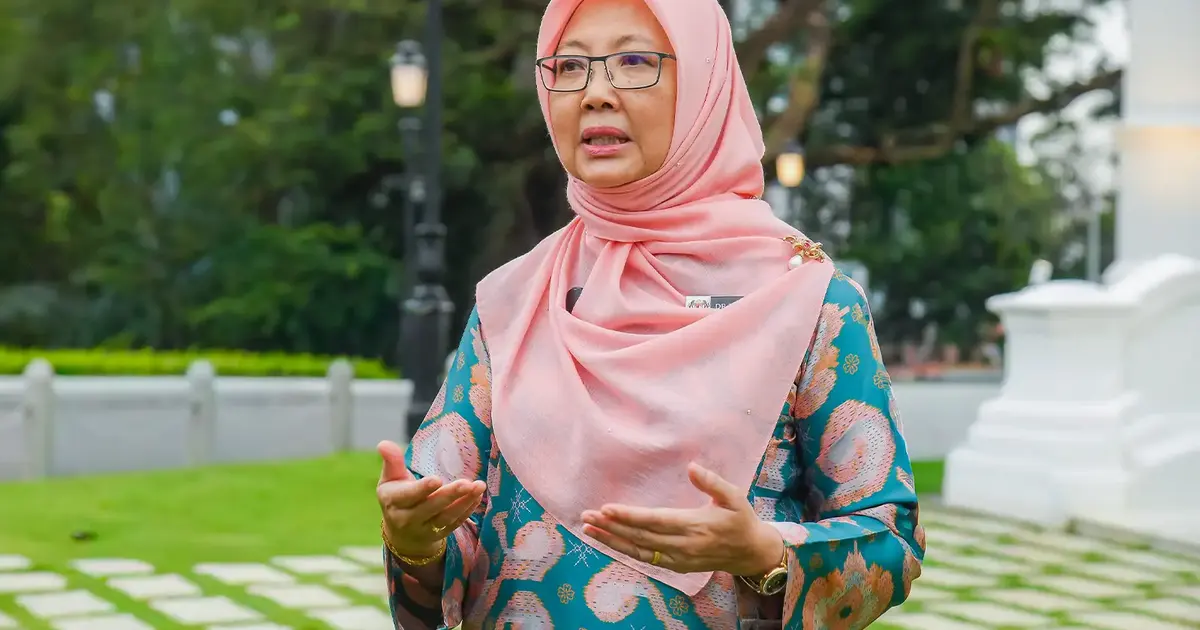
PKR vice-president Zaliha Harun has expressed bewilderment at Johor Barisan Nasional chairman Onn Hafiz Ghazi's insistence that the opposition coalition Pakatan Harapan must publicly reveal its intended menteri besar candidate ahead of the state election, questioning the logic behind such a requirement when there remains no guarantee regarding the outcome.
Zaliha's response highlights a fundamental tension in Malaysian electoral politics: the distinction between pre-election positioning and post-election coalition negotiations. In a parliamentary democracy, parties typically decline to pledge their leadership choices until they have secured sufficient electoral support to form a government. The Johor BN chief's demand appears to contradict this standard practice, creating confusion about whether he is seeking transparency or attempting to gain tactical advantage.
The timing of Onn Hafiz's call is significant given the competitive nature of Johor politics. As Barisan Nasional's representative in the state, he faces the prospect of a determined opposition challenge from Pakatan Harapan, which has been rebuilding its presence in the southern state following the 2018 general election upheaval. By requesting that the opposition name its candidate, Onn Hafiz may be attempting to expose internal divisions within PH or to force a premature leadership declaration that could be used against them during campaigning.
For Malaysian voters and observers, this exchange illustrates the complex dynamics between electoral transparency and strategic necessity. The opposition coalition faces a dilemma: announcing a candidate too early risks making that individual a target for intensive criticism, while remaining silent invites accusations of lacking clarity and vision. Conversely, ruling coalitions benefit from the natural advantage of incumbency, where the menteri besar position remains predictable because the current officeholder can be expected to continue unless changed by their own party.
Zaliha's puzzlement also touches on a broader question about the nature of electoral mandates in Malaysia. When voters cast their ballots in a state election, they are voting for their preferred government, not necessarily for a specific individual to hold executive office. The composition of that government and its leadership emerge through post-election negotiations, particularly in situations where no single coalition achieves overwhelming dominance. This principle has been tested repeatedly in recent Malaysian elections, from the 2018 general election to various state polls where coalition arithmetic becomes crucial.
The Johor context is particularly relevant for Southeast Asian political observers because the state has historically served as a bellwether for national trends. Its economic importance—as a major manufacturing and trading hub adjacent to Singapore—makes its governance outcomes significant beyond state boundaries. A Pakatan Harapan victory or strengthened presence in Johor would represent a notable shift in peninsular Malaysian politics, whereas a continued BN dominance would reinforce the current power structure.
From a governance perspective, Zaliha's position reflects PKR's strategy of maintaining flexibility while building electoral momentum. The party has experienced considerable upheaval and reorganisation in recent years, and premature commitment to a specific menteri besar candidate could create internal friction or provide ammunition to rivals questioning succession planning and merit-based selection processes. By refusing to be drawn into naming a candidate before election results are known, PH preserves its ability to choose leadership based on the actual political configuration after polling day.
Onn Hafiz's demand, viewed charitably, might be interpreted as a request for greater electoral clarity and democratic accountability. However, Zaliha's response suggests that the opposition sees this framing as fundamentally misguided—conflating the right of voters to choose a government with the supposed obligation of that government-in-waiting to make personnel commitments before electoral validation. This distinction matters significantly in Westminster-style systems where governmental formation follows election results rather than preceding them.
The exchange between these two political figures also reflects deeper questions about political culture in Malaysia. As the nation continues to grapple with electoral integrity, institutional independence, and democratic practices, these high-profile disagreements between ruling and opposition figures become teaching moments for the broader public. They demonstrate how different parties frame electoral contests, manage expectations, and navigate the gap between campaign promises and governing realities.
For regional observers tracking Malaysian politics, this Johor development signals that the state remains contested political territory where neither Barisan Nasional nor Pakatan Harapan can take voter support for granted. The refusal to name a poster boy, as Zaliha has effectively articulated, is not evasiveness but rather an acknowledgment that Malaysian elections ultimately belong to the voters, whose preferences must be determined before leadership positions are allocated. Whether this strategic approach succeeds electorally remains to be seen, but it represents a defensible interpretation of how democratic transitions should function in parliamentary systems where election results must precede governmental formation.

