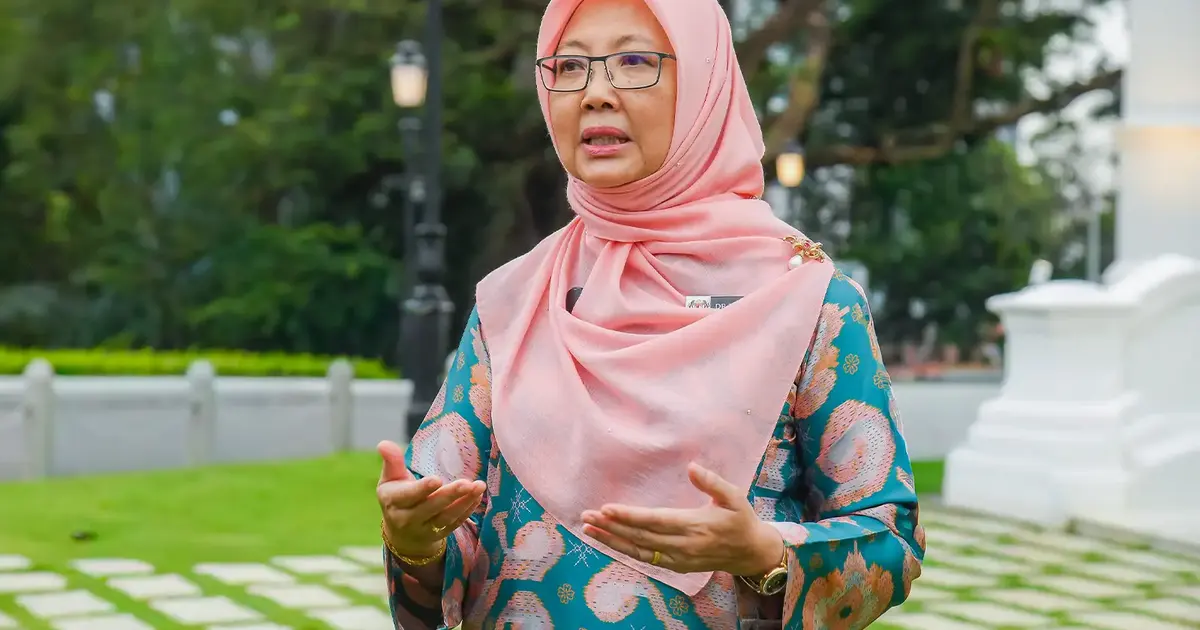
PKR vice-president Zaliha Mustafa has expressed bewilderment at Johor BN chairman Onn Hafiz Ghazi's insistence that Pakatan Harapan publicly identify its menteri besar candidate ahead of the state election, pointing out the logical inconsistency in such a demand when post-election dynamics may render any advance designation moot.
The friction between the coalition partners reflects deeper tensions surrounding leadership succession in Johor, one of Malaysia's most politically significant states. While Onn Hafiz appears intent on forcing PH's hand by demanding transparency about its preferred chief minister, Zaliha's pushback highlights the precarious nature of pre-election pledges in Malaysia's electoral system, where coalition negotiations and numbers games often determine who ultimately occupies the menteri besar position regardless of prior announcements.
Zaliha's objection carries weight because it underscores a fundamental reality of Malaysian politics: naming a candidate does not guarantee that person will be appointed to the top state position. The menteri besar ultimately requires the confidence of a majority of state assemblymen, and coalitions frequently negotiate leadership roles after ballots are counted. Previous state elections have demonstrated this principle repeatedly, with designated candidates either falling away or facing last-minute substitutions based on post-election political calculations and horse-trading among component parties.
Onn Hafiz's public call appears designed to place PH in an uncomfortable position, forcing the coalition to either reveal internal preferences and invite criticism, or maintain strategic silence and face accusations of evasiveness. This tactical manoeuvre is not uncommon in pre-election posturing, where opposition groups seek to extract commitments that may prove embarrassing or constraining once voting concludes and real negotiations commence. By demanding transparency, Onn Hafiz may hope to expose divisions within PH's Johor coalition or lock them into positions that prove electorally disadvantageous.
For Malaysian voters, such exchanges underscore the gap between campaign promises and constitutional realities. Menteri besar appointments rest with the Johor Sultan following a complex evaluation of which coalition commands legislative support. A party that wins the most seats does not automatically secure the chief ministerial post if a rival coalition can assemble a working majority through defections or coalition-building. This uncertainty is a feature of the Malaysian system, not a flaw, but it does complicate pre-election messaging when candidates and parties attempt to offer specific assurances about leadership outcomes.
PH's reluctance to name a poster boy may also reflect internal discussions about how to balance representation across its component parties in Johor. The coalition includes PKR, DAP, Amanah, and other partners, each with their own expectations regarding high office. Announcing a chief ministerial candidate prematurely could provoke internal friction or suggest that one party has been favoured over others in the crucial bargaining that shapes coalition governance structures. Zaliha's statement may therefore represent not evasiveness but a pragmatic acknowledgment that PH has not yet resolved these internal questions.
The exchange also carries implications for Southeast Asian observers watching Malaysian political dynamics. Johor's election will test whether PH can maintain cohesion and recover support in a state where BN retains traditional strength. The coalition's handling of internal negotiations and public messaging will signal to other regional players how effectively PH can manage the complex realities of multi-party coalition politics. Onn Hafiz's pressure tactics suggest BN recognises it faces a genuine challenge and is attempting to seize the agenda through procedural demands.
Historically, Johor has been a BN stronghold, but recent years have seen erosion of the coalition's dominance as PH expanded its footprint. The state election carries national significance because it will test whether shifts in voter sentiment observed in the last general election translate into decisive changes at state level, or whether BN's ground machinery and traditional support networks prove resilient. Leadership questions inevitably attract media attention and voter interest, making them central to campaign narratives regardless of whether formal candidates are pre-announced.
Zaliha's position suggests PH prefers to navigate the Johor election without being tied to advance commitments about who will occupy Istana Bukit Serene if the coalition prevails. This approach mirrors broader PH strategy of maintaining flexibility in negotiations with potential independent candidates or defectors who might cross over following election day. By resisting Onn Hafiz's demand, PH preserves its manoeuvrability in the crucial period between voting and government formation.
The broader political context shows that Malaysian state elections often pivot on ground-level issues—infrastructure development, local governance, and constituent services—rather than grand declarations about leadership appointments. Voters are typically more concerned with which party will deliver roads, schools, and economic opportunities in their constituencies than with formal advance announcements about the menteri besar. Onn Hafiz's focus on forcing a naming may therefore miss the actual dynamics driving voter decisions in the state.
Moving forward, it remains possible that PH will eventually identify a chief ministerial candidate as the election nears, either through formal announcement or through media reporting of coalition decisions. However, Zaliha's rebuff indicates the coalition wishes to make such announcements on its own timeline and terms, not in response to BN pressure. This assertion of autonomy over the PH agenda setting may resonate with supporters who view Onn Hafiz's demand as overreach by an opposition coalition seeking to dictate rival party procedures.

