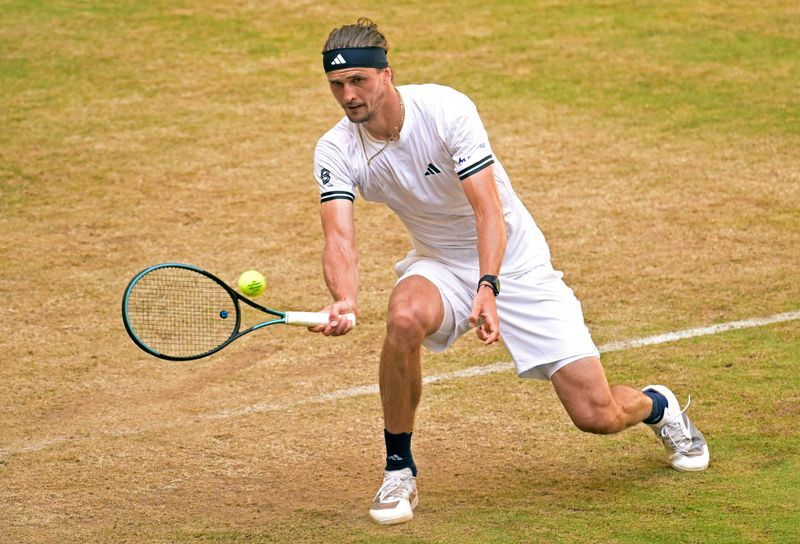
Alexander Zverev's unexpected exit from the Halle Open semi-finals on Saturday came with an unusual explanation: the German tennis champion attributed his loss to Taylor Fritz to a critical malfunction in the glucose sensor he relies upon to manage his Type 1 diabetes. The world number three fell in straight sets, 6-7(4) 6-4 7-5, in a two-hour-39-minute encounter that left him visibly frustrated—though not primarily with his opponent's tennis.
Zverev's reliance on continuous glucose monitoring technology underscores the complex demands elite athletes face when managing chronic conditions at the highest competitive levels. Diagnosed with Type 1 diabetes at just four years old, the German has built a remarkable career while carefully regulating his blood sugar levels both on and off court. For nearly a decade, he has trusted Medtronic's sensor systems to provide accurate real-time glucose readings, allowing him to make informed decisions about insulin administration and carbohydrate intake during grueling matches.
The malfunction on Saturday proved catastrophic to his performance. Zverev explained that the sensor conveyed markedly inflated glucose readings when his actual blood sugar was dangerously low—a reversal that triggered him to inject significantly more insulin than his body required. This medication error, compounded during intense physical exertion, created a severe metabolic crisis that manifested acutely during the opening stages of the match. In the first 45 minutes alone, Zverev consumed approximately 350 grams of sugar in an attempt to counteract the unwanted insulin, yet still felt profoundly unwell throughout much of the competition.
For context, such a glucose management failure during professional sport represents a genuine medical emergency. Athletes with Type 1 diabetes must balance the concurrent demands of intense physical activity—which naturally lowers blood glucose—with precise insulin dosing. When sensors provide false data, players face an impossible calculation: trust technology that has proven reliable for years, or override it based on subjective physical sensation while racing at peak cardiovascular intensity. Zverev's decision to maintain competition despite this metabolic turmoil speaks to both his competitive resolve and the particular vulnerabilities athletes with diabetes face.
Strikingly, Zverev offered Fritz considerable credit despite the adverse circumstances affecting his own display. The German acknowledged that Fritz earned the victory through superior tennis rather than benefiting merely from fortune or his opponent's medical difficulties. This gracious assessment becomes meaningful when considered against Zverev's recent struggles against the American: he had lost their previous six consecutive meetings, arriving at Halle with a demonstrable psychological disadvantage regardless of glucose levels.
What makes Zverev's situation particularly noteworthy for Southeast Asian and Malaysian sports followers is the broader narrative about athlete health management in professional sport. As diabetes prevalence increases across the region, particularly Type 2 diabetes linked to lifestyle factors, the visibility of elite athletes managing Type 1 diabetes gains importance. Zverev's transparency about his condition and his technological solutions demystifies diabetes management and illustrates how athletes can compete at tennis's highest echelons while maintaining careful health protocols.
The sensor malfunction appears to have been unprecedented in Zverev's nine-year relationship with the technology. Since adopting continuous glucose monitoring around 2016 or 2017, he had encountered no comparable errors—making Saturday's failure genuinely shocking. This rarity almost certainly contributed to his decision to continue playing; had such malfunctions occurred regularly, he might have abandoned the match sooner. The incident raises important questions about sensor reliability, backup protocols, and whether professional athletes managing chronic conditions should have contingency systems available at major tournaments.
Looking ahead to Wimbledon, scheduled to commence on June 29, Zverev expressed confidence that the sensor incident would not recur. His measured optimism suggests either that he has identified and rectified the specific problem with the Halle device, or that he views Saturday's malfunction as a singular aberration unlikely to repeat. Nevertheless, the episode serves as a reminder that even the most meticulously managed health systems occasionally fail, and that elite athletes sometimes perform beneath their capacity through circumstances entirely beyond their technical or strategic control.
Zverev's transparency about his diabetes management distinguishes him among professional athletes. Many competitors guard such health information closely, yet Zverev has consistently discussed his condition publicly, helping normalise diabetes in elite sport. His Halle exit, rather than becoming merely another tournament loss, instead becomes an educational moment about the intersection of chronic disease management and professional athletics. For Malaysian sports audiences following the global tennis circuit, Zverev's candid discussion offers perspective on the hidden complexities behind competitive performance.

