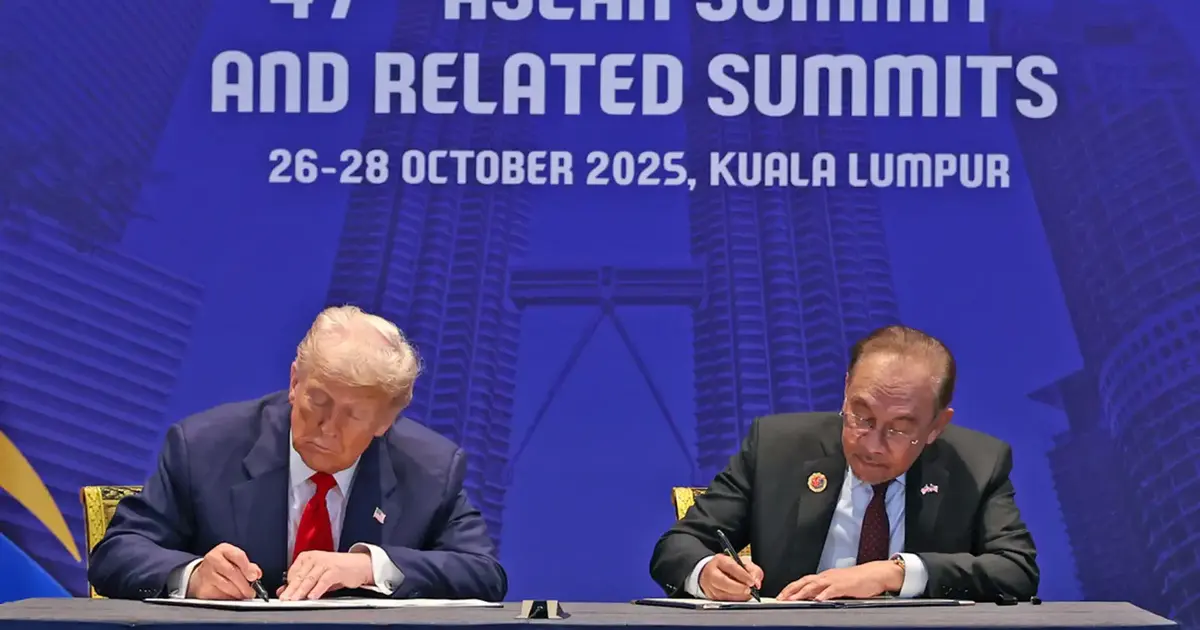
Prime Minister Anwar Ibrahim's administration has filed an application to have dismissed a legal challenge mounted by opposition members of parliament against the reciprocal trade agreement currently under negotiation between Malaysia and the United States. The move represents an escalation in the political and legal tensions surrounding the proposed bilateral trade pact, which has drawn scrutiny from both within and outside government.
The government's bid to strike out the suit signals its determination to proceed with the trade negotiations without what it views as obstructive parliamentary litigation. By seeking dismissal, the administration is essentially arguing that opposition MPs lack standing to challenge the agreement or that the matter falls outside the jurisdiction of the courts to adjudicate. This legal strategy could prove consequential for how Malaysia handles future international agreements, particularly those with major trading partners like the United States.
Simultaneously, the opposition MPs have adopted a complementary legal approach by filing their own application requesting that constitutional questions arising from the trade deal be referred to the Federal Court. This dual-pronged strategy suggests the opposition is hedging its bets: even if lower courts strike out their initial challenge, the constitutional questions could still reach Malaysia's highest court. The tactic reflects growing opposition concern that the trade agreement may override or conflict with constitutional protections, though the exact nature of these constitutional concerns has not been fully articulated in public statements.
The reciprocal trade agreement represents a significant strategic initiative for the Anwar administration as it seeks to strengthen Malaysia's economic ties with the United States and diversify trading relationships beyond traditional partners. Such agreements typically involve commitments on tariff reduction, intellectual property protections, labour standards, and environmental provisions. The US has been actively pursuing bilateral trade deals across the Indo-Pacific region as part of its economic strategy, making Malaysia a natural priority given its geographic position and economic importance in Southeast Asia.
Opposition resistance to the trade deal likely stems from several concerns that resonate with many Malaysians. Agricultural interests worry about increased competition from American imports, particularly in sectors like poultry and palm oil where Malaysia has significant domestic production. Labour unions and civil society groups have traditionally raised concerns about bilateral trade agreements potentially prioritising corporate profits over worker protections. Additionally, some opposition figures may view the agreement as tilting too heavily in the US favour or representing a departure from Malaysia's longstanding policy of non-alignment and equidistant engagement with major powers.
The legal challenge also highlights deeper questions about parliamentary oversight of executive authority in Malaysia's constitutional system. Opposition MPs appear to be asserting that parliament should have a stronger say in ratifying major international agreements, or at least that such agreements should not proceed without thorough scrutiny of their constitutional implications. This reflects broader regional debates about the proper balance between executive efficiency in conducting foreign policy and legislative accountability to constituents who may be affected by trade commitments.
For Malaysian businesses, the uncertainty created by ongoing litigation could prove problematic. Companies seeking to plan investments or restructure supply chains for compliance with future trade obligations face unclear timelines and constantly shifting legal parameters. Export-oriented manufacturers who might benefit from improved access to the American market through the trade deal have an interest in seeing the agreement concluded, whereas domestically-focused firms may prefer protective barriers.
The Federal Court's involvement, if the constitutional referral proceeds, would be significant because it could establish important precedents regarding the hierarchy of treaty obligations versus constitutional provisions. Malaysia's Federal Constitution contains various protections and rights that might theoretically conflict with certain trade agreement obligations, such as those related to agricultural subsidies or intellectual property monopolies. The court would need to clarify how such conflicts should be resolved, potentially affecting future trade policy for years to come.
Regionally, Malaysia's approach to this trade agreement is being watched closely by neighbouring nations considering their own bilateral deals with the United States. Singapore, Indonesia, and other Southeast Asian countries are monitoring how Malaysia navigates the legal and political challenges, as their own government-opposition dynamics and constitutional frameworks bear similarities. A successful conclusion of the Malaysia-US trade deal could encourage others to accelerate negotiations, while protracted legal battles might serve as cautionary tales about parliamentary resistance.
The government's decision to seek dismissal rather than defend the agreement on its merits suggests confidence in the legal arguments but also awareness that substantive debate could become politically costly. The administration may prefer to avoid detailed public airing of the agreement's terms and implications at this stage, particularly given Malaysia's broader economic challenges and public sensitivity around potential job losses or price increases that might result from certain trade liberalisation measures.
Looking ahead, the courts will face the delicate task of balancing constitutional principles with legitimate executive prerogatives in foreign economic policy. How Malaysian judges navigate this tension could reshape the relationship between parliament, the courts, and the executive in matters of international commerce. The outcome will likely influence not only the fate of the current trade agreement but also serve as a template for how Malaysia handles similar arrangements with other partners in future years.

