Prime Minister Datuk Seri Anwar Ibrahim has formally launched the permanent housing development for Bukit Kiara Longhouse residents, marking a watershed moment in the resolution of one of Kuala Lumpur's longest-standing resettlement disputes. The groundbreaking ceremony underscores the administration's commitment to tackling entrenched urban poverty and housing insecurity, particularly affecting communities who have endured decades of uncertainty about their living arrangements and land rights.
The housing initiative will provide eligible families with two new residential units at no cost, a substantial intervention designed to lift residents out of precarious longhouse conditions into permanent, dignified accommodation. This dual-unit provision represents an unusual and generous policy approach, suggesting officials recognise both the historical injustice faced by residents and the practical need to ensure families have adequate space and security. For the urban poor in Malaysia's capital, where property prices remain stratospheric and formal housing programmes often exclude those without steady formal income, such unconditional provision of housing represents a rare policy concession.
The longevity of the Bukit Kiara dispute stretches back more than four decades, rooting the issue deep within Kuala Lumpur's post-independence urban development history. Residents and their representatives pursued legal avenues persistently since 2018, accumulating cases and arguments that eventually persuaded senior government figures of the moral and practical necessity for resolution. This patient legal strategy, coupled with political willingness at the highest level, demonstrates how sustained advocacy can eventually penetrate bureaucratic inertia, though the forty-year waiting period itself reveals the typical sluggishness of state responses to informal settlement crises across Southeast Asia.
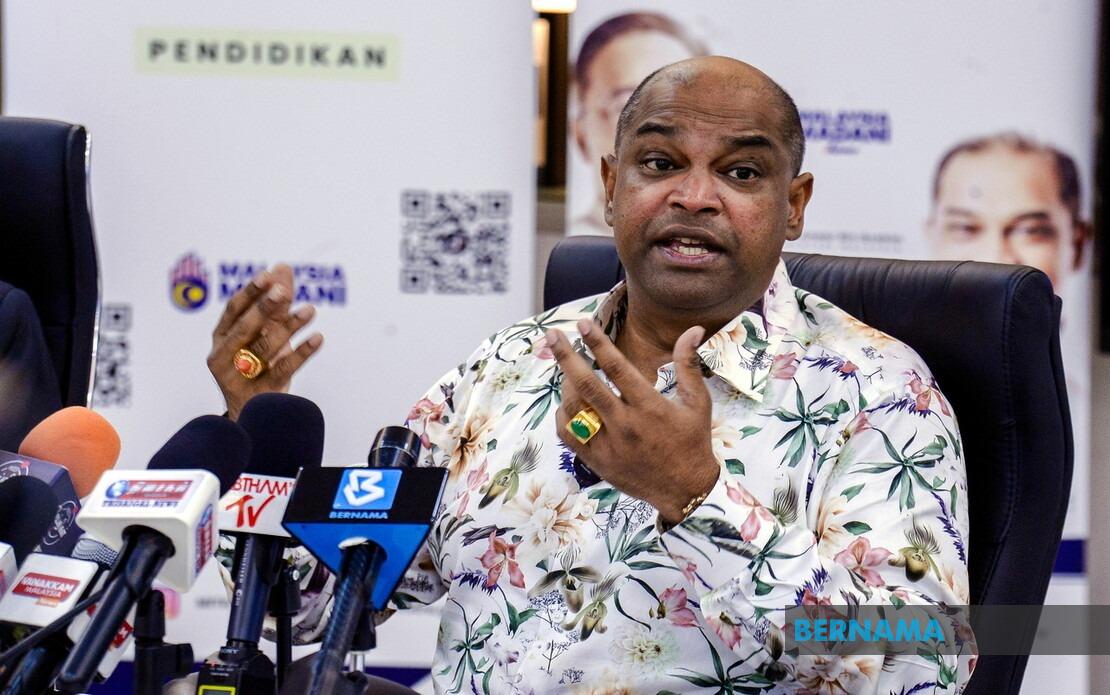
Human Resources Minister Datuk Seri R. Ramanan, who represents the Sungai Buloh constituency, characterised the resolution as evidence that the government will not perpetuate generational cycles of housing deprivation and legal limbo. His statement carries symbolic weight, positioning the project as part of a broader reimagining of the state's responsibility towards vulnerable urban populations. The minister's emphasis on preventing problems from cascading through generations acknowledges a painful reality: without intervention, children born in the longhouse would likely face identical housing insecurity as their parents, creating self-perpetuating cycles of urban poverty.
Beyond the housing units themselves, the Prime Minister has allocated an additional RM1 million to Kuala Lumpur City Hall over a three-year period specifically for maintaining and developing the resettlement area. This complementary funding acknowledges that simply building structures is insufficient; surrounding infrastructure, public spaces, water systems, waste management, and social facilities require sustained investment to ensure the community develops into a genuinely liveable neighbourhood rather than merely a physical relocation site. The maintenance commitment also suggests officials are thinking beyond the immediate transition period, recognising that long-term community stability demands ongoing resource allocation.
The resolution involved careful navigation of competing interests and conservation concerns. Earlier development proposals for the Bukit Kiara area had generated environmental and heritage preservation controversies, particularly regarding Taman Rimba Kiara, the forest reserve adjacent to the longhouse location. The eventual approach preserved this conservation area while accommodating resident resettlement, suggesting officials found a middle path that satisfied both housing advocates and environmental constituencies. This balancing act reflects broader tensions across Malaysian urban planning, where preservation of green spaces increasingly competes with demands for affordable housing and social equity.
For Kuala Lumpur's urban poor and informal settlement dwellers more broadly, the Bukit Kiara project carries significant implications. It demonstrates that well-organised community advocacy, combined with sympathetic political leadership and persistent legal pressure, can achieve outcomes once deemed politically impossible. The initiative may establish precedent for other longhouse and informal settlement communities across the federal territories and major Malaysian cities to pursue similar claims, potentially triggering more comprehensive government responses to urban housing crises that have been simmering for decades.
The project also reflects evolving political calculations regarding the urban poor as a constituency. With sprawling cities becoming increasingly central to Malaysian electoral politics, and younger voters concentrated in urban areas, addressing visible housing inequality carries mounting political significance. Governments can no longer ignore or indefinitely defer resolving high-profile informal settlements without risking reputational damage and electoral consequences, particularly among urban middle-class voters sympathetic to social justice narratives.
Minister Ramanan's framing of the initiative as modest in scale but immense in human impact captures an essential truth about housing policy impacts. While RM1 million annual maintenance and permanent housing for Bukit Kiara residents represents significant state investment, the actual absolute cost remains modest within government budgets. Yet for individual families transitioning from crowded longhouse conditions to independent housing units, the transformation in daily quality of life, dignity, health outcomes, and economic opportunity proves profound and life-altering. This disproportionality between budgetary modesty and human benefit suggests that systematic expansion of such programmes could address multiple informal settlements with relatively contained fiscal outlay, though political will remains the genuine constraint.
The resolution also carries implications for neighbouring communities and similar settlements. Other longhouse residents and informal settlement dwellers observing the Bukit Kiara breakthrough will likely reassess their own advocacy strategies and political opportunities. Where patient legal campaigns and documented community demands encounter receptive political administrations, tangible outcomes become possible. Conversely, settlements lacking organised leadership or where local politicians remain indifferent may continue facing indefinite limbo, highlighting how access to political capital increasingly determines outcomes for Malaysia's most vulnerable urban populations.
Looking forward, the success of this project's implementation—whether housing units actually materialise according to schedule, whether infrastructure adequately supports the new community, whether social services and livelihood opportunities emerge in the area—will substantially influence public confidence in similar government housing interventions. Conversely, implementation failures or delayed delivery would reinforce cynicism about government commitments to housing justice, potentially dampening enthusiasm for further such initiatives. The Bukit Kiara project thus carries weight beyond its immediate context, serving as a litmus test for state capacity and commitment to addressing urban poverty through tangible, sustained intervention rather than rhetorical promises.
%22%2F%3E%3C%2Fpattern%3E%3C%2Fdefs%3E%3Crect%20width%3D%22100%25%22%20height%3D%22100%25%22%20fill%3D%22url(%23ph54t2sg)%22%2F%3E%3Crect%20width%3D%22100%25%22%20height%3D%22100%25%22%20fill%3D%22url(%23ph54t2sp)%22%2F%3E%3Ctext%20x%3D%2250%25%22%20y%3D%2250%25%22%20text-anchor%3D%22middle%22%20dominant-baseline%3D%22central%22%20fill%3D%22rgba(255%2C255%2C255%2C0.95)%22%20font-family%3D%22Georgia%2C%20'Times%20New%20Roman'%2C%20serif%22%20font-weight%3D%22700%22%20font-size%3D%22226%22%20letter-spacing%3D%22-0.02em%22%3EPolice%3C%2Ftext%3E%3C%2Fsvg%3E)