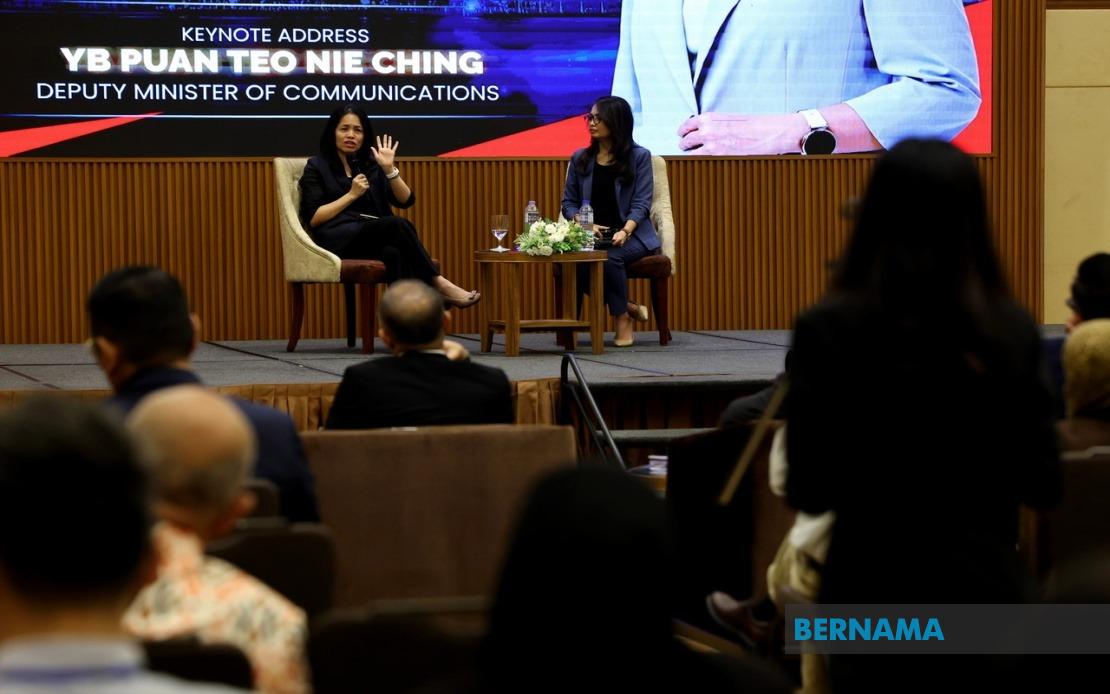
Deputy Communications Minister Teo Nie Ching has issued a broad appeal to government officials and the public to exercise restraint when making public statements, particularly by avoiding language that could inflame sensitivities around Malaysia's most contentious social and political fault lines. Speaking in Putrajaya on June 15 following her participation in an industry dialogue on journalism standards, Teo emphasised that the principle of responsible communication should apply at all times, not merely during electoral campaigns when political discourse typically becomes more heated.
The remarks come amid controversy surrounding Mohd Hisyamuddin Ghazali, the newly appointed director-general of the Department of Community Communications, who faces allegations of employing inappropriate language in his official communications since taking up the position on June 9. The appointment itself represents a significant personnel change, with Mohd Hisyamuddin replacing Datuk Ismail Yusop at the helm of the government's primary communications agency. The timing and nature of the criticism directed at the new director-general underscore the heightened scrutiny that senior government communicators face regarding their public conduct and the tone they set for the broader civil service.
Teo's warning specifically flagged the three-R framework—an informal but widely understood Malaysian convention that encompasses matters of race, religion, and royalty. These domains represent particularly sensitive territory in Malaysia's plural society, where historical communal tensions, constitutional protections for Islam and the monarchy, and the complex social compact underpinning the federation have created strict informal norms around public discourse. When senior officials breach these norms, the ripple effects can extend far beyond their immediate statements, potentially undermining public confidence in government institutions and setting a problematic precedent for lower-ranking civil servants.
The deputy minister indicated that she had not yet personally conveyed her counsel to Mohd Hisyamuddin, suggesting that the conversation remains pending. This measured approach reflects the hierarchical nature of Malaysia's civil service structure, where guidance on professional conduct typically flows through established channels rather than through public rebukes. However, Teo's public articulation of these principles serves a dual purpose: it establishes clear expectations for government communicators while also signalling to the broader public service that the Communications Ministry takes language and professionalism seriously.
The context for this intervention becomes clearer when one considers the broader responsibilities of J-KOM as Malaysia's primary government communications apparatus. As the agency tasked with disseminating official information and shaping public narratives, its director-general wields considerable influence over how the government presents itself to citizens and the international community. Any appearance of partisan bias, inflammatory rhetoric, or disregard for established conventions regarding sensitive matters risks compromising the agency's credibility and its ability to function as a trusted source of information.
Teo's remarks also reflect a recognition within the Communications Ministry that government employees occupy a different position from private citizens when it comes to public expression. Civil servants are expected to maintain standards of propriety and restraint that align with their role as representatives of the state. This distinction between the rights and responsibilities of officials and ordinary citizens has particular resonance in the Malaysian context, where civil service codes and constitutional provisions establish specific expectations for government employee conduct.
The emphasis on avoiding 3R discussions during all periods, rather than only during election campaigns, represents a notably comprehensive standard. Election periods are traditionally understood as times when political discourse becomes more robust and potentially more divisive, yet Teo's guidance suggests that the bar for official government communications should remain consistently high. This reflects an underlying concern that careless remarks by senior officials can normalise inflammatory language more broadly, particularly among lower-ranking civil servants who may view the conduct of their superiors as establishing acceptable boundaries.
The mention of the industry dialogue on journalism standards provides important additional context. That event, focused on balancing virality and responsibility in media coverage amid rapid information flows, touches on closely related issues of communication ethics and the social consequences of thoughtless public speech. The convergence of Teo's remarks with this professional discussion suggests recognition within government circles that digital communication platforms, information velocity, and algorithmic amplification have fundamentally changed how official statements circulate and impact public opinion.
For Malaysian observers and civil servants, the message from the Communications Ministry carries implications beyond simple courtesy or professional etiquette. It represents a reaffirmation that government officials serve the entire nation and must therefore demonstrate particular care when addressing matters that touch on the concerns, identities, and values of different communities. In a multicultural democracy built on constitutional compromises around sensitive communal issues, the language choices of senior officials carry disproportionate weight in either reinforcing social cohesion or threatening it.
The incident also raises questions about appointment processes and vetting for senior government positions. The speed with which Mohd Hisyamuddin assumed his role and the subsequent controversies surrounding his communication style suggest that expectations regarding professional standards may not have been adequately clarified beforehand. For future appointments to similar positions, particularly at the level of permanent secretary or director-general in communications-focused agencies, there may be value in explicit discussions about the importance of measured, inclusive communication that respects Malaysia's established conventions regarding sensitive matters.
Looking forward, Teo's intervention should prompt reflection within the entire civil service about communication standards and professional conduct. Government employees at all levels interact with the public daily, and the cumulative effect of thousands of individual decisions about what language to use and which sensitivities to respect shapes public trust in institutions. By establishing clear expectations at the top, the Communications Ministry seeks to create a culture where careful, respectful communication becomes the norm rather than the exception throughout the civil service hierarchy.
%22%2F%3E%3C%2Fpattern%3E%3C%2Fdefs%3E%3Crect%20width%3D%22100%25%22%20height%3D%22100%25%22%20fill%3D%22url(%23ph54t2sg)%22%2F%3E%3Crect%20width%3D%22100%25%22%20height%3D%22100%25%22%20fill%3D%22url(%23ph54t2sp)%22%2F%3E%3Ctext%20x%3D%2250%25%22%20y%3D%2250%25%22%20text-anchor%3D%22middle%22%20dominant-baseline%3D%22central%22%20fill%3D%22rgba(255%2C255%2C255%2C0.95)%22%20font-family%3D%22Georgia%2C%20'Times%20New%20Roman'%2C%20serif%22%20font-weight%3D%22700%22%20font-size%3D%22226%22%20letter-spacing%3D%22-0.02em%22%3EPolice%3C%2Ftext%3E%3C%2Fsvg%3E)