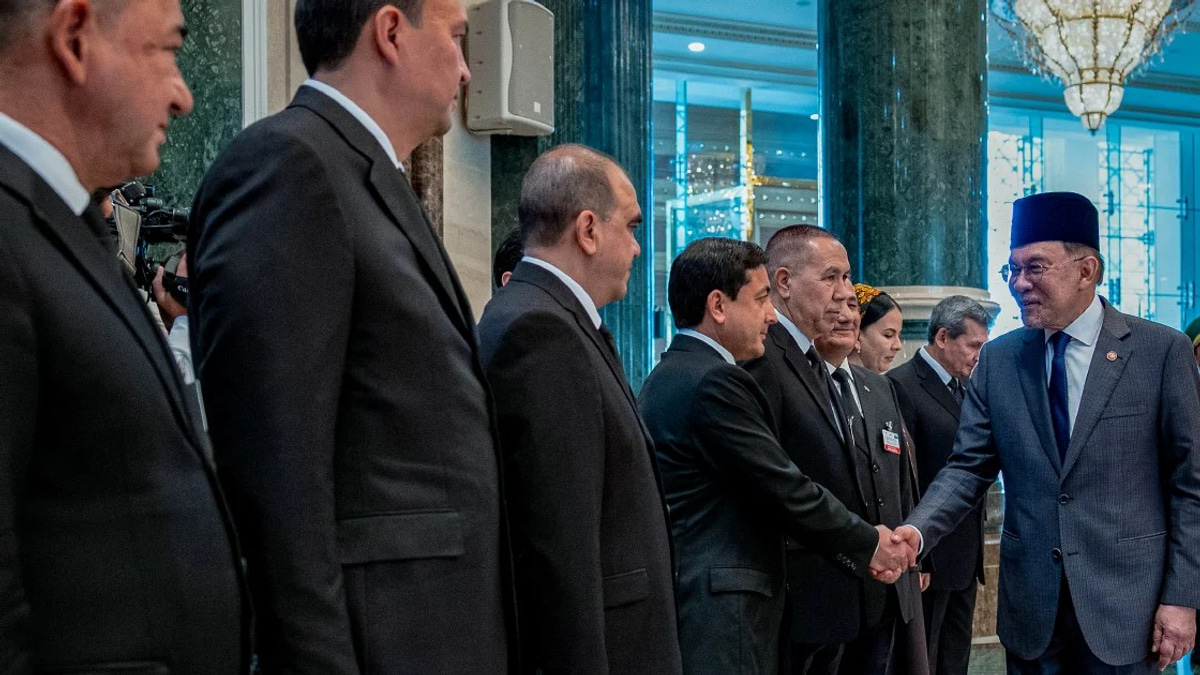
Prime Minister Datuk Seri Anwar Ibrahim has sought to reassure the nation that fostering robust diplomatic relations with global superpowers does not require Malaysia to compromise its fundamental values or dilute its independent voice in international affairs. Speaking in Muar, the PM emphasised that the country's approach to maintaining friendly ties with both China and the United States represents a balanced strategy rooted in pragmatism rather than ideological capitulation.
The clarification touches on a longstanding concern among observers about Malaysia's ability to navigate great power competition without being pulled into exclusive blocs or forced to choose sides on matters of principle. Many nations in Southeast Asia have grappled with similar tensions as they attempt to benefit economically and diplomatically from relationships with multiple major powers while preserving their sovereignty and freedom of action. Anwar's statement suggests Malaysia views its diplomatic positioning as complementary to, rather than contradictory with, its defense of its stated values.
This reassurance carries particular weight given Malaysia's geographic location and economic interests that intersect with those of both Beijing and Washington. As a significant trading nation with investments and strategic concerns spanning multiple regions, Malaysia has consistently argued for the right to engage productively with all major powers without being forced into zero-sum calculations. The Prime Minister's comments align with Malaysia's long-standing policy of non-alignment and its emphasis on maintaining an independent foreign policy framework.
Anwar's framing reflects a broader Southeast Asian perspective that rejects the notion of forced binary choices in international relations. Countries across the region, including Indonesia, Vietnam, and Thailand, have similarly sought to demonstrate that engagement with China on economic and diplomatic matters need not contradict security partnerships or collaborative efforts with Western nations. This approach has become increasingly important as global tensions have intensified and the temptation for other nations to demand exclusive loyalty has grown.
The emphasis on preserving national principles while cultivating major power relationships addresses domestic political sensitivities as well. Malaysian civil society, academic circles, and opposition voices have at various points raised concerns about whether the government might sacrifice long-held positions on issues ranging from human rights to regional disputes in pursuit of economic or security gains from powerful partners. By explicitly stating that good relations do not necessitate such compromises, Anwar attempts to pre-empt criticism and signal continuity in Malaysia's value system.
However, the challenge of maintaining this balance remains substantive and ongoing. Malaysia faces real situations where the interests of different major powers diverge, particularly regarding the South China Sea, Myanmar's political crisis, and issues affecting ASEAN unity. The test of whether Anwar's assertion holds true will come when Malaysia must take concrete positions on contentious international matters where its major trading and security partners hold opposing views. Such moments reveal whether a nation's stated commitment to principles remains unwavering or gives way to practical pressures.
The Prime Minister's statement also reflects Malaysia's investment in ASEAN centrality and regional mechanisms as a framework for managing great power competition. By strengthening ASEAN's collective voice and coordinating positions through mechanisms like ASEAN Regional Forum and the East Asia Summit, Malaysia seeks to amplify its influence while avoiding individual dependency on any single major power. This multilateral approach theoretically allows smaller nations to uphold their principles while maintaining good relations across the board.
From an economic perspective, Malaysia's diversified engagement with both China and the United States generates substantial benefits. China remains a major trading partner and source of foreign direct investment, particularly in manufacturing and infrastructure development. Simultaneously, the United States represents important technology partnerships, investment opportunities, and security cooperation. The government's position suggests these economic relationships need not come at the cost of independent political judgment or adherence to stated values.
Yet observers note that maintaining this balance requires constant diplomatic skill and clear communication. Misunderstandings or perceived wavering on fundamental principles could invite criticism from either side, with accusations that Malaysia is not sufficiently committed to broader geopolitical alignments. The Prime Minister's explicit statement may serve as a marker of Malaysia's intent to preserve flexibility while avoiding the appearance of unreliability or opportunism.
The statement emerges at a time when regional dynamics continue shifting, with questions about Taiwan, great power military presence in Southeast Asia, and economic competition creating fresh diplomatic pressures. Malaysia's assertion that it can maintain good relations with all major powers without compromising principles will be tested repeatedly in coming years as global affairs grow more contested and demands for alignment intensify.

%22%2F%3E%3C%2Fpattern%3E%3C%2Fdefs%3E%3Crect%20width%3D%22100%25%22%20height%3D%22100%25%22%20fill%3D%22url(%23ph3lyoeg)%22%2F%3E%3Crect%20width%3D%22100%25%22%20height%3D%22100%25%22%20fill%3D%22url(%23ph3lyoep)%22%2F%3E%3Ctext%20x%3D%2250%25%22%20y%3D%2250%25%22%20text-anchor%3D%22middle%22%20dominant-baseline%3D%22central%22%20fill%3D%22rgba(255%2C255%2C255%2C0.95)%22%20font-family%3D%22Georgia%2C%20'Times%20New%20Roman'%2C%20serif%22%20font-weight%3D%22700%22%20font-size%3D%22151%22%20letter-spacing%3D%22-0.02em%22%3EMuhyiddin%3C%2Ftext%3E%3C%2Fsvg%3E)