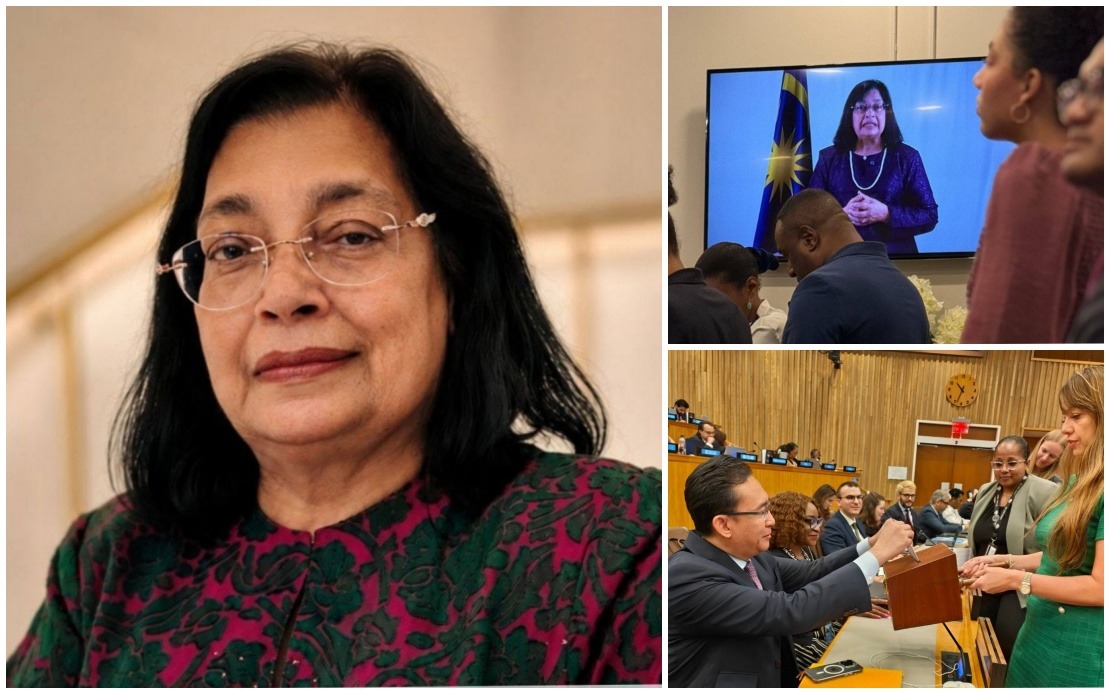
Datuk Yasmeen Muhamad Shariff has secured a seat on the United Nations Committee on the Rights of the Child following elections held at the UN Headquarters in New York on Tuesday. The respected Malaysian candidate garnered 136 votes from the 189 States Parties participating in the 21st Meeting of States Parties to the Convention on the Rights of the Child, placing her at the top of the voting results and underscoring broad international support for her candidacy.
The Foreign Ministry highlighted that Yasmeen's election represents recognition of her considerable expertise and sustained commitment to advancing child welfare on the global stage. Her appointment to the 2027–2031 term is particularly significant as it marks a return engagement with the committee, having previously served during the 2013–2017 period. This consecutive recognition demonstrates the enduring value the international community places on her contributions to child protection discourse and implementation.
As an independent expert serving in her personal capacity, Yasmeen will participate in the committee's core responsibilities, which centre on monitoring how signatory nations implement the Convention on the Rights of the Child. Her role will encompass constructive engagement with member states, evaluation of compliance frameworks, and advocacy for a rights-based approach to addressing challenges that disproportionately affect children in developing and developed contexts alike. This responsibility carries particular weight given the committee's influence over global policy conversations regarding child protection.
Malaysia's successful nomination reflects broader international acknowledgment of the country's commitment to elevating children's rights through substantive policy mechanisms and legislative initiatives. The Foreign Ministry characterised the election outcome as validation of Malaysia's multifaceted approach, which combines legal reform, inclusive policy development, and targeted programmes designed to enable every child to achieve their potential. Such recognition carries implications for Malaysia's standing within international governance structures and reinforces its positioning as a constructive actor in global human rights architecture.
The appointment also underscores the collaborative efforts of Malaysian government institutions in advancing this nomination. The Ministry of Women, Family and Community Development worked in tandem with the Foreign Ministry to build consensus and articulate Malaysia's vision for child protection to the international community. This institutional coordination demonstrates how domestic alignment can translate into diplomatic success at the United Nations level, a lesson relevant for other Southeast Asian nations seeking greater representation in UN mechanisms.
Within the context of Southeast Asia, Yasmeen's election holds significance as a demonstration of regional capacity in international affairs. The committee's work directly impacts how child protection standards diffuse across member states, including those in the region grappling with distinct challenges such as trafficking, child labour in informal sectors, and education access in conflict-affected areas. Having a Malaysian expert embedded in this decision-making body enhances Southeast Asian influence over how child rights frameworks evolve globally.
The UN Committee on the Rights of the Child functions as a monitoring and advisory body rather than an enforcement mechanism, yet its role remains consequential. The committee reviews periodic reports submitted by states about their implementation of the Convention on the Rights of the Child, issues recommendations, and provides guidance on emerging issues affecting children worldwide. Yasmeen's presence on the committee for the coming five years positions her to influence discussions around contemporary challenges such as digital child safety, climate change impacts on child welfare, and pandemic-related disruptions to education and development.
Malaysia's statement of commitment to children's rights extends beyond symbolic gestures. The country has implemented various legislative and programmatic measures aligned with the Convention on the Rights of the Child, though observers continue to identify areas requiring strengthened enforcement and resource allocation. Yasmeen's international platform through the UN committee provides an opportunity to reflect Malaysia's evolving standards back to domestic audiences and to leverage international best practices for domestic policy refinement.
The voting outcome, with Yasmeen securing the highest number of votes, suggests that her professional record and advocacy approach resonate across diverse political and cultural contexts represented at the UN. This broad endorsement potentially reflects recognition that she brings balanced perspectives and pragmatic engagement to child rights discussions, qualities particularly valued in a committee tasked with bridging differences between states with varying development levels and governance systems.
Looking forward, Yasmeen's appointment positions Malaysia to contribute substantively to committee discussions regarding emerging child protection issues likely to dominate the 2027–2031 period. These may include the implications of artificial intelligence and digital technologies for child safety, evolving patterns of child migration and displacement, and the long-term impacts of climate-related crises on childhood development. Her technical expertise and diplomatic experience could prove instrumental in crafting recommendations that balance protection imperatives with practical implementation considerations facing governments across multiple continents.
The election also carries domestic implications for Malaysia's civil society and child protection advocates. A Malaysian representative on an influential UN committee amplifies the visibility of child rights issues within national discourse and potentially strengthens the hand of domestic advocates engaging with policymakers. International recognition of Malaysian expertise in this domain can catalyse domestic investment in child welfare infrastructure and reinforce political will to implement protective measures.

