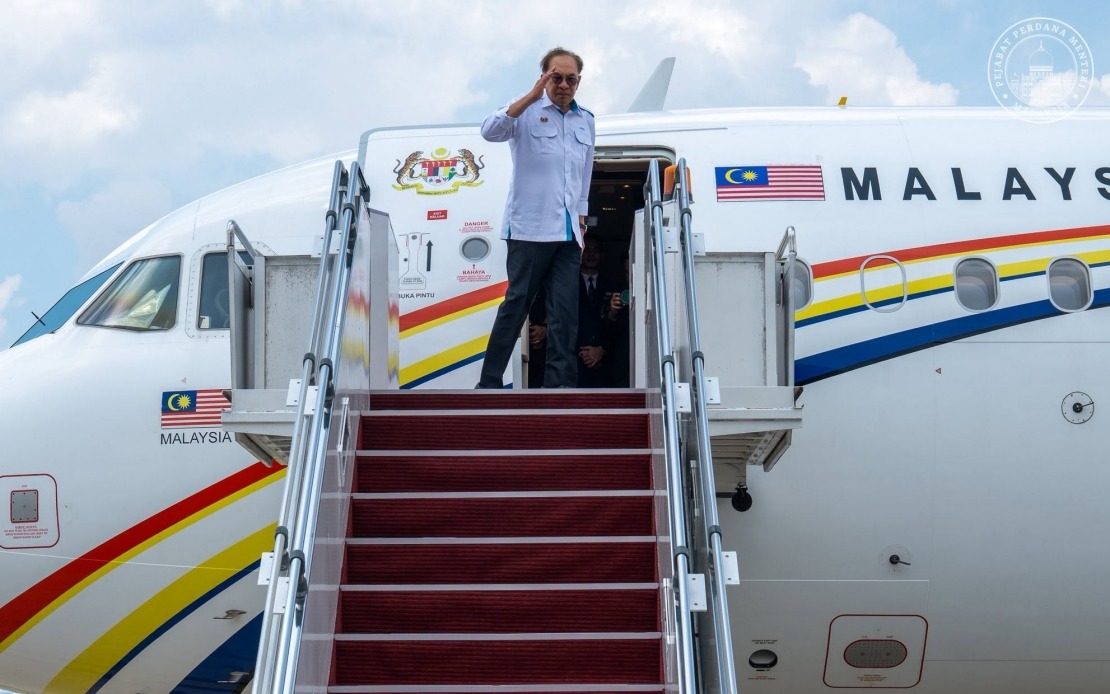
Prime Minister Datuk Seri Anwar Ibrahim departed Subang Air Base on June 16 for Kazan, Russia, to represent Malaysia at a landmark gathering that underscores Southeast Asia's deepening engagement with Moscow despite geopolitical tensions elsewhere. The ASEAN-Russia Commemorative Summit represents a significant moment for regional diplomacy, bringing together the ten-member bloc with a major global power at a time when multilateral cooperation faces unprecedented scrutiny.
Anwar will preside over the Malaysian delegation to the Kazan summit scheduled for June 17 and 18, a carefully timed diplomatic mission that includes heavyweight cabinet ministers. Accompanying the Prime Minister are Minister of Investment, Trade and Industry Datuk Seri Johari Abdul Ghani and Minister of Economy Akmal Nasrullah Mohd Nasir, signalling Malaysia's intent to leverage the gathering for substantive commercial and economic discussions. The presence of these trade-focused ministers suggests that discussions will move beyond ceremonial acknowledgements toward concrete bilateral arrangements.
The summit marks the 35th anniversary of formal ASEAN-Russia relations, a partnership established in Kuala Lumpur in 1991 when the Cold War was ending and Russia was navigating its own post-Soviet transition. This three-and-a-half-decade relationship has evolved significantly, transforming from tentative engagement into a multifaceted strategic partnership. For Malaysia, which chairs ASEAN's dialogue partnerships with various nations at different intervals, this gathering represents an opportunity to demonstrate the bloc's commitment to balanced engagement across the Indo-Pacific and beyond.
A highlight of Anwar's visit will be his scheduled bilateral meeting with Russian President Vladimir Putin, an encounter with considerable symbolic weight given the current international environment. The meeting provides a platform for Malaysia to articulate ASEAN's position on regional stability, economic cooperation, and the principles of non-interference and respect for sovereignty that underpin the bloc's founding philosophy. Such dialogues at the highest level often serve to communicate nuanced positions that transcend the formal statements issued by foreign ministries.
Beyond the diplomatic ceremony, Anwar will participate in the Russia-ASEAN Business Forum, an event designed to facilitate commercial connections between Southeast Asian enterprises and Russian counterparts. For Malaysian business interests, this forum offers exposure to Russian markets and potential partnerships in sectors where comparative advantages align. The participation of senior economic ministers indicates that Malaysia views these commercial channels as integral to the summit's value proposition.
Wisma Putra has outlined an ambitious agenda for the Kazan discussions, with negotiations expected to encompass trade and investment expansion, energy cooperation, food security initiatives, digital economy development, science and technology collaboration, cultural exchanges, educational partnerships, tourism promotion, and people-to-people engagement. This broad spectrum reflects the comprehensive nature of modern strategic partnerships, moving beyond military or political considerations to encompass multiple dimensions of bilateral and multilateral relationships. Energy cooperation, in particular, carries significance for Malaysia given the region's energy security concerns and Russia's substantial hydrocarbon resources.
The food security component of planned discussions addresses a concern that has grown more acute in Southeast Asia since the global supply chain disruptions of recent years. With Russia being a major grain producer, dialogue on agricultural trade and food systems resilience could yield practical benefits for ASEAN nations. Similarly, digital economy and technology collaboration reflect the reality that emerging technologies and digital infrastructure represent contemporary drivers of economic growth and competitive advantage in the region.
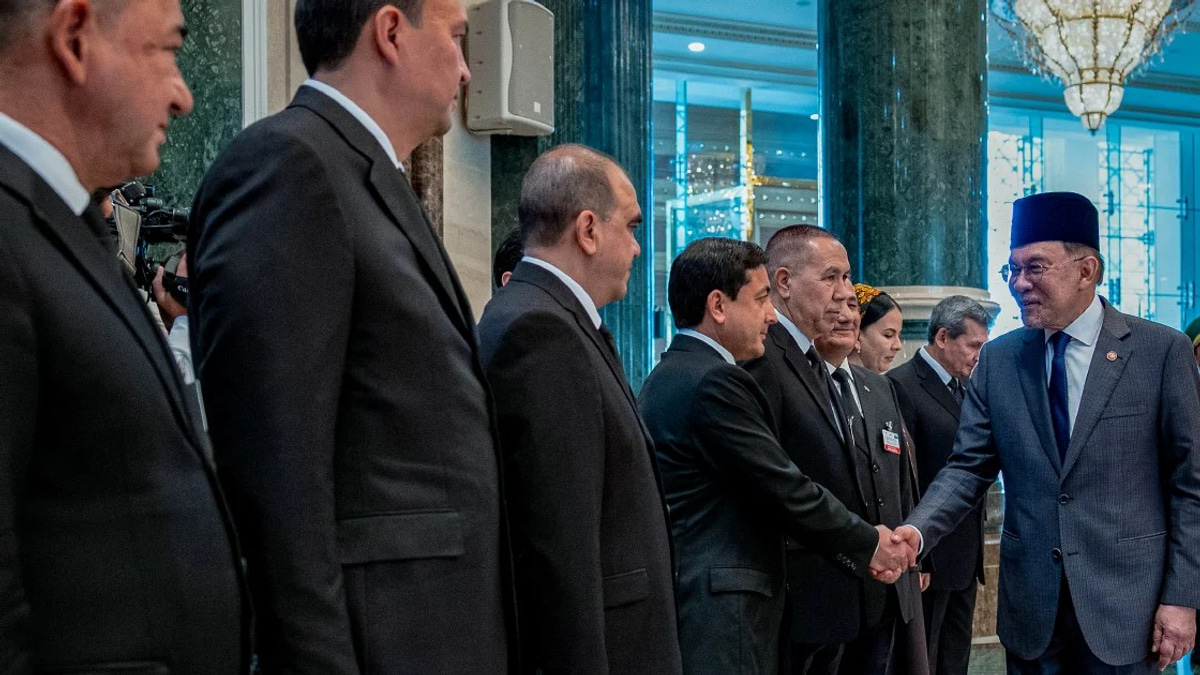
Anwar will conclude his extended international engagement by proceeding to Ashgabat, Turkmenistan, for an official visit at the invitation of President Serdar Berdimuhamedow. This two-destination trip underscores Malaysia's strategy of active engagement across Central Asia and the broader Asian continent, moving beyond the traditional East Asian focus. The Turkmenistan leg of the journey, following immediately after Kazan, suggests coordinated diplomacy aimed at establishing or reinforcing relationships across this strategically important region.
The timing of this diplomatic mission reflects Malaysia's broader positioning within ASEAN and on the world stage. By maintaining dialogue channels with Russia while simultaneously engaging with Western partners and regional neighbours, Malaysia exemplifies the non-aligned pragmatism that has characterised ASEAN's approach to international relations. This balanced engagement strategy allows the bloc to advance its collective interests without being drawn into zero-sum geopolitical contests.
The ASEAN-Russia Strategic Partnership, under which the Kazan summit operates, provides institutional framework for deepening ties. ASEAN's centrality in regional affairs and its commitment to inclusive dialogue make it an attractive partner for Russia, particularly as Moscow seeks to maintain influence and presence across Asia. For ASEAN members like Malaysia, engagement with Russia offers opportunities to benefit from diversified international relationships while maintaining adherence to fundamental principles of non-interference and peaceful dispute resolution.
Anwar's leadership of the Malaysian delegation carries personal and national significance. His international engagement patterns have emphasised Malaysia's desire to play a constructive role in regional stability and economic cooperation. The Prime Minister's direct participation in high-level summits and bilateral meetings with major powers sends clear signals about Malaysia's diplomatic priorities and its willingness to engage substantively on complex regional and global issues. His presence in Kazan demonstrates that despite domestic political considerations, Malaysia remains committed to active participation in multilateral forums.

%22%2F%3E%3C%2Fpattern%3E%3C%2Fdefs%3E%3Crect%20width%3D%22100%25%22%20height%3D%22100%25%22%20fill%3D%22url(%23ph3lyoeg)%22%2F%3E%3Crect%20width%3D%22100%25%22%20height%3D%22100%25%22%20fill%3D%22url(%23ph3lyoep)%22%2F%3E%3Ctext%20x%3D%2250%25%22%20y%3D%2250%25%22%20text-anchor%3D%22middle%22%20dominant-baseline%3D%22central%22%20fill%3D%22rgba(255%2C255%2C255%2C0.95)%22%20font-family%3D%22Georgia%2C%20'Times%20New%20Roman'%2C%20serif%22%20font-weight%3D%22700%22%20font-size%3D%22151%22%20letter-spacing%3D%22-0.02em%22%3EMuhyiddin%3C%2Ftext%3E%3C%2Fsvg%3E)