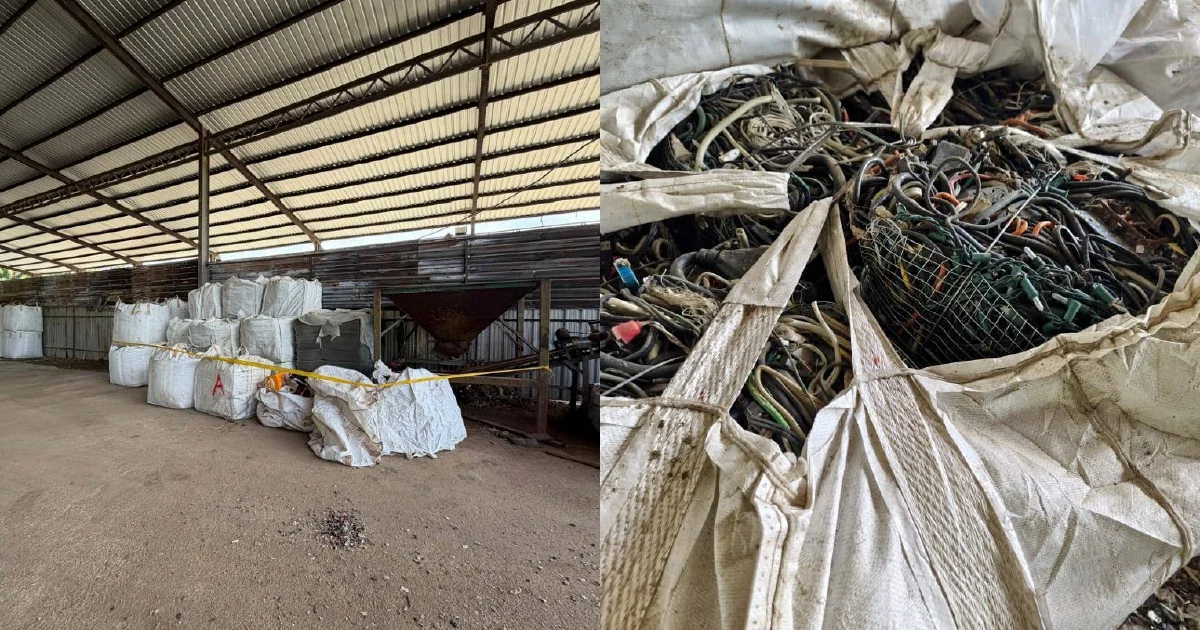
Enforcement officials have completed a significant crackdown on illegal e-waste operations in Bukit Mertajam, removing an estimated RM3 million worth of improperly handled electronic materials from an unauthorized facility. The operation, conducted yesterday, resulted in the arrest of five individuals suspected of involvement in the unlicensed processing and stockpiling of discarded electronic equipment. The seizure represents another major blow against the informal recycling sector that has proliferated in industrial zones across Malaysia, processing equipment ranging from redundant computers to mobile devices without proper environmental safeguards.
The raid targeted a storage and processing location that authorities had been monitoring for its alleged involvement in handling e-waste outside licensed channels. Illegal e-waste operations have become an increasing concern across Peninsular Malaysia and Sabah, with criminal networks exploiting lax enforcement in certain areas to extract valuable materials like copper wiring, circuit board components, and precious metals. These unregulated facilities typically operate with minimal pollution controls, exposing workers and surrounding communities to toxic substances including lead, mercury, and cadmium that leach into soil and groundwater when improperly dismantled.
The Bukit Mertajam facility exemplifies the broader challenge facing environmental and enforcement agencies across the region. Malaysia generates approximately 260,000 tonnes of e-waste annually, yet an estimated 40 percent enters the informal recycling system where operators prioritize extracting high-value materials over environmental protection. The materials recovered in yesterday's operation represent equipment that either arrived at unauthorized premises through illicit channels or was diverted from legitimate recycling pathways by corrupt handlers. This underground market flourishes because legal recyclers operate under stringent cost structures and environmental compliance requirements that make their services less competitive than black-market alternatives.
The five individuals detained are currently assisting investigators to map out the supply chains and distribution networks supporting the illegal operation. Authorities are particularly focused on determining whether the facility served as a hub receiving shipments from multiple sources or primarily processed materials collected from a specific region. Understanding these networks proves critical to disrupting the economic model that incentivizes illegal e-waste handling. Previous investigations have revealed that criminal syndicates coordinate across state lines, with collection operations in one state shipping materials to processing hubs in zones with weaker enforcement presence.
Industrial zones adjacent to port facilities and highways have become particular hotspots for illegal recycling enterprises seeking accessibility to incoming materials and transportation networks. The location in Bukit Mertajam, situated between major population centres and within reasonable distance of port facilities, made it an attractive location for illicit operators. Local residents in surrounding areas have increasingly reported concerns about noxious odours and visible pollution from nearby industrial activities, suggesting that enforcement agencies must develop more proactive community-based intelligence networks.
Regulatory bodies including the Ministry of Housing and Local Government and the Department of Environment have intensified compliance inspections following pressure from environmental groups highlighting the health risks posed by uncontrolled e-waste processing. Legitimate operators hold specific licenses requiring documented management of hazardous materials, regular environmental audits, and proper worker safety training. Illegal facilities operate under no such constraints, creating a regulatory arbitrage that allows unscrupulous competitors to undercut lawful businesses. The RM3 million seizure signals a renewed commitment to enforcement, though observers note that single operations cannot address the systemic factors driving the illegal sector.
The recovered materials will undergo proper environmental assessment and classification before processing at certified facilities capable of handling hazardous content safely. This process incurs significant costs that legitimate recyclers absorb through their pricing structures, further explaining why price-sensitive customers sometimes prefer illegal alternatives. Some recovered items may retain salvage value and be returned to formal recycling channels, while other components will require specialized hazardous waste treatment. The actual environmental remediation of the facility site itself may take months, requiring soil testing and potential decontamination if toxic residues have accumulated.
Malaysia's approach to e-waste management lags behind regional peers, with Singapore and Thailand having implemented more aggressive producer responsibility schemes requiring manufacturers to fund end-of-life management. Stakeholders including environmental groups and industry associations have advocated for similar extended producer responsibility models domestically, arguing these create stronger incentives for designing products for easier recycling and establishing verified recycling infrastructure. The persistent viability of illegal operations underscores the absence of such market mechanisms that could shift economics in favour of licensed processors.
International dimensions complicate enforcement efforts, as some electronic waste bound for Malaysia originates in developed nations via forwarded consignments or deliberately misdeclared shipments. Import restrictions on certain e-waste categories exist but face implementation challenges, particularly concerning the identification of shipments at ports. Cooperation between Malaysia's Royal Malaysian Customs Department and international counterparts has improved, yet transnational criminal networks continuously adapt declaration methods to circumvent detection.
For Malaysian businesses and households, the seizure underscores the importance of engaging certified e-waste recyclers rather than informal dealers promising rapid asset recovery. Many private companies and government agencies remain unaware of local licensed recyclers in their regions, creating information gaps that serve illegal operators. Environmental groups recommend that organizations develop formal e-waste disposal policies specifying certified processors and requiring documentation of proper handling. Building awareness among consumers about responsible disposal pathways represents a longer-term strategy to reduce material flows into illegal channels.
Investigators will continue examining documents and communications recovered from the facility to identify additional networks and individuals involved in the broader illegal recycling ecosystem. Authorities indicated that charges are expected against the five detainees, though precise offences under environmental and waste management legislation remain under determination. The operation contributes to ongoing efforts across Malaysian enforcement agencies to dismantle illegal e-waste processing, though observers acknowledge that sustainable solutions require simultaneous action on demand-side economics, producer responsibility, and consumer awareness. The Bukit Mertajam case will likely inform future intelligence priorities regarding industrial zone enforcement strategies across the Klang Valley and northern regions where e-waste operations have concentrated.

%22%2F%3E%3C%2Fpattern%3E%3C%2Fdefs%3E%3Crect%20width%3D%22100%25%22%20height%3D%22100%25%22%20fill%3D%22url(%23ph8sf2g)%22%2F%3E%3Crect%20width%3D%22100%25%22%20height%3D%22100%25%22%20fill%3D%22url(%23ph8sf2p)%22%2F%3E%3Ctext%20x%3D%2250%25%22%20y%3D%2250%25%22%20text-anchor%3D%22middle%22%20dominant-baseline%3D%22central%22%20fill%3D%22rgba(255%2C255%2C255%2C0.95)%22%20font-family%3D%22Georgia%2C%20'Times%20New%20Roman'%2C%20serif%22%20font-weight%3D%22700%22%20font-size%3D%22272%22%20letter-spacing%3D%22-0.02em%22%3EAnwar%3C%2Ftext%3E%3C%2Fsvg%3E)