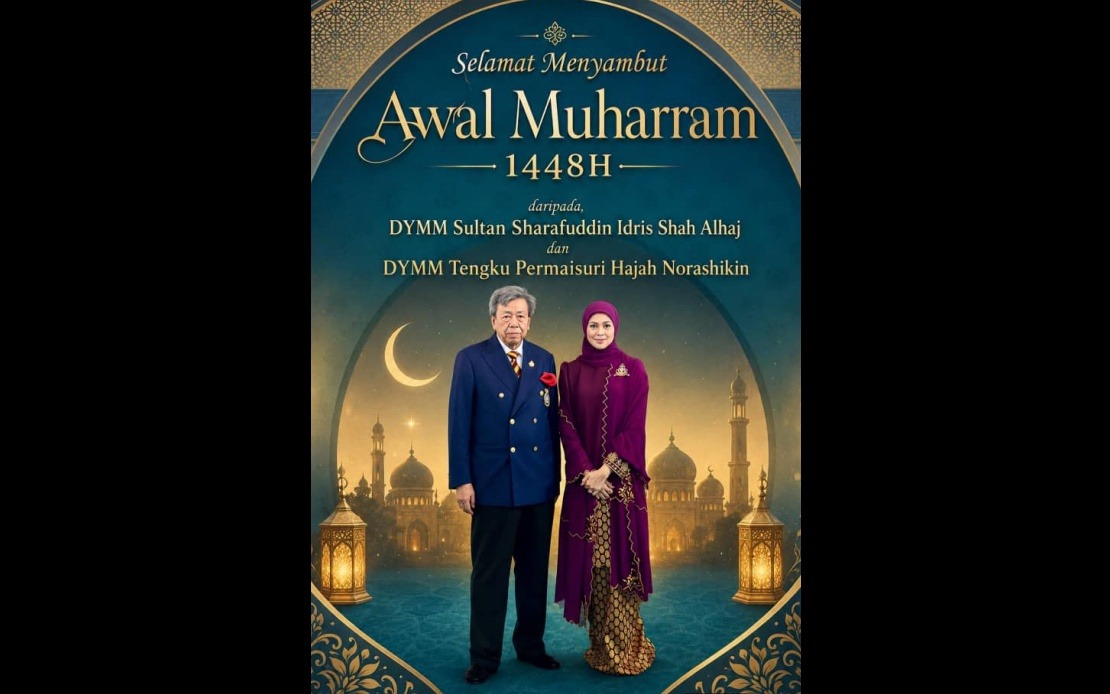
The Sultan of Selangor, Sultan Sharafuddin Idris Shah, has renewed his appeal for Muslims to place unity at the forefront of their efforts to confront contemporary challenges, particularly as the Islamic community observes the Maal Hijrah 1448H milestone. Speaking in Shah Alam on June 16, the ruler emphasised that the significance of Hijrah extends beyond its historical meaning as a physical journey, representing instead a profound spiritual transformation and the consolidation of the Muslim ummah's collective strength.
In his remarks, Sultan Sharafuddin drew upon the wisdom passed down by his predecessor, the late Sultan Salahuddin Abdul Aziz Shah, whose counsel consistently emphasised the dangers of discord within the community. The Sultan articulated a framework for constructive engagement that prioritizes restraint and propriety, particularly when addressing contentious matters or delivering criticism. He stressed that disagreements should be approached with wisdom and decorum, establishing a model of conduct that reinforces community bonds rather than fracturing them.
The ruler outlined a clear protocol for managing internal disputes, advocating that criticisms and concerns be communicated through private channels and guided by mutual respect and a genuine commitment to identifying equitable solutions. This approach reflects a traditional understanding of community governance that values the preservation of public harmony while allowing for the frank discussion of substantive issues behind closed doors. By confining sensitive discussions to private forums, the Sultan suggested, the ummah can address its challenges without needlessly exposing internal vulnerabilities to external scrutiny.
One of the Sultan's most forceful warnings concerned the dangers of allowing internal conflicts to spill into the public arena. He cautioned that when communities engage in visible quarrels and disputes, observers from outside may perceive weakness and division, creating opportunities for those with competing interests to exploit the fractures that have emerged. This calculus of vulnerability extends to the national level, where internal religious or communal discord can undermine social cohesion and state stability. The Sultan suggested that permitting such divisions to fester ultimately produces no genuine victor—only a collective weakening that diminishes the strength and standing of all parties involved.
The implications of the Sultan's message resonate across multiple dimensions of Malaysian society. Malaysia's multicultural and multi-religious composition requires that religious communities maintain internal coherence while simultaneously engaging respectfully with other faiths and ethnic groups. The Sultan's emphasis on resolving disputes through private discourse rather than public confrontation offers a template for managing differences that could apply beyond the Muslim community, speaking to broader principles of national harmony and institutional stability.
The Maal Hijrah occasion itself carries profound historical and spiritual significance within Islamic tradition, marking the migration of Prophet Muhammad and his followers from Mecca to Medina in 622 CE. However, the Sultan reframed the celebration not as a mere commemoration of past events but as an annual opportunity for spiritual renewal and recommitment to foundational Islamic values. In this reading, Maal Hijrah becomes a moment for the contemporary ummah to reset its priorities and redirect its energies toward shared objectives that transcend individual or factional interests.
The Sultan explicitly called upon Muslims to embody the spirit of Hijrah by reinforcing their collective unity, cultivating greater tolerance for differing perspectives, and subordinating parochial concerns to the broader welfare of religion, nation, and people. This formulation places the individual and the group in proper hierarchical relationship, suggesting that personal ambitions and group interests must yield when they conflict with communal or national good. The emphasis on tolerance within this framework indicates recognition that unity need not mean uniformity, but rather the capacity to coexist and cooperate despite differences.
As Malaysia continues to navigate complex social and political terrain, the Sultan's intervention provides a counter-narrative to divisiveness. His insistence that matters capable of resolution should remain outside the public sphere addresses a contemporary challenge where social media amplification and rapid information dissemination can transform local disagreements into national controversies. By advocating for restraint and private resolution, the Sultan champions an older model of governance that recognizes some utility in discretion and protective boundaries around communal discourse.
The ruler concluded his message with an expression of hope that the new Islamic year would inaugurate a period of renewed effort toward strengthening unity and harmony among both Muslims and the broader Malaysian society. This benediction serves as both an aspirational statement and an implicit call to action, suggesting that the upcoming year presents a specific opportunity for communities to recommit themselves to the principles of tolerance, mutual respect, and collective welfare that the Maal Hijrah tradition symbolizes.
For Malaysian policymakers and community leaders, the Sultan's remarks offer authoritative guidance on managing religious and social discourse in ways that preserve both candour and cohesion. His championing of private resolution over public dispute aligns with institutional interests in maintaining social stability while acknowledging the legitimacy of internal debate and disagreement. The message ultimately reaffirms that Islamic tradition, as understood by Malaysia's religious leadership, values consensus-building and the suppression of unnecessary public conflict—principles that resonate with broader commitments to national unity and interfaith cooperation that define contemporary Malaysia's social contract.
%22%2F%3E%3C%2Fpattern%3E%3C%2Fdefs%3E%3Crect%20width%3D%22100%25%22%20height%3D%22100%25%22%20fill%3D%22url(%23ph54t2sg)%22%2F%3E%3Crect%20width%3D%22100%25%22%20height%3D%22100%25%22%20fill%3D%22url(%23ph54t2sp)%22%2F%3E%3Ctext%20x%3D%2250%25%22%20y%3D%2250%25%22%20text-anchor%3D%22middle%22%20dominant-baseline%3D%22central%22%20fill%3D%22rgba(255%2C255%2C255%2C0.95)%22%20font-family%3D%22Georgia%2C%20'Times%20New%20Roman'%2C%20serif%22%20font-weight%3D%22700%22%20font-size%3D%22226%22%20letter-spacing%3D%22-0.02em%22%3EPolice%3C%2Ftext%3E%3C%2Fsvg%3E)