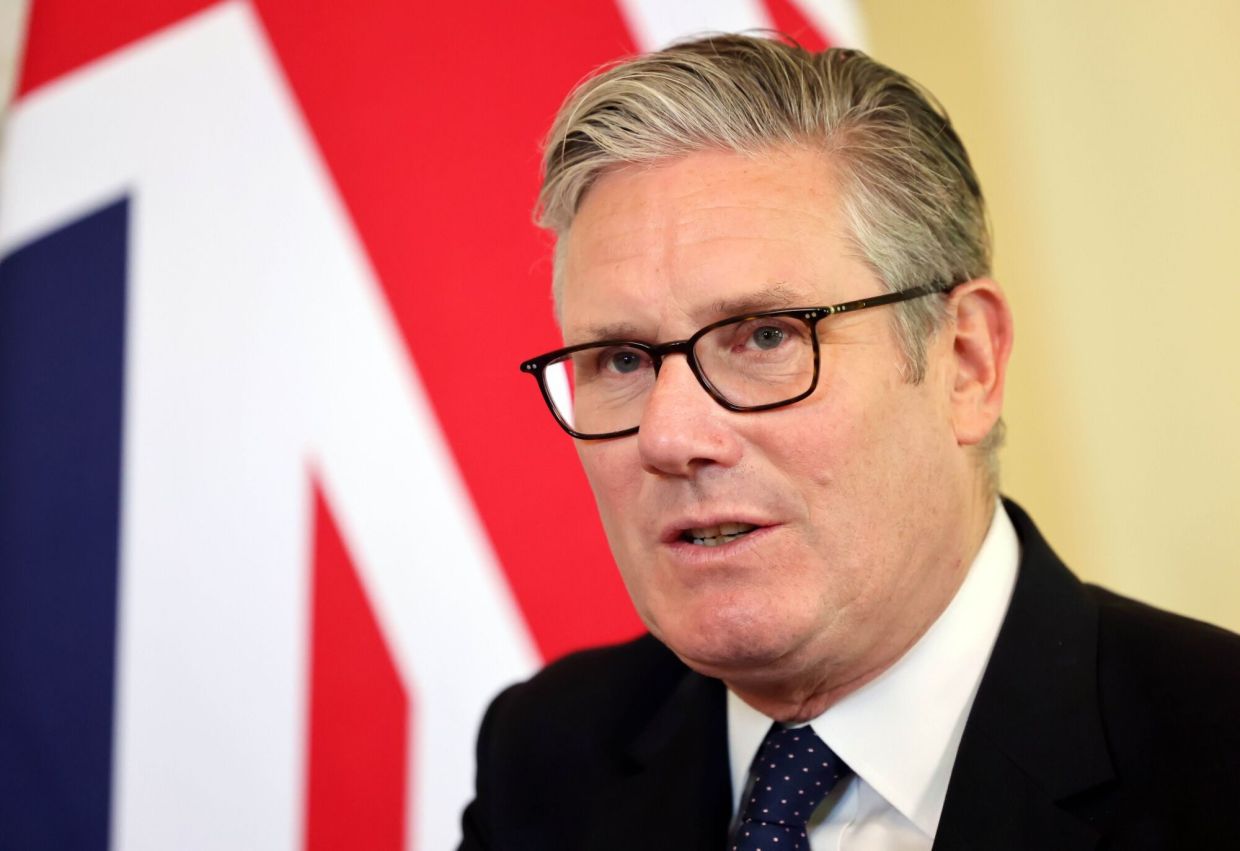
Prime Minister Keir Starmer is set to unveil a far-reaching package of digital restrictions aimed at insulating British teenagers from online harms, marking a defining moment in his early tenure as he simultaneously confronts mounting political headwinds within his own government. The Labour leader will confirm on Monday morning that children under 16 will be prohibited from accessing major social media platforms, accompanied by supplementary measures including time-based restrictions for older adolescents and stringent oversight of artificial intelligence chatbots. Immediately following this announcement, Starmer will depart for the Group of Seven summit in Évian-les-Bains, France, where he must address uncomfortable circumstances stemming from last week's unexpected departure of his defence secretary and ongoing wrangle over military funding.
The proposed social media restrictions represent a notably aggressive stance compared to precedents in other major democracies. Australia implemented its own social media ban for younger teenagers just last year, yet the incoming UK framework would go substantially further in scope and enforcement mechanisms, encompassing additional restrictions on chatbots and online gaming platforms. Despite the stringent nature of these proposals, polling consistently demonstrates robust public backing for such measures among British voters, notwithstanding genuine uncertainties about practical implementation and enforcement challenges that authorities will inevitably face when attempting to verify the ages of millions of users across multiple platforms.
Starmer's characteristically direct framing of the policy choice emphasises the government's alignment with families and their protective interests against a status quo he portrays as inadequate. "This is a choice about whose side we're on: families across the country, or a status quo that isn't working," he declared in a late Sunday statement, attempting to position the measure as fundamentally about safeguarding young people rather than political opportunism. This rhetorical approach seeks to preempt criticism that the timing of the announcement prioritises political theatre over considered policymaking, particularly given intensifying questions about the government's underlying motivations.
The announcement arrives amid persistent controversy regarding online child safety, exemplified by the continued prominence of cases involving tragic outcomes for vulnerable teenagers. Ian Russell, whose daughter took her own life in 2017 following exposure to deleterious online material, publicly criticised Starmer over the weekend, warning that accelerating this ban announcement ahead of anticipated leadership challenges would constitute a grave betrayal of the seriousness such issues deserve. Russell's intervention carries particular weight given his sustained advocacy for stronger digital safeguarding mechanisms and his credibility as a grief-stricken parent rather than a partisan political actor.
Inside government circles, scepticism persists regarding the pace and completeness of the policy formulation process. A public consultation examining youth digital protection mechanisms concluded merely three weeks ago, an extraordinarily compressed timeline for developing legislation of this complexity and scope. Multiple cabinet-level colleagues have privately expressed reservations about whether rushing toward a comprehensive under-16 ban represents sound governance, particularly when the decision appears substantially influenced by Thursday's by-election in Makerfield and the broader political calendar rather than exhaustive evidence review and stakeholder consultation.
The Liberal Democrats have seized upon these procedural concerns, characterising the announcement as opportunistic and insufficiently developed. "Rushing through a half-baked policy just to secure a political legacy" represents their assessment of Starmer's approach, reflecting broader opposition criticism that the government prioritises headlines and political positioning over substantive policy rigour. This criticism gains traction precisely because the compressed timeline between consultation closure and legislative announcement can plausibly be interpreted as reflecting political convenience rather than the methodical approach typically associated with fundamental changes to children's digital rights.
Starmer's immediate political circumstances provide crucial context for understanding the timing of this announcement. Andy Burnham, the mayor of Greater Manchester and a prominent Labour figure, is expected to secure a parliamentary seat through Thursday's special election in Makerfield, northwest England. Should Burnham win decisively against Reform UK's Nigel Farage, party insiders anticipate he will immediately move to challenge Starmer for the Labour leadership, potentially precipitating a summer contest for control of 10 Downing Street during what should represent the government's most strategically advantageous political period.
This leadership vulnerability has intensified following last week's departmental exodus, which saw defence secretary John Healey resign alongside junior defence minister Al Carns and two additional ministerial aides. Healey's departure specifically highlighted Starmer's apparent failure to secure defence spending increases commensurate with contemporary security threats posed by Russia and other strategic competitors. The resignations signalled genuine cabinet-level dissatisfaction with the premier's stewardship and resource allocation decisions, creating an impression of governmental instability and internal discord precisely when Starmer should be consolidating power.
Nandy's public comments regarding ongoing defence budget negotiations suggest the government may yet recalibrate its spending position. The culture secretary indicated Sunday that discussions remained active to identify savings across other departmental budgets that could be redirected toward military capabilities. She explained to the BBC that "negotiation is happening as we speak," implying Starmer had determined to revisit his initial defence funding position. A more substantial military budget increase would assist Starmer in fulfilling commitments to allied nations, though it simultaneously risks inviting accusations of indecision and policy reversals following Healey's high-profile resignation on precisely this issue.
For Malaysian and Southeast Asian observers, these developments carry relevance beyond British domestic politics. The social media restrictions being proposed represent a global trend toward stricter digital governance affecting young people, with implications for technology companies operating across multiple jurisdictions and considerations for regional policymakers weighing similar measures. Australia's precedent already influences discussions throughout the Asia-Pacific region regarding age-appropriate digital access, and the UK's potentially more expansive framework may establish new benchmarks that other democracies reference when formulating their own regulations. Additionally, the stability of British government during a period of significant geopolitical consequence affects alliance relationships and international security cooperation arrangements that indirectly influence regional stability and Southeast Asian strategic calculations.
%22%2F%3E%3C%2Fpattern%3E%3C%2Fdefs%3E%3Crect%20width%3D%22100%25%22%20height%3D%22100%25%22%20fill%3D%22url(%23ph54t2sg)%22%2F%3E%3Crect%20width%3D%22100%25%22%20height%3D%22100%25%22%20fill%3D%22url(%23ph54t2sp)%22%2F%3E%3Ctext%20x%3D%2250%25%22%20y%3D%2250%25%22%20text-anchor%3D%22middle%22%20dominant-baseline%3D%22central%22%20fill%3D%22rgba(255%2C255%2C255%2C0.95)%22%20font-family%3D%22Georgia%2C%20'Times%20New%20Roman'%2C%20serif%22%20font-weight%3D%22700%22%20font-size%3D%22226%22%20letter-spacing%3D%22-0.02em%22%3EPolice%3C%2Ftext%3E%3C%2Fsvg%3E)