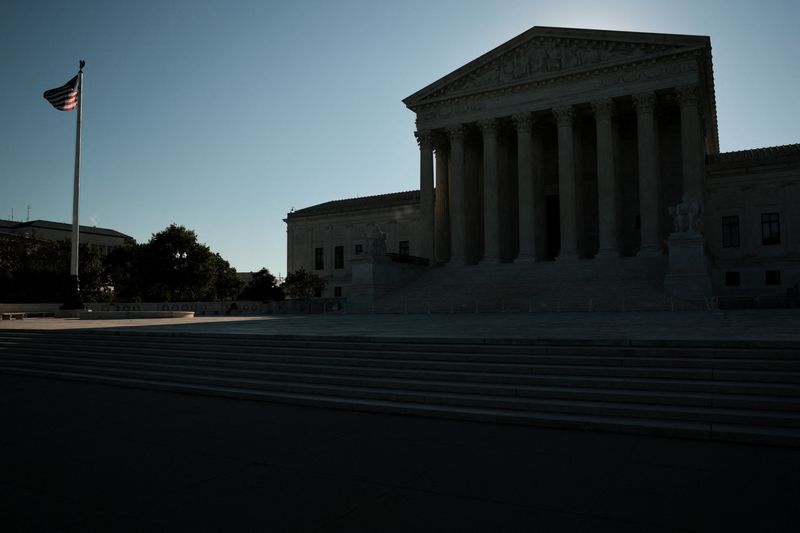
India-based Tata Consultancy Services has exhausted its legal options in the United States after the Supreme Court declined on Monday to hear its challenge to a $168 million damages award imposed by DXC Technology. The decision marks the end of a prolonged legal battle that has illustrated the complexities surrounding intellectual property protection and the application of US trade secrets law in cross-border corporate disputes involving major technology service providers.
The underlying dispute centres on allegations that Tata leveraged the experience and knowledge of approximately 2,200 former Transamerica employees it recruited in order to develop a competing life-insurance software platform. Transamerica had previously licensed proprietary insurance software from Computer Sciences Corp, the predecessor company to DXC, during the 1990s. When Tata brought the Transamerica workers into its workforce, DXC contended that the Indian firm exploited their access to confidential technical specifications and strategic business information that remained proprietary.
DXC initiated legal action in Dallas federal court in 2019, positioning its case as one involving willful misappropriation of valuable trade secrets. Tata mounted a vigorous defence, denying the core allegations and asserting that the information in question lacked the legal characteristics necessary to qualify as trade secrets under applicable statutes. The company further argued that any access it obtained to the technical materials occurred through legitimate channels and did not constitute unlawful acquisition.
The litigation proceeded through the American judicial system with significant financial stakes at each stage. A jury rendered an advisory verdict in 2023, recommending that Tata pay DXC $210 million in damages for what it determined was willful theft of proprietary information. However, US District Judge Brantley Starr, who presided over the case in Dallas, subsequently reduced that figure to $168 million when issuing a final judgment in 2024. The damages award comprised $56 million in compensatory damages intended to address losses suffered by DXC and $112 million in punitive damages designed to deter similar conduct.
When Tata appealed to the 5th U.S. Circuit Court of Appeals, based in New Orleans, the appellate tribunal affirmed Judge Starr's decision in 2025, providing no grounds for further reconsideration. This left Tata with a final opportunity to petition the Supreme Court, which the company pursued with arguments specifically targeting the legal framework governing trade secrets damages under federal law. The Supreme Court's refusal to grant certiorari—the formal review petition—effectively closes the appellate process and allows the $168 million judgment to stand as final.
Tata's Supreme Court petition centred on a technical but consequential legal proposition: the company argued that DXC should not have been entitled to recover damages based on unjust enrichment theory without simultaneously demonstrating that the technology firm had suffered measurable financial losses as a direct consequence of the alleged theft. This argument sought to redefine how courts should calculate trade secrets damages when a company profits from misappropriated information but the original owner has not quantified its own financial harm in explicit terms.
US law addressing trade secrets permits courts to award monetary relief that encompasses both compensatory damages reflecting the plaintiff's actual losses and separate recovery based on the defendant's unjust enrichment from wrongful conduct. In DXC's case, the $168 million judgment was founded entirely upon the unjust enrichment calculation—reflecting the financial benefit that Tata obtained by deploying the misappropriated information to build its competing product rather than licensing the original software or developing technology independently. Tata additionally challenged the quantum of punitive damages as disproportionate to the wrongdoing involved.
DXC's response to Tata's Supreme Court petition emphasised that the appellate court's decision reflected straightforward application of well-established legal principles to the specific facts of the case. The Virginia-based technology company argued that no novel questions of constitutional or statutory interpretation warranted Supreme Court intervention, effectively contending that the lower courts had correctly identified and applied existing law to resolve the dispute. This position aligned with the Supreme Court's traditional reluctance to review cases where appeals courts have properly applied settled jurisprudence.
For Malaysian and Southeast Asian technology and professional services companies, this judgment underscores the significant financial exposure associated with trade secrets disputes in the United States. The case illustrates that recruitment of employees from competitor organisations, even when that recruitment is conducted through lawful hiring practices, can create substantial liability if those workers possess knowledge of confidential business information and their employer subsequently utilises that knowledge to create competing products or services. Companies operating across borders must implement robust policies governing employee transitions and maintain clear documentation demonstrating that competitive advantages derive from independent development rather than transferred knowledge.
The magnitude of the award reflects American courts' willingness to impose substantial financial penalties when they determine that a company has obtained competitive advantage through misappropriation of valuable trade secrets. The inclusion of punitive damages—which exceed the actual compensatory award—signals judicial intent to deter similar conduct by other enterprises. For Indian IT services firms like Tata and comparable regional technology companies, the ruling demonstrates the necessity of implementing stringent compliance protocols and maintaining transparent documentation of software development processes when engaging in competitive product development.
The Supreme Court's rejection of the appeal also carries broader implications for how American courts will treat unjust enrichment claims in trade secrets cases. By declining to reconsider the lower court decisions, the Supreme Court implicitly affirmed that companies need not prove concrete quantifiable losses to recover damages when they can demonstrate that a competitor has profited from misappropriated proprietary information. This standard potentially expands the universe of potential damages in future trade secrets litigation and increases the stakes for companies operating in knowledge-intensive industries.
Tata must now determine whether to settle remaining aspects of this litigation or exhaust other remedies. The company's initial public statement has not been disclosed regarding its response to the Supreme Court's decision. The judgment ultimately stands as a cautionary example for any multinational enterprise considering how to manage competitive dynamics while safeguarding the intellectual property interests it has developed through substantial investment and research. The case reinforces that in the American legal system, the consequence of being found liable for trade secrets misappropriation can be extraordinarily expensive, particularly when courts determine that conduct was deliberate rather than inadvertent.