Beijing has formally acknowledged Malaysia's central role in pushing forward negotiations on a Code of Conduct governing activities in the South China Sea, signalling confidence that the disputed maritime region is moving toward institutional frameworks designed to prevent conflict. China's Ambassador to Malaysia Ouyang Yujing made these remarks during a media briefing, responding to recent comments by Prime Minister Datuk Seri Anwar Ibrahim that Malaysia would intensify efforts to advance the ongoing talks. The ambassador's statement underscores the strategic importance Malaysia holds in brokering agreement among multiple claimant states and other stakeholders with interests in one of the world's busiest shipping lanes.
The Code of Conduct represents a decades-long diplomatic endeavour to translate the non-binding Declaration on the Conduct of Parties in the South China Sea, adopted in 2002, into a more robust legal instrument with enforcement mechanisms. Malaysia's appointment as co-chair of the implementation mechanism positions the country as a neutral custodian of the negotiation process, a role that requires balancing Beijing's ambitions with the concerns of other ASEAN members and external powers. Ouyang's recognition of this contribution indicates that China views Malaysia as a reliable partner capable of facilitating consensus-building while maintaining equitable representation among participants with competing maritime claims and economic interests.
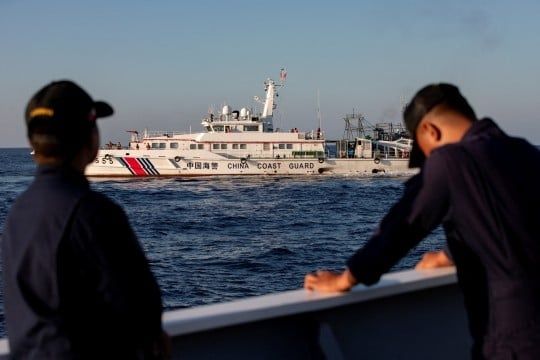
The talks have reached what all parties characterise as a decisive juncture, with multiple ASEAN leaders publicly committing to finalising the accord within the current calendar year. This timeline reflects a sense of urgency driven by several factors: escalating incidents in contested waters, growing military activities by external powers, and pressure from ASEAN's own institutional frameworks to deliver tangible outcomes on regional security matters. The completion of a COC would represent a significant achievement for Southeast Asian regionalism, demonstrating the bloc's capacity to shape outcomes on issues directly affecting its member states' sovereignty and development interests.
China has framed its participation in these negotiations as consistent with its commitment to regional stability and institutional cooperation, language designed to address concerns among ASEAN nations about Beijing's assertiveness in the South China Sea. By publicly commending Malaysia's role and reiterating its support for timely completion of the negotiations, China signals willingness to move beyond earlier phases where progress stalled due to disagreements over substance and procedure. The ambassador's statement that all parties aim to "complete them as scheduled" represents a collectively articulated expectation that carries political weight, as any nation seen as obstructing progress would face reputational costs within regional forums.
Malaysia's strategic position derives partly from its status as a moderate voice within ASEAN and a country with its own territorial claims in the South China Sea yet no desire for confrontation with Beijing. The kingdom has pursued a pragmatic foreign policy balancing great power interests while protecting national interests in the maritime domain. As co-chair of the implementation mechanism, Malaysia benefits from enhanced diplomatic visibility and the ability to influence the shape of future regional arrangements. Simultaneously, the role imposes obligations to facilitate dialogue and consensus, requiring careful navigation of positions that range from Vietnam's more assertive stance to Cambodia's closer alignment with Chinese interests.
Beyond the COC negotiations, Ouyang emphasised that bilateral ties between China and Malaysia have reached unprecedented levels of warmth and cooperation. He attributed this trajectory to President Xi Jinping's state visit to Malaysia in the previous year, an occasion that reset the tone of relationship management at the highest levels. The ambassador cited a dramatic increase in high-level diplomatic exchanges, pointing to Premier Li Qiang's two separate visits to Malaysia and Prime Minister Anwar Ibrahim's fourth journey to China since assuming office. These figures document an intensity of engagement that extends far beyond ceremonial courtesy, suggesting substantive discussions across economic, security, and political dimensions.
The expansion of bilateral engagement reflects broader strategic calculations on both sides. For Malaysia, deepened ties with China offer economic opportunities through investment, trade preferences, and participation in Chinese-led infrastructure initiatives. For Beijing, strengthening relationships with individual ASEAN members while simultaneously pushing for regional-level agreements on maritime conduct serves multiple purposes: it reinforces China's centrality in Southeast Asian affairs, builds support for its vision of regional order, and creates multiple channels through which to advance national interests. This multi-level engagement strategy has proven effective in ensuring that no single ASEAN nation becomes a veto player on matters China considers important.
Anwar Ibrahim's multiple visits to China since taking office in late 2022 reflect the priority Malaysia's government assigns to the relationship with its largest trading partner and a crucial investor in national development projects. Each visit provides opportunities to discuss not only South China Sea governance but also matters ranging from trade balances to Chinese participation in Malaysian industrial development zones. The Fourth Industrial Revolution initiatives and digital economy partnerships represent emerging areas where Malaysia seeks Chinese technological expertise and capital, creating reinforcing incentives for diplomatic cooperation on regional security matters.
The COC negotiations must address fundamental questions about permitted activities, dispute resolution mechanisms, and the relationship between the agreement and international law, particularly the United Nations Convention on the Law of the Sea. These technical and legal issues have proved contentious in previous rounds, with different ASEAN members prioritizing different outcomes. Vietnam, for instance, has advocated for stronger language constraining military activities and protection for smaller claimants, while Cambodia has been more accommodating of Chinese positions. Malaysia's role requires threading these divisions into language acceptable to all parties while maintaining credibility as an impartial facilitator.
The stakes of the COC negotiations extend beyond maritime governance to questions of regional autonomy and the future distribution of power in Southeast Asia. A successful agreement that establishes meaningful constraints on state behaviour would represent a triumph of multilateral institution-building in a region increasingly affected by great power competition. Conversely, a framework that merely codifies existing patterns of assertiveness would constitute a setback for ASEAN's stated desire for an "Indo-Pacific region where big and small countries are equal." Malaysia's constructive engagement, as recognised by Beijing, may prove decisive in determining which outcome prevails and whether the Code ultimately strengthens or merely papers over fundamental disagreements about maritime order.