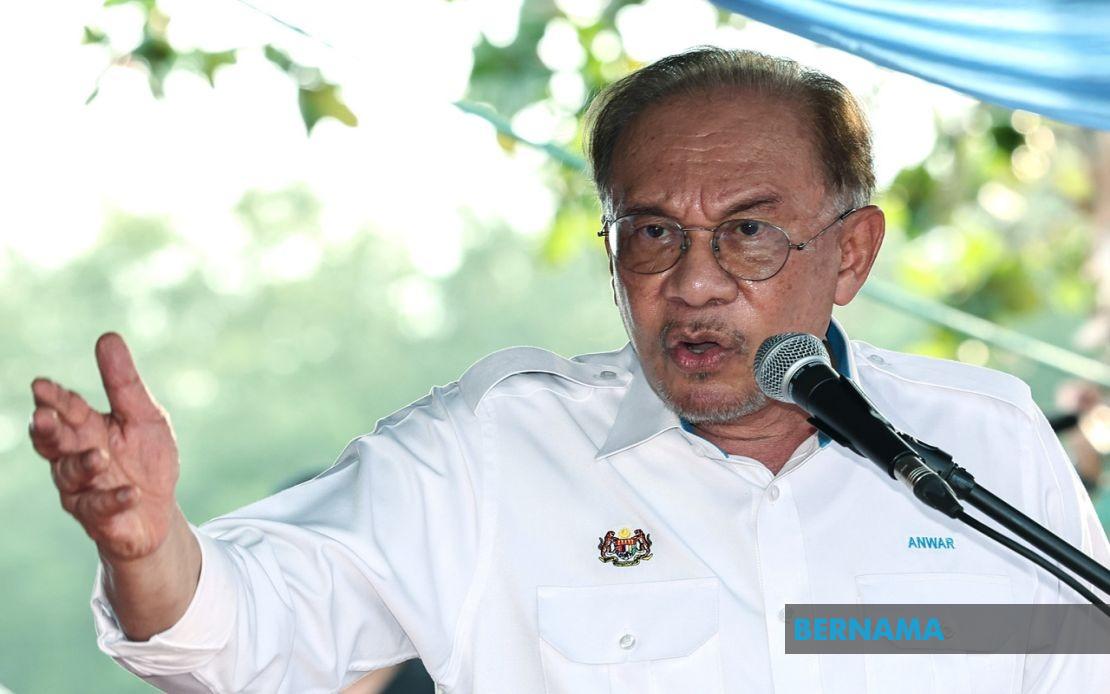
Prime Minister Datuk Seri Anwar Ibrahim has underscored the imperative for Malaysia's economic advancement to translate into tangible improvements across all societal tiers, with particular emphasis on rural and disadvantaged communities. Speaking at a gathering in Muar on June 15, he articulated the government's commitment to ensuring that prosperity reaches beyond urban centres and high-income brackets to encompass farmers, fishermen, rice cultivators, and smallholders who form the backbone of many rural economies.
The Prime Minister's remarks signal a deliberate recalibration of national priorities, challenging the conventional development paradigm that often prioritizes megaprojects and technological infrastructure over immediate welfare considerations. He questioned the purpose of advancement if ordinary citizens, particularly those in lower income brackets, fail to experience its concrete benefits in their daily lives. This perspective reflects growing recognition within government circles that sustainable economic growth requires broad-based participation and visible improvements in living standards across demographic boundaries.
Anwar emphasized that while technological initiatives—including artificial intelligence and digital transformation—remain essential for long-term competitiveness, the MADANI Government's immediate focus must remain on enhancing the income and welfare prospects of rural populations. This balancing act addresses a persistent tension in developing economies: the need to simultaneously pursue cutting-edge modernization whilst addressing the pressing needs of communities that have historically lagged behind in prosperity gains. For Malaysia, where rural-urban disparities remain pronounced in certain regions, this approach carries significant political and social implications.
The Prime Minister's address at Pantai Leka Food Court represented more than ceremonial engagement with grassroots constituents. His presence underscored administrative accountability and the expectation that government leaders must routinely immerse themselves in community concerns rather than remaining insulated within ministerial offices. He explicitly challenged his Cabinet colleagues and political leadership to replicate this ground-level engagement, transforming it from occasional public relations exercise into institutionalized practice.
Anwar highlighted the government's existing mechanisms for channelling support to vulnerable populations, referencing social safety nets and targeted assistance programmes administered through relevant agencies. However, his comments implied recognition that existing infrastructure may be insufficient or inefficiently deployed. The emphasis on ensuring assistance reaches intended beneficiaries suggests ongoing concerns about leakage, bureaucratic delays, or misalignment between programme design and actual community needs—challenges that plague welfare delivery across Southeast Asia.
The rhetoric of inclusive development carries particular resonance in Malaysia's contemporary political economy. Rural communities, especially those dependent on agriculture and fisheries, have witnessed structural economic shifts that have diminished their relative prosperity over decades. As younger generations migrate to urban centres seeking better opportunities, ageing rural populations face stagnating incomes and limited access to modern services. Government interventions must therefore address not merely poverty reduction but broader questions of economic dignity and opportunity creation in primary sectors.
From a Southeast Asian perspective, Malaysia's articulated commitment to inclusive growth mirrors broader regional conversations about balanced development. Neighbouring countries grapple with similar challenges: how to advance technologically competitive economies whilst ensuring rural populations benefit from growth trajectories. Malaysia's approach—emphasizing leadership accountability and direct engagement—offers one model, though success ultimately depends on execution rather than rhetoric alone.
The Prime Minister's insistence that leadership must have courage to voice the concerns of marginalized populations contains an implicit acknowledgment that technocratic approaches, divorced from ground realities, produce suboptimal outcomes. This represents a significant departure from development paradigms that prioritize macro-level metrics—GDP growth, foreign direct investment, technological adoption rates—over qualitative improvements in individual livelihoods and community resilience.
Critically, Anwar's statements raise questions about measurement and accountability. How will government evaluate whether economic progress genuinely reaches grassroots communities? What metrics beyond income statistics will indicate successful inclusive development? Without clear targets, monitoring mechanisms, and consequences for underperformance, aspirational rhetoric risks becoming disconnected from substantive policy changes.
The timing of these comments, delivered during engagement with fishing and farming communities, reflects strategic recognition that these sectors require renewed policy attention. Global seafood demand and sustainability concerns create both opportunities and pressures for Malaysian fisheries. Agriculture faces challenges from climate change, labour shortages, and competition from imports. Targeted government support addressing sector-specific obstacles could meaningfully enhance rural prosperity.
Looking forward, the real test of inclusive development commitment lies in budgetary allocation and institutional reform. Do government expenditure patterns genuinely prioritize rural welfare enhancement? Are bureaucratic structures reformed to facilitate more responsive delivery of services to remote communities? Are political incentives aligned to reward leaders who demonstrably improve grassroots living standards rather than merely announcing grand projects?
For Malaysian businesses and investors, the Prime Minister's emphasis on inclusive growth carries strategic implications. Companies operating in rural sectors or supplying rural markets require clarity about government support mechanisms and regulatory frameworks. Conversely, for urban-focused enterprises, sustained rural prosperity creates market expansion opportunities and reduces the social tensions that can accompany widening inequality.
Ultimately, Anwar's message addresses a fundamental challenge facing middle-income developing countries: maintaining momentum for technological advancement and global competitiveness whilst ensuring development benefits distribute equitably. How Malaysia navigates this tension will significantly influence social cohesion, political stability, and long-term economic sustainability across the region.

%22%2F%3E%3C%2Fpattern%3E%3C%2Fdefs%3E%3Crect%20width%3D%22100%25%22%20height%3D%22100%25%22%20fill%3D%22url(%23ph58prkg)%22%2F%3E%3Crect%20width%3D%22100%25%22%20height%3D%22100%25%22%20fill%3D%22url(%23ph58prkp)%22%2F%3E%3Ctext%20x%3D%2250%25%22%20y%3D%2250%25%22%20text-anchor%3D%22middle%22%20dominant-baseline%3D%22central%22%20fill%3D%22rgba(255%2C255%2C255%2C0.95)%22%20font-family%3D%22Georgia%2C%20'Times%20New%20Roman'%2C%20serif%22%20font-weight%3D%22700%22%20font-size%3D%22136%22%20letter-spacing%3D%22-0.02em%22%3EPAS-Bersa%E2%80%A6%3C%2Ftext%3E%3C%2Fsvg%3E)