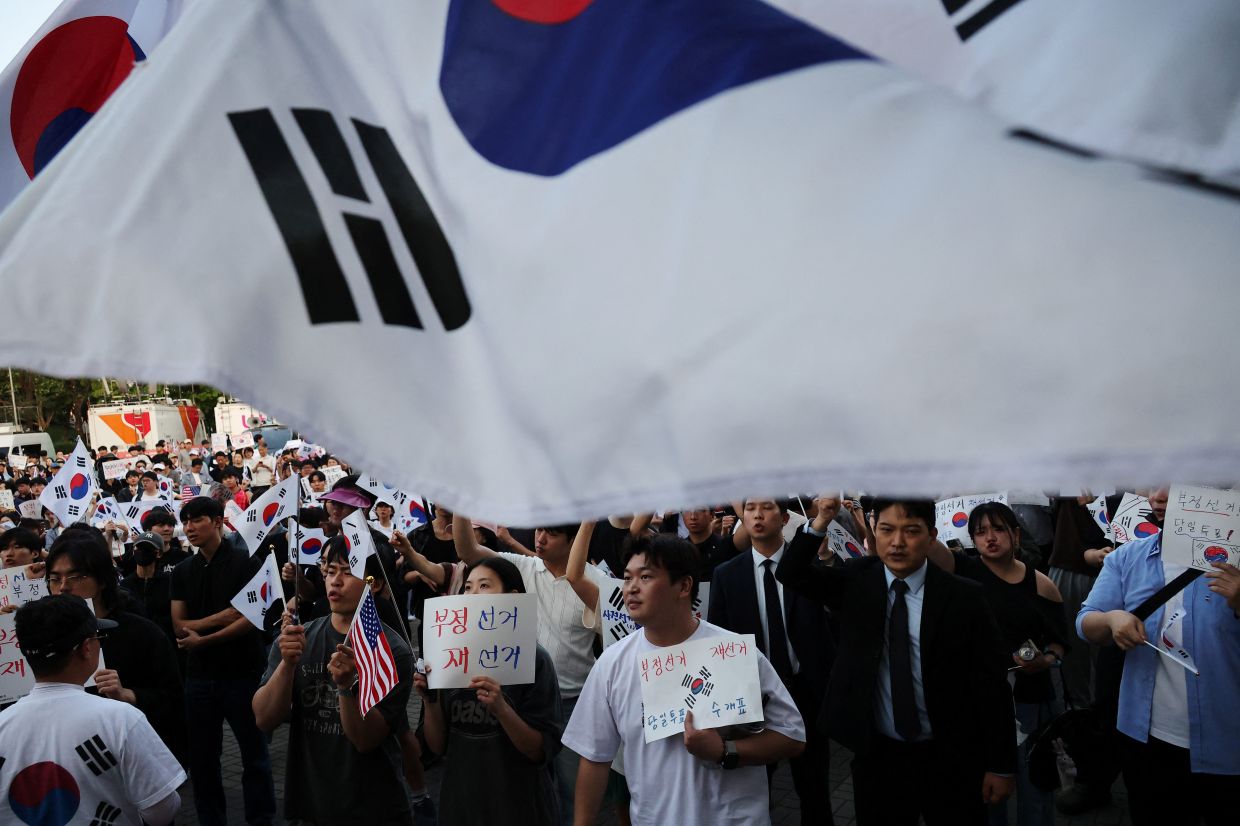
South Korean President Lee Jae Myung has sought to balance acknowledgement of genuine electoral concerns with warnings against what he characterises as unfounded conspiracy theories, following sustained protests centred on the June 3 local election ballot shortage crisis. Writing on social media on June 15, Lee called upon demonstrators to ensure their advocacy does not encroach upon the freedoms and opportunities of others, striking a measured tone in response to escalating unrest that has disrupted daily operations across Seoul.
The controversy centres on the handling of the June 3 local elections, where numerous polling stations experienced critical shortfalls in ballot paper supplies, forcing temporary suspensions and delays in voting. These administrative failures have ignited public anger and sparked ongoing demonstrations, particularly around Olympic Park's handball arena in southern Seoul, which served as the vote-counting facility and ballot storage location. The persistence of these protests has begun creating collateral damage: sports organisations based within Olympic Park have reported significant workplace disruptions, with access to their facilities being blocked by demonstrators, undermining administrative functions essential to South Korea's international athletic participation.
Lee's comments, delivered while presiding over a senior government meeting conducted via video link from Vatican City, represented an attempt to separate legitimate grievances about electoral management from what he views as dangerous misinformation. He explicitly acknowledged that the National Election Commission's performance fell substantially short of democratic standards, describing the incident as a grave failure that violated voters' constitutional rights. Recognising the public's understandable frustration, the President stated his full acceptance of citizens' concerns regarding the infringement of their fundamental democratic participation.
Yet Lee drew a sharp distinction between reasonable criticism of the election commission's operational failures and allegations of deliberate electoral manipulation. He accused unnamed actors of exploiting the legitimate ballot shortage issue to advance what he termed baseless and absurd conspiracy theories about election rigging. According to the President's account, individuals spreading fraud narratives have engaged in increasingly problematic behaviour, including intimidation of law enforcement officers and civilians, obstructing access to facilities, and impeding official duties, actions that he insisted must face legal consequences.
The President's instruction to police to conduct rigorous investigations reflects an attempt to simultaneously validate public concerns whilst maintaining order. He directed law enforcement to investigate not only those who forcibly obstructed work and access to facilities, but also anyone who conspired in such activities. This dual-track approach suggests an effort to distinguish between justified expressions of democratic discontent and unlawful protest conduct that strays beyond acceptable bounds.
For Malaysian observers, the South Korean situation illuminates tensions that can emerge when electoral administration failures intersect with public trust in democratic institutions. The ballot shortage itself represents a genuine institutional failure that demands remediation and transparency. However, the emergence of increasingly conspiratorial interpretations of the incident reveals how initial credibility gaps can expand into broader challenges to electoral legitimacy if not addressed systematically. This pattern bears relevance for regional democracies where confidence in election management remains crucial to political stability.
Lee's call for accelerated parliamentary investigation and joint prosecution-police task force efforts reflects recognition that institutional credibility requires decisive action. He urged the National Election Commission to fully cooperate with legislative inquiries scheduled to commence within days, whilst simultaneously pressing the investigative task force to determine responsibility thoroughly and without exception. The emphasis on speed, transparency, and institutional accountability suggests an understanding that prolonged uncertainty could further erode public confidence.
The President framed the challenge as an opportunity to strengthen democratic practices and citizen engagement rather than merely suppress dissent. He emphasised that healthy criticism and constructive alternatives must remain protected and actively pursued, positioning institutional reform as a legitimate outcome of the present controversy. This rhetoric seeks to channel legitimate grievance into systemic improvement rather than allowing frustration to calcify into institutional mistrust.
Lee's invocation of "the righteous anger of young people and citizens" acknowledged that generational frustration extends beyond the immediate electoral incident. Younger South Koreans have increasingly questioned institutional reliability and political responsiveness, and the ballot shortage incident tapped into these deeper reservoirs of discontent. By framing responsible institutional action as the appropriate societal response, Lee attempted to demonstrate that democratic channels can address substantive concerns, potentially redirecting energy from confrontational protest to constructive engagement.
The underlying challenge facing South Korea's leadership involves managing the transition from crisis acknowledgement to resolution whilst maintaining the boundaries of lawful protest. The blocking of Olympic Park facilities demonstrates how sustained demonstrations, however motivated by legitimate grievances, can create secondary harms that affect unrelated institutions and citizens. Lee's position essentially argues that democratic values require protecting both the right to demonstrate and the rights of those affected by extensive disruptions.
For Southeast Asian contexts where electoral integrity concerns occasionally arise, the South Korean response offers instructive precedent. Rather than dismissing all protest as illegitimate or accepting all conspiracy narratives uncritically, Lee's approach attempts institutional validation through transparent investigation alongside clear legal lines regarding unlawful conduct. This framework requires sufficient institutional credibility to maintain public confidence that investigations will be genuine and consequences appropriately applied.
The broader implications hinge on whether subsequent institutional actions match the President's rhetorical commitments. If parliamentary and prosecutorial investigations prove superficial or politically manipulated, public trust will deteriorate further. Conversely, if genuine reforms emerge and responsibility is appropriately assigned regardless of political affiliation, the incident could strengthen rather than undermine democratic institutions. The coming weeks will test whether South Korea's institutional architecture can convert legitimate grievance into systemic improvement whilst maintaining the rule of law.